Prediabetes: what it means, the numbers, and what you can do at home
 Written byJatin AgnihotriCOO and Co-Founder, The Sweet Change
 Reviewed byKapil GroverrChief Business Officer and Co-Founder, The Sweet Change
 Medically reviewed byManvi AgnihotriCEO and Co-Founder, The Sweet Change


Prediabetes means your blood sugar is higher than normal but not yet high enough to be called diabetes [1]. It usually causes no symptoms, so a blood test is the only way to know [2], and in India's national survey 15.3% of adults had it [3]. In a Chennai trial, people who changed how they ate and moved were less likely to go on to type 2 diabetes [4].
Discuss with your doctor or dietitian before changing your diet, especially if you take diabetes medicines.
On this page
- What is prediabetes, and why is it a warning light?
- How common is it in India?
- What are signs of prediabetes, if any?
- Who should get a sugar test, and how often?
- The numbers: where India's guideline draws the lines
- What causes prediabetes?
- Can blood sugar go back to normal? What the trials found
- What to change first at home
- Where sweetness fits: chai, mithai, gur and sweeteners
- What to read next, and in what order
- When to see a doctor
- Cheat sheet
- Sources
- Common: in a national survey, 15.3% of Indian adults had prediabetes, beside 11.4% with diabetes [3].
- The numbers: fasting 100 to 125 mg/dL (ADA) or 110 to 125 (WHO), 2-hour 140 to 199, HbA1c 5.7 to 6.4% [1].
- Who should test: every adult over 30, and earlier with a BMI of 23 or more, a large waist or diabetes in the family [1].
- What worked: in a Chennai trial, 39.3% of the lifestyle group had diabetes after three years, against 55.0% of the control group [4].
- Silent: most people in this stage feel nothing, which is why the test matters [2].
This guide explains; it does not diagnose. Talk to your doctor about your test results and what to do next.
The report comes back with one line in bold. A fasting sugar a little higher than last year, and a word like "borderline" printed beside it. By evening the family WhatsApp group has three opinions and a forwarded video.
If that is where you are, this page is written for you. It starts with what the word means and the numbers India's doctors use. Then it gets practical: who should get tested, what the prevention trials found (including one that did not work), and what to change first at home.
You are in good company. In our survey of our own buyers, 59% said someone at home keeps an eye on blood sugar.
What is prediabetes, and why is it a warning light?
The prediabetes meaning fits in one line: your blood glucose sits above the normal range but below the line where diabetes is diagnosed. Doctors see it in two forms. One is a high fasting blood sugar, called impaired fasting glucose; the other is a high reading two hours after a glucose drink, called impaired glucose tolerance [1].
So it is a stage, not a diagnosis of diabetes. If blood glucose keeps going up, type 2 diabetes can follow [2].
It is also the stage where prevention has work to do. India's guideline asks that everyone with prediabetes be checked regularly and encouraged towards a healthy diet, enough exercise and weight control, in order to prevent diabetes [1].
The wider picture, from type 1 to long-term complications, is in our full diabetes guide; this page stays with the stage before it.
In short: a warning light, not a verdict.
How common is it in India?
A borderline result can feel like it happened only to you. It did not.
A national survey of Indian adults found that 15.3% had prediabetes and 11.4% had diabetes [3]. Its fieldwork ran between 2008 and 2020, so read it as a recent snapshot rather than this year's count [3].
Put that figure into a family. In a joint family of six adults, 15% works out to about one person: simple arithmetic, not a finding about your family. And that person usually feels perfectly well, which is the next problem.
In short: common enough that a sugar test should feel routine, not alarming.
What are signs of prediabetes, if any?
Most people find out by accident: a pre-employment check, a health package, a test ordered for something else.
That is because people at this stage usually have no symptoms, though some notice the same signs as diabetes [2]. Those signs include passing urine often, feeling very thirsty or very hungry, blurred vision, tiredness and sores that do not heal [5]. They point to higher sugar and need a doctor's test, not a guess at home.
One skin change is worth knowing by name. Acanthosis nigricans, a skin change your doctor can spot, is on India's list of reasons to get screened early [1]. Treat it as a reason to test, never as proof of anything on its own.
In short: feeling fine tells you nothing; the test does.
Who should get a sugar test, and how often?
If you have been reading American health sites, put their cut-offs aside for a moment. India's guideline sets its own for Indian adults.
It advises screening every adult over 30 [1]. Testing should start earlier if one or more of these risk factors apply to you [1]:
- Family history: diabetes in the family.
- Weight or waist: a BMI of 23 or more, or a waist over 90 cm in men or 80 cm in women.
- Blood pressure: 130/80 or higher, or on treatment for it.
- Blood fats: high cholesterol or triglycerides.
- Routine: a mostly inactive day.
- Pregnancy history: diabetes in pregnancy (gestational diabetes) or a baby who weighed over 3.5 kg at birth.
- Heart: heart disease or a stroke.
- PCOS or skin: polycystic ovary syndrome (PCOS) or acanthosis nigricans.

The waist line is the one you can check tonight. A cloth tape from the tailoring drawer settles it in a minute. If PCOS is on your list, our PCOS guide explains how it and blood sugar are tied together.
The test itself can be a fasting sugar, a 75 g oral glucose tolerance test (OGTT) or a random sugar test. HbA1c is also used for screening, with some limitations in India [1].
Once you have a result, the timing is simple. With prediabetes, retest every year; with a normal result, retest after three years [1].
In short: if you are over 30, or any line above fits, ask your doctor for the test.
The numbers: where India's guideline draws the lines
Lab reports print a reference range beside your result, and two labs can print different ones, for a simple reason.
India's diabetes guideline from the Indian Council of Medical Research (ICMR), published in 2018, lists the prediabetes criteria side by side [1]. For fasting plasma glucose, the band is 100 to 125 mg/dL on the American Diabetes Association (ADA) criteria, or 110 to 125 mg/dL on the World Health Organization (WHO) criteria [1].
A 2-hour glucose of 140 to 199 mg/dL after the 75 g glucose drink is also in the band, and so is an HbA1c of 5.7 to 6.4% [1]. Diabetes starts at a fasting glucose of 126, a 2-hour value of 200 or an HbA1c of 6.5% [1].
The two fasting bands exist because two expert bodies drew the line in different places, and the guideline prints both. A lab that follows the ADA flags a fasting value from 100; one that follows the WHO flags it from 110, and both are correct.
What this page will not do is read your own report. Your doctor reads it next to your history and may ask for a repeat test, so take it to them and ask which band your lab uses.
Prediabetes criteria in India's 2018 guideline (mg/dL unless stated) [1]
| Test | Normal | Prediabetes | Diabetes |
|---|---|---|---|
| Fasting plasma glucose | under 100 (ADA) or under 110 (WHO) | 100 to 125 (ADA) or 110 to 125 (WHO) | 126 or more |
| 2-hour glucose (75 g OGTT) | under 140 | 140 to 199 | 200 or more |
| HbA1c | under 5.7% | 5.7 to 6.4% | 6.5% or more |
In short: know which band your lab uses.
What causes prediabetes?
It does not arrive overnight, even if the report does.
Insulin is a hormone made by the pancreas [2]. In insulin resistance, the cells in your muscles, fat and liver stop responding well to it; over time the pancreas may not make enough insulin to move the extra glucose into those cells, so it stays in the blood [2].
The odds go up with extra weight or a large waist, age, a family history of diabetes and an inactive routine, and smoking adds to them [2]. Most of them also sit on India's screening list, which is why it looks the way it does.
What insulin does, and how doctors measure resistance to it, has a guide of its own. Guide: how the body stops responding to insulin
In short: it builds slowly, which is why small daily changes count.
Can blood sugar go back to normal? What the trials found
This is the question behind the late-night searching. You want to know whether the number can come down, and whether it stays down.
The best evidence comes from prevention trials that followed people for years. Two Indian trials and an American one tell the story better than any promise.
The Chennai trial
The Indian Diabetes Prevention Programme in Chennai followed 531 Asian Indians with impaired glucose tolerance [4]. After three years, 55.0% of the control group had diabetes, against 39.3% of the group that changed diet and activity: a relative cut of 28.5% [4].
Most of the people in it were men, and they were leaner than people in the American, Finnish and Chinese prevention trials [4]. That makes it the closest match we have to an Indian reader.
The American trial, and getting back to normal
In the US Diabetes Prevention Program, a heavier group aimed to lose at least 7% of their weight and to be active for at least 150 minutes a week. Against placebo, that cut new cases of diabetes by 58% [6].
The same people were followed for years afterwards. Those whose glucose moved back into the normal range at least once during the trial had a 56% lower risk of diabetes later than those who stayed in prediabetes [7]. That is a link seen in follow-up, not a promise, and it is still the most hopeful finding on this page.
The trial that did not work
Not every programme moves the needle. In Kerala, among adults at high risk of diabetes, a lighter community programme built on peer support made no significant difference at about two years: 17.1% of the control group and 14.9% of the programme group developed diabetes [8].
What it means for you: how much you change, and for how long, matters more than signing up for something.
What it adds up to
Several studies, Indian ones included, show that diabetes can be prevented in up to a third of people with prediabetes [1]. One three-year Indian trial in adults at this stage also tested methi powder and saw fewer people develop diabetes [9]; our methi guide covers the amounts and the cautions.
Some people are offered medicine as well. Ask your doctor about treatment.
In short: the odds move; nothing is guaranteed.
What to change first at home
Prediabetes management at home comes down to a few habits you repeat every day, not a special plan.
- Weight: if you carry extra weight, losing around 5 to 7% of it, along with regular activity, can lower your risk of type 2 diabetes [10]. For someone who weighs 70 kg, that is 3.5 to 5 kg (our arithmetic).
- Movement: at least 150 minutes a week of brisk walking or something similar, which is 30 minutes on 5 days [10]. The walk after dinner counts, and so do the stairs at work.
- Grains: whole grains and millets over refined grains, with more fibre from pulses, vegetables and nuts [11].
- Cereal with pulse: pairing the two, as in idli, dosa, missi roti or khichdi, improves protein quality and keeps you full for longer [1].
- Fruit: papaya, guava, apple, pear, orange and mosambi in moderation, and fruit juices best avoided [1].
The grain lines are written for everyone; the cereal-pulse and fruit lines come from India's diabetes guideline, and they make a sensible plate for the stage before it too.
Swaps for an Indian plate

- Rice: fill half the plate's rice space with dal or sabzi instead.
- Roti: atta or millet roti in place of maida; here is which atta to pick.
- Fruit: a whole orange in place of a glass of juice.
- Snack: roasted chana in place of namkeen at 4 pm.
For a full plate-by-plate walk-through, read what to eat with diabetes, Indian plate by plate; most of it applies here.
In short: pick one change for this month, not ten.
Where sweetness fits: chai, mithai, gur and sweeteners
Nobody should have to give up chai because of a lab report. The spoon of sugar in it is another matter.
For adults, ICMR-NIN advises keeping sugar under 5% of the day's energy [11]. Gur is not a way round that: 100 g of cane jaggery holds about 84 g of sugars [12]. Honey is on the list of nutritive sweeteners that India's diabetes guideline says are best avoided [1].
So the realistic move is to keep the sweet taste and change what makes it sweet. For people with diabetes and those at risk, the American Diabetes Association's 2026 standards say non-nutritive sweeteners can replace sugar-sweetened products if used in moderation and for the short term [13].
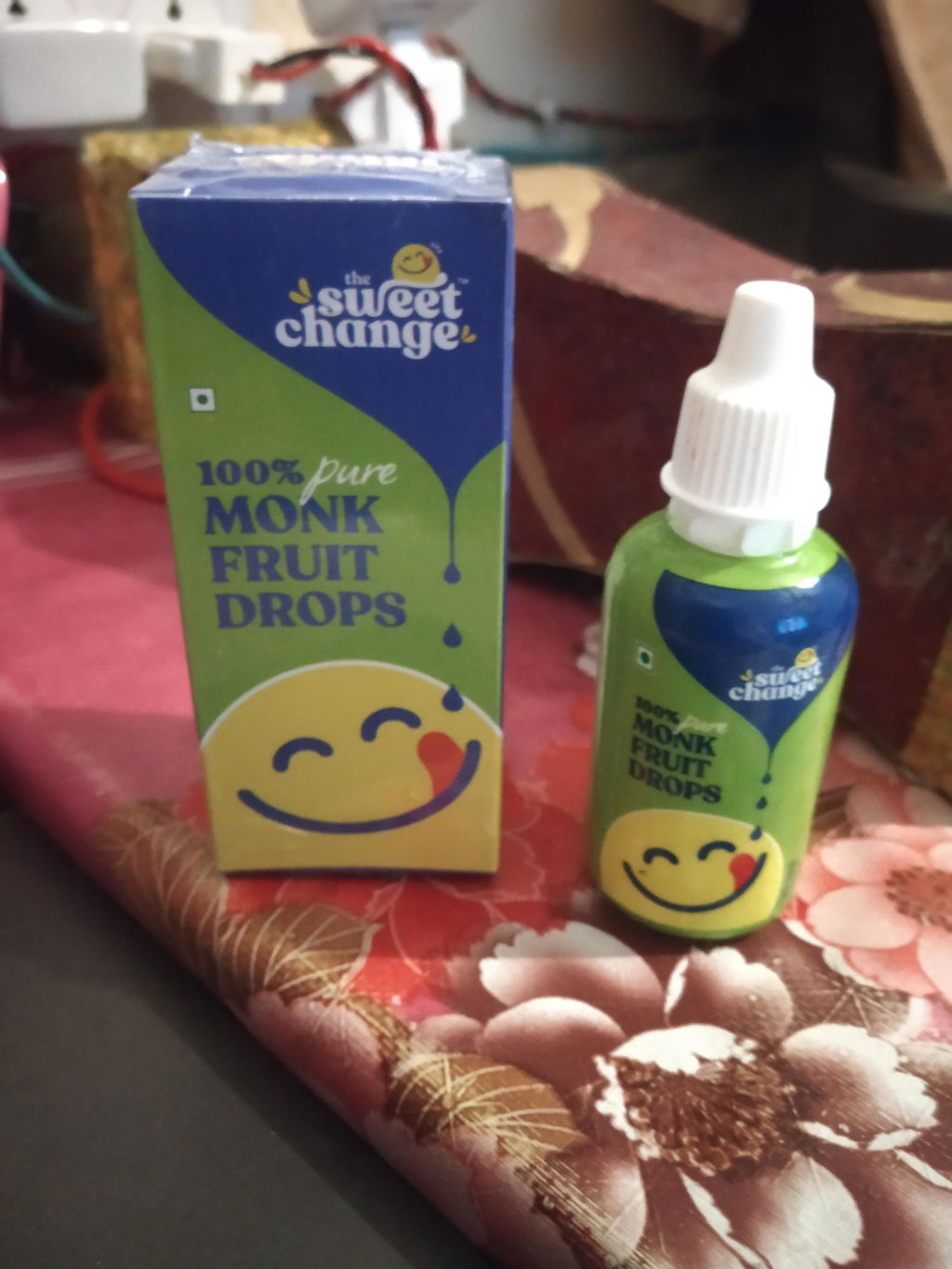
Our pick for daily chai is a monk fruit sweetener made without sugar alcohols; at The Sweet Change we make it as drops and powder, with sachets coming. Its limit: monk fruit has fewer long-term human studies than older sweeteners, so use it in place of the sugar spoon, not as a reason for more sweets.
In the cup, two drops replace a teaspoon of sugar.
If you are weighing the options, natural sweeteners compared and our guide to sweeteners for diabetes go through each one; if PCOS is part of the picture, read sweeteners for PCOS.
What to read next, and in what order
This guide stays at summary depth on purpose. Three more guides go further, each on one question.
Every sugar band, read together
How do you read a fasting value, a 2-hour value and an HbA1c that do not agree? This guide will take each test band by band, in mg/dL and in the other units some labs print.
One example of what it covers: a random sugar between 140 and 199 mg/dL is a reason to go on to a full glucose tolerance test, and a random value of 200 or more with symptoms points to diabetes [1]. Guide: every sugar band explained
Lifestyle changes that last
The prevention trials worked because people kept going. This guide will turn their programmes into steps for an Indian week, slip-ups included.
India's diabetes guideline, written for people with diabetes, gives the outline: about 150 minutes of aerobic activity a week, plus resistance training at least twice a week and flexibility exercises [1]. For stress it lists meditation, yoga, a long outdoor walk and hobbies such as reading or gardening [1]. Guide: lifestyle changes that last
An Indian week of meals
What does a day of eating look like at home, in the office canteen and at a wedding? This guide will lay out a week in katoris and rotis.
Its starting point is that a diet should be planned for the person yet stay close to the family's own pattern, flexible and varied [1]. For fibre, the guideline's figure for the general population is 40 g a day on a 2,000 kcal diet [1]. Guide: an Indian week of meals
When to see a doctor
See a doctor for a sugar test if you are over 30 or any line on the screening list fits you. See one soon if you notice any of the signs of high sugar listed earlier on this page.
If a test has already shown it, keep the yearly recheck. Whether you also need medicine is a decision for you and your doctor, made with your full reports in front of you.
Prediabetes is common, usually silent and worth acting on early. This guide explains; it does not diagnose, so take your results and your questions to your doctor.
Cheat sheet
- Test: over 30, or earlier with a risk factor; recheck yearly once you have prediabetes.
- Numbers: ask which fasting band your lab uses, ADA from 100 or WHO from 110.
- First change: one habit this month, such as the walk after dinner or half the rice.
- Sweet: gur and honey are sugar; keep the chai sweet with less sugar, not more mithai.
- Doctor: your report, your history, your decision together.
Questions people ask
Is prediabetes curable?
Nobody can promise that, but the odds can move: in an Indian trial in Chennai and a large US trial, people who changed diet and activity were less likely to develop type 2 diabetes. US follow-up found that getting back into the normal range was linked with lower risk later. India's ICMR guideline advises a yearly recheck.
Prediabetes kya hai?
India's ICMR diabetes guideline defines prediabetes as blood sugar higher than normal but below the diabetes line, either a high fasting sugar or a high value two hours after a glucose drink. The US NIDDK notes it usually causes no symptoms, so only a blood test shows it. Simple words mein: sugar normal se zyada, diabetes se kam.
What can a person with prediabetes eat?
Everyday Indian food, chosen well: ICMR-NIN's dietary guidelines favour whole grains and millets over refined grains, with fibre from pulses, vegetables and nuts. India's diabetes guideline suggests cereal and pulse together, as in idli, dosa or khichdi. Keep added sugar and maida low, and swap juice for whole fruit.
What fruits are ok for prediabetes?
India's ICMR diabetes guideline names papaya, guava, apple, pear, orange and mosambi as fruits to have in moderation, and says fruit juices are best avoided. Those lines are written for people with diabetes, and they make a sensible guide for the stage before it too. Choose a whole fruit over a glass of juice.
Can a prediabetic have any sugar?
A little. ICMR-NIN advises adults to keep sugar under 5% of daily energy, and gur and honey count as sugar too. If you want chai to stay sweet, the American Diabetes Association's 2026 standards say non-nutritive sweeteners can replace sugar-sweetened products when used in moderation and for the short term.
> CTA · product · P4: Monk fruit sweetener, drops and powder, with sachets coming. Contains no erythritol or other sugar alcohols. See the monk fruit sweetener
 Monk Fruit Drops (100 servings)
Rs. 497.00
Monk Fruit Drops (300 servings)
Rs. 1,197.00
 Monk Fruit Powder No Erythritol (100 servings)
Rs. 675.00
Monk Fruit Powder No Erythritol (300 servings)
Rs. 1,493.00
Related articles


Written by
Jatin Agnihotri · COO and Co-Founder
MBA, Indian School of Business · 12 years in technology and security
Jatin Agnihotri is COO and Co-Founder of The Sweet Change, where he runs operations, from manufacturers and vendors to shipping and logistics, and creates content for our Instagram. He spent 12 years in technology at Honda Cars India, Extramarks Education, where he was Vice President IT, and Jio Platforms. He holds an MBA from ISB.
Disclosure: Co-founder of The Sweet Change

Reviewed by
Kapil Groverr · Chief Business Officer and Co-Founder
IIM Lucknow alumnus · 18 years in marketing
Kapil Groverr is Co-Founder and Chief Business Officer of The Sweet Change, where he leads growth and marketing. He has 18 years in marketing, most recently as Vice President Marketing at Breathe Well-being and before that Head of Digital Marketing at King Koil. An IIM Lucknow alumnus, he writes our sweetener guides and comparisons.
Writes about: Sweetener guides and comparisons
Disclosure: Co-founder of The Sweet Change

Medically reviewed by
Manvi Agnihotri · CEO and Co-Founder
12 years in clinical nutrition, over 11,000 patients · M.Sc Food and Nutrition, silver medallist
Manvi Agnihotri is CEO and Co-Founder of The Sweet Change. She holds an M.Sc in Food and Nutrition, in which she was a silver medallist, and has led brand strategy and patient and doctor education at Breathe Well-being, a diabetes care programme. She reviews our health and nutrition pages before they go live.
Reviews: Nutrition and food science, Blood sugar and diabetes diet
Disclosure: Co-founder of The Sweet Change
Sources
- Indian Council of Medical Research. 2018. ICMR Guidelines for Management of Type 2 Diabetes 2018. ICMR, New Delhi. https://www.icmr.gov.in/icmrobject/custom_data/pdf/resource-guidelines/ICMR_GuidelinesType2diabetes2018_0.pdf
- US National Institute of Diabetes and Digestive and Kidney Diseases (NIDDK). Insulin Resistance & Prediabetes (last reviewed March 2025). NIH, Bethesda. https://www.niddk.nih.gov/health-information/diabetes/overview/what-is-diabetes/prediabetes-insulin-resistance
- Anjana RM, Unnikrishnan R, Deepa M, et al.; ICMR-INDIAB Collaborative Study Group. 2023. Metabolic non-communicable disease health report of India: the ICMR-INDIAB national cross-sectional study (ICMR-INDIAB-17). The Lancet Diabetes & Endocrinology 11(7):474-489. https://doi.org/10.1016/S2213-8587(23)00119-5
- Ramachandran A, Snehalatha C, Mary S, Mukesh B, Bhaskar AD, Vijay V; Indian Diabetes Prevention Programme (IDPP). 2006. The Indian Diabetes Prevention Programme shows that lifestyle modification and metformin prevent type 2 diabetes in Asian Indian subjects with impaired glucose tolerance (IDPP-1). Diabetologia 49(2):289-297. https://doi.org/10.1007/s00125-005-0097-z
- US National Institute of Diabetes and Digestive and Kidney Diseases (NIDDK). Symptoms & Causes of Diabetes (last reviewed October 2024). NIH, Bethesda. https://www.niddk.nih.gov/health-information/diabetes/overview/symptoms-causes
- Knowler WC, Barrett-Connor E, Fowler SE, et al.; Diabetes Prevention Program Research Group. 2002. Reduction in the incidence of type 2 diabetes with lifestyle intervention or metformin. New England Journal of Medicine 346(6):393-403. https://doi.org/10.1056/NEJMoa012512
- Perreault L, Pan Q, Mather KJ, Watson KE, Hamman RF, Kahn SE; Diabetes Prevention Program Research Group. 2012. Effect of regression from prediabetes to normal glucose regulation on long-term reduction in diabetes risk: results from the Diabetes Prevention Program Outcomes Study. The Lancet 379(9833):2243-2251. https://doi.org/10.1016/S0140-6736(12)60525-X
- Thankappan KR, Sathish T, Tapp RJ, Shaw JE, Lotfaliany M, Wolfe R, et al. 2018. A peer-support lifestyle intervention for preventing type 2 diabetes in India: a cluster-randomized controlled trial of the Kerala Diabetes Prevention Program. PLoS Medicine 15(6):e1002575. https://doi.org/10.1371/journal.pmed.1002575
- Gaddam A, Galla C, Thummisetti S, Marikanty RK, Palanisamy UD, Rao PV. 2015. Role of Fenugreek in the prevention of type 2 diabetes mellitus in prediabetes. Journal of Diabetes & Metabolic Disorders 14:74. https://pmc.ncbi.nlm.nih.gov/articles/PMC4591578/
- US Centers for Disease Control and Prevention (CDC). Prediabetes: Your Chance to Prevent Type 2 Diabetes (reviewed 26 December 2024). CDC, Atlanta. https://www.cdc.gov/diabetes/prevention-type-2/prediabetes-prevent-type-2.html
- ICMR-National Institute of Nutrition. 2024. Dietary Guidelines for Indians (English booklet). ICMR-NIN, Hyderabad. https://www.nin.res.in/downloads/DGI_Booklet_English_CMYK.pdf
- Longvah T, Ananthan R, Bhaskarachary K, Venkaiah K. 2017. Indian Food Composition Tables 2017 (food I001, jaggery, cane). ICMR-National Institute of Nutrition, Hyderabad. https://www.nin.res.in/ebooks/IFCT2017.pdf
- American Diabetes Association Professional Practice Committee. 2026. 5. Facilitating Positive Health Behaviors and Well-being to Improve Health Outcomes: Standards of Care in Diabetes-2026. Diabetes Care 49(Suppl 1):S89-S131. https://pmc.ncbi.nlm.nih.gov/articles/PMC12690188/
The Sweet Change makes the products mentioned on this page. How we write and review