Sweetener for diabetics: what works in your chai, and what is still sugar
 Written byKapil GroverrChief Business Officer and Co-Founder, The Sweet Change
 Reviewed byJatin AgnihotriCOO and Co-Founder, The Sweet Change
 Medically reviewed byManvi AgnihotriCEO and Co-Founder, The Sweet Change


Our pick of sweetener for diabetics is a monk fruit sweetener made without sugar alcohols. Stevia and sucralose also add few or no calories and generally do not raise blood sugar, so any of the three can replace the sugar in your chai, though none of them treats diabetes. Gur, honey and dates are still sugar, and every option has a trade-off, from stevia's bitter aftertaste to open questions about erythritol.
Key takeaways
- Blood sugar: most non-nutritive sweeteners generally do not raise it [1].
- Still sugar: honey has a glycemic index of 61 and table sugar 65, so count gur, honey and dates as sugar [2].
- The WHO advice: the 2023 recommendation against sweeteners for weight control does not apply to people who already have diabetes [3].
- Erythritol: linked to heart risk in a 2023 study, and the US FDA said that study's observational data did not establish cause [4] [1].
Discuss with your doctor or dietitian before changing your diet, especially if you take diabetes medicines.
On this page
- How to judge a sweetener for diabetics
- Zero-calorie sweeteners: stevia and monk fruit
- Artificial sweeteners: sucralose, aspartame and saccharin
- Sugar alcohols and the erythritol question
- "Healthy" swaps that are still sugar: gur, honey, dates
- Sweeteners and diabetes risk: what the WHO found
- Prediabetes and insulin resistance: one change first
- Drops, powder or tablets: which format suits which use
- Using a sweetener in chai, coffee, kheer and baking
- The whole page in one table, and a cheat sheet
- Sources
If you take medicine or insulin for diabetes, talk to your doctor before changing what you eat or drink.
How to judge a sweetener for diabetics
The question arrives with a report. Someone at home comes back from the doctor with a new prescription, the sugar dabba moves to the top shelf, and by evening the family is standing in front of a shelf of "sugar free" packs wondering which one to trust.
You are not the only household doing this. In a national survey of more than 1.1 lakh adults aged 20 and over, 11.4% had diabetes and another 15.3% had prediabetes, which is roughly one adult in four [5]. Nearly every family has a chai to think about.
People want one good sweetener for diabetics that beats the rest. We have a pick, and it helps to know how we got there: a sweetener's job is to keep the taste of sweet without adding sugar, and that is the whole job. It is not a treatment for diabetes.
A non-nutritive sweetener is one that tastes sweet but adds few or no calories. Most of them generally do not raise blood sugar [1].
We wrote this page because the question lands on our own doorstep. In our survey of our own buyers, 59% said someone at home keeps an eye on blood sugar.
The alternative sweeteners for diabetics on an Indian shelf fall into four groups: plant extracts (stevia, monk fruit), artificial sweeteners (sucralose, aspartame, saccharin), sugar alcohols (erythritol, xylitol) and the traditional swaps that are still sugar (gur, honey, dates).
Our full guide to sweeteners covers every type for every reader; this page asks one thing of each: what it does in the cup of someone with diabetes.
In short: judge each one by what it adds to the cup and what it costs you in taste. By those two tests our pick is a monk fruit sweetener made without sugar alcohols.
Zero-calorie sweeteners: stevia and monk fruit
These two are the ones sold as "natural sweeteners", and the names you will see on the front of many "sugar free" packs. Both come from a plant and both are extracts; here is what each one does in the cup.

Stevia
For many families stevia is the first try, usually as a small green pack of tablets from the chemist. If you are weighing up a stevia sweetener for diabetics in the family, start with the taste, not the chemistry.
Steviol glycosides, the sweet part of the stevia leaf, are 200 to 400 times sweeter than table sugar, so a cup of chai needs a pinch [1].
The catch is the aftertaste: steviol glycosides carry a bitter off-taste, and a 2012 study that combined taste panels with receptor tests found two of the tongue's bitter receptors respond to steviol glycosides [6].
How bitter it tastes depends on which steviol glycosides a pack uses, so one brand can taste less bitter than another [6]. In plain milk or kheer there is nothing to cover it; in masala chai or nimbu paani the elaichi and lime do some of the covering. Try it there first.
Stevia costs little per cup and is in every chemist, which is why it stays on this list despite the taste.
Monk fruit
Monk fruit (Siraitia grosvenorii, luo han guo) is a fruit grown in southern China whose extract is 100 to 250 times sweeter than sugar, depending on how much mogroside it carries [1]. Mogrosides are the compounds that make it sweet.
There is one trial worth knowing, and its size matters. In a 2017 study, 30 healthy men drank, on separate days, a drink sweetened with stevia, monk fruit, aspartame or 65 g of sugar an hour before lunch. The sugar drink sent blood glucose and insulin up steeply in the first hour; the three sweetener drinks did not [7].
Here's the catch, and it comes at lunch. The men ate as much lunch as they wanted an hour later, and on the sweetener days they ate more; glucose and insulin rose after that larger lunch, and the calories saved at the drink were eaten back at later meals [7].
What it means in your kitchen: a swap takes the sugar out of the cup, and that is real. It does not stand in for the rest of the meal, and those men were healthy; nobody in that trial had diabetes.
For what the regulators say, read what regulators and studies say about monk fruit.
Artificial sweeteners: sucralose, aspartame and saccharin
These are the sweeteners in many "sugar free" tablets and sachets at the chemist, and in the diet cola at the restaurant. People ask about them with a slight frown, because "artificial" sounds like a verdict before the evidence is in.
The numbers first. Aspartame is about 200 times sweeter than table sugar, sucralose about 600 times and saccharin 200 to 700 times, which is why one tiny tablet sweetens a full cup [1].
Now the downside, with its size. In a 2013 study, 17 people with obesity who did not normally use sweeteners took sucralose or plain water ten minutes before a glucose drink. After sucralose their blood glucose peaked higher and their insulin response was about 20% larger [8].
That is one small study in insulin-sensitive people with obesity, and it measured one morning, not a lifetime. A 2022 review came to a similar, careful place: it concluded that the role of artificial sweeteners in treating diabetes should be reconsidered, and that replacing sugar with them needs long-term tracking of blood glucose and weight [9].
What it means in your kitchen: an artificial sweetener removes the sugar from the cup, and the evidence on anything beyond that is unsettled. One practical point for the cook: aspartame loses its sweetness when heated, so it is not the one for kheer or halwa, while sucralose stays sweet at cooking temperatures [1].
Sugar alcohols and the erythritol question
If you have searched for the safest sweetener for diabetics, you have already met erythritol, whether you knew it or not. It is a white crystal used as a bulk sweetener alongside stevia or monk fruit, so check for it in any powder that measures spoon for spoon like sugar [4].
Sugar alcohols (polyols) are a family: sorbitol, xylitol, maltitol and erythritol among them. They are 25% to 100% as sweet as sugar, slightly lower in calories, and do not cause a sudden rise in blood glucose [1]. On paper that is a good fit for a cup of chai.
Then came the study you may have seen forwarded on WhatsApp. In 2023, a research team measured erythritol in the blood of more than 4,000 people undergoing heart checks in the US and Europe, and found that higher levels went with a higher risk of heart attack, stroke or death over the next three years [4].
That study sent many people back to reading labels.
The US FDA reviewed that paper and said the observational studies in it did not establish a causal link between eating erythritol and those effects [1].
A 2024 follow-up gave 10 healthy volunteers a drink with 30 g of erythritol and another 10 a drink with 30 g of glucose; after erythritol, their platelets (the blood cells that form clots) reacted more strongly to clotting signals [10].
That is a link, not proof, and both studies are small or observational. It is still fair to want to know what goes into a cup you drink every single day.
At The Sweet Change: our Powder is made with monk fruit, guar fibre and allulose (30% / 35% / 35%), with no erythritol, and our Drops contain no erythritol or other sugar alcohols. We chose that after the 2023 and 2024 studies: a link, not proof. In our survey of our own buyers, 49% said they chose us for no erythritol.
"Healthy" swaps that are still sugar: gur, honey, dates
This is the section most ranking lists skip, and the one that matters most at an Indian table. Gur in the chai, honey in warm water first thing, dates in the laddoo: all three arrive with a halo. In our survey of our own buyers, 16% said they had been sweetening with jaggery or honey before.

The glycemic index (GI) ranks a carbohydrate food by how much it raises blood glucose compared with glucose; 55 or less counts as low and 70 or more as high [2]. On the 2008 international tables, glucose scores 103, table sugar 65 and honey 61, so honey sits four points below sugar in the same medium band [2].
Raw dates score 42 on the same tables, which counts as low [2]. A low GI means the sugar lands more slowly; it does not mean less sugar, and three dates in a laddoo are still three dates' worth of it.
We found no checked GI figure for gur (jaggery), so we give it no number. It is made from the same sugarcane as table sugar, and we count it as sugar.
What it means in your kitchen: swapping sugar for gur or honey changes the flavour of the chai, not the sugar in it. If the reason for the swap is blood sugar, these three are not a swap at all; they are a different packet of the same thing.
Sweeteners and diabetes risk: what the WHO found
You have been told sweeteners are the sensible choice, and then an uncle forwards a headline saying they cause diabetes. The two cannot both be fully right, and neither is.
In 2023 the World Health Organization (WHO) advised against using non-sugar sweeteners to control body weight, because its review found no long-term benefit for body fat and suggested possible undesirable effects from long-term use, including a higher risk of type 2 diabetes, heart disease and death in adults [3].
The part most headlines skipped sits in the same release. The recommendation is rated conditional, because the links seen in the studies might be confounded by who uses sweeteners and how; it applies to everyone except people with pre-existing diabetes; and it does not cover sugar alcohols [3].
So if you already have diabetes, swapping the sugar in your chai is a different question from using sweeteners to slim down, and the guideline says so itself. The advice everyone can take comes from the same release: make the whole diet less sweet [3].
In short: a link in observational studies, not proof, and a guideline that leaves people with diabetes out of its scope. Start with the cup you drink most often and make it a little less sweet each month.
Prediabetes and insulin resistance: one change first
Prediabetes is the stage where a report says "borderline" and nothing else at home changes. The advice above does not change either: a sweetener for diabetics is a sweetener for prediabetes too, the ones that add no sugar to the cup add none at either stage, and gur, honey and dates are still sugar.
The same goes for a report that says insulin resistance: in the kitchen the question is still what is in the spoon.
The first win is less added sugar overall, and the chai is where most of it hides. Two spoons a cup, three cups a day, is six teaspoons before a single mithai.
For the wider picture, from what the readings mean to what to eat, read our blood sugar and diabetes guide.
Drops, powder or tablets: which format suits which use
Much of what is sold as sugar free for diabetics in India comes in three formats, and the format matters more than the name on the front.

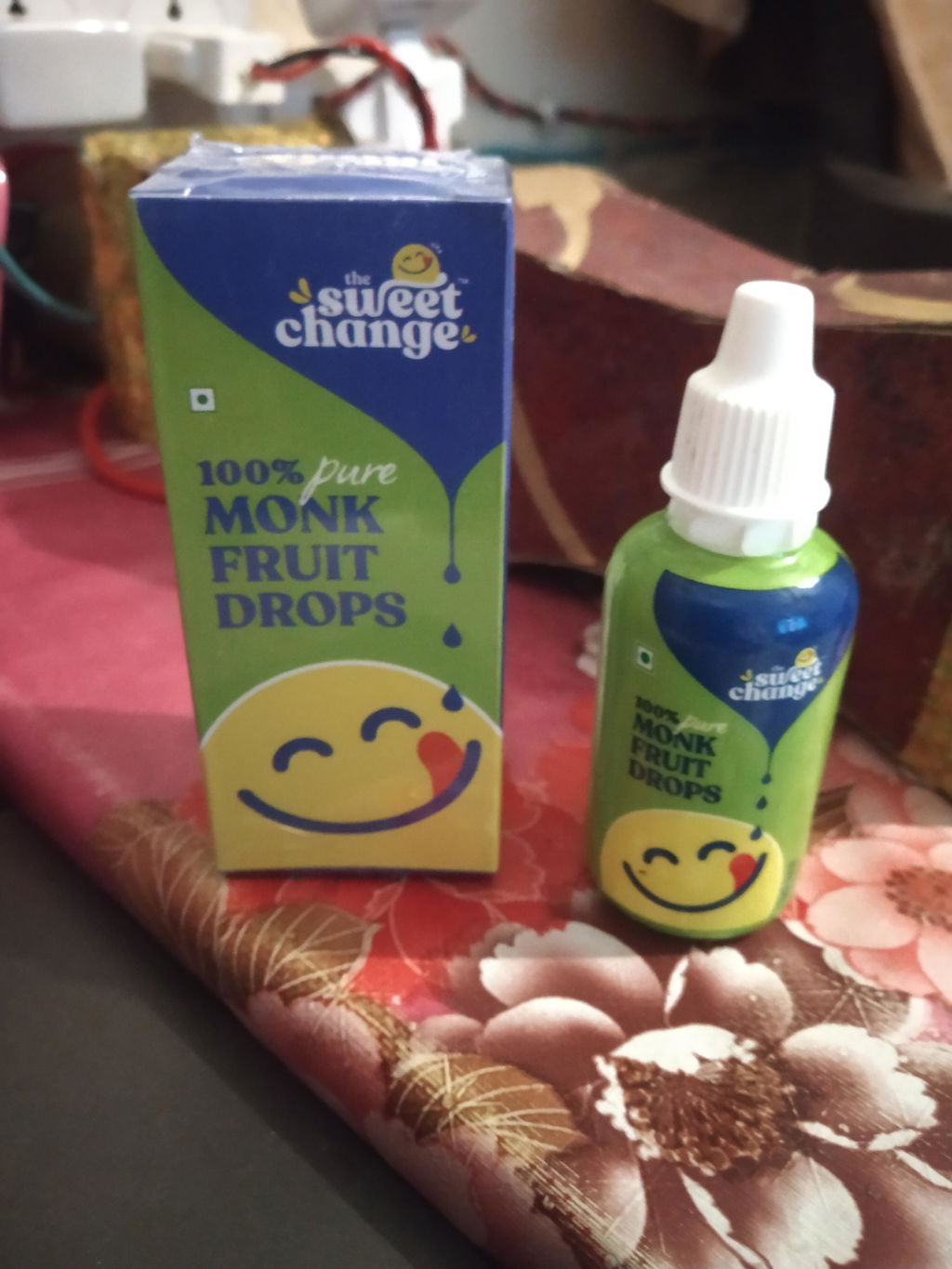
- Drops: a liquid sweetener for diabetics is the simplest format for chai and coffee: a few drops into the hot cup, nothing to dissolve, easy to adjust.
- Powder: for cooking and baking, where sugar also gave bulk. A powder that measures spoon for spoon like sugar is mostly a bulking agent, because a pinch of extract cannot fill a spoon; the erythritol section above says which agent to look for.
- Tablets: sugar free tablets for diabetics are the oldest format, a fixed dose per cup that fits a pocket for the office chai. In our survey of our own buyers, 9% said they had been using sugar-free tablets or sachets before.
Whatever the format, read the ingredient list, not the front of the pack. A pack that sells itself as monk fruit or stevia and still fills a spoon is telling you most of the spoon is something else. Our ingredient library explains each name you will find there.
Using a sweetener in chai, coffee, kheer and baking
In our survey of our own buyers, 66% said their sweetener goes into coffee and 64% into chai. This is where the swap lives or dies, so here is how to make it stick.

Chai and coffee
Whatever you choose as a diabetic sweetener for tea or coffee, the method is the same: add it after the chai has boiled and been poured, start with less than you think, and taste before adding more. These sweeteners are many times sweeter than sugar, so the usual mistake is too much, not too little.
Milk, elaichi and adrak carry the flavour; sugar was only ever the sweetness. A little less each week trains the tongue down, and that is the "less sweet overall" advice from the section above, put into practice one cup at a time.
Kheer, mithai and baking
The sweetener is only one part of the katori. The rice in kheer, the besan in a laddoo and the atta in a cake carry their own carbohydrate, and the portion decides more than the sweetener does. For the flour side, read our page on choosing atta when you have diabetes.
A diabetic sweetener for baking has to survive heat, so this is where aspartame drops out and the heat-stable choices stay in. Sugar also gave kheer and halwa their bulk, browning and body, and no extract gives those back, so expect to adjust the milk and the cooking time.
The whole page in one table, and a cheat sheet
If you came for one table comparing each sweetener for diabetics, here it is. Every line in it comes from the sections above, so nothing new is claimed here, and the sources sit with the sentences they belong to.
| Sweetener | Calories | Effect on blood sugar | Watch out for |
|---|---|---|---|
| Stevia (steviol glycosides) | Few or none | Generally does not raise it; no first-hour spike in a 2017 trial in healthy men | Bitter aftertaste |
| Monk fruit | Few or none | Same trial: no glucose or insulin spike from the monk fruit drink | Check powders for erythritol |
| Sucralose | Few or none | Generally does not raise it; in 17 people with obesity, a higher peak and more insulin before a glucose drink | A 2022 review asks for long-term tracking |
| Aspartame | A few | Generally does not raise it | Loses sweetness when heated |
| Sugar alcohols, including erythritol | Slightly fewer than sugar | No sudden rise | Erythritol: a 2023 link to heart risk, not proof; the FDA says cause was not shown |
| Gur, honey, dates | Sugar | Honey GI 61, table sugar 65, dates 42: still sugar | Sold as "healthy"; count them as sugar |
Cheat sheet
- Our pick for the cup: a monk fruit sweetener made without sugar alcohols; stevia and sucralose also add no sugar to the cup, though stevia can leave a bitter note, and kheer and baking need a heat-stable one.
- A smaller win, still real: a sweetener takes sugar out of the cup and skips the spike; in the 2017 trial the men ate more at lunch, so the plate still counts.
- Count gur, honey and dates as sugar: a different packet, the same thing.
- Read the back of the pack: a spoon-for-spoon "monk fruit" or "stevia" powder is mostly bulking agent; check whether it is erythritol.
- Less sweet overall: the advice in the WHO's 2023 release; start with the chai you drink most.
That is the honest version of "sweetener for diabetics": our pick is a monk fruit sweetener made without sugar alcohols, a few other fair choices, three swaps that are not swaps, and one habit worth more than any of them.
Start with the cup you drink most often, and take a pack with you to your next appointment so your doctor sees the ingredient list too.
Questions people ask
Which sweetener is best for diabetics?
Our pick is a monk fruit sweetener made without sugar alcohols. Stevia and sucralose also add little or no sugar, and the US FDA's position is that such sweeteners generally do not raise blood sugar, so taste and use decide. Gur, honey and dates are sugars, and honey sits just below table sugar on the 2008 international GI tables.
Is sweetener ok for diabetics?
For most people, yes, in moderation and as a swap for the sugar you already take. The US FDA says approved sweeteners generally do not raise blood sugar, and the WHO's 2023 advice against sweeteners for weight control leaves out people who already have diabetes. If you take medicine or insulin, ask your doctor before changing your routine.
Can sweeteners cause diabetes?
It is not proven. The WHO's 2023 review of long-term observational studies suggested a possible link between long-term sweetener use and type 2 diabetes, but it rated its advice conditional because those links may be confounded by who uses sweeteners and why. The surer advice from the same guideline is to make the whole diet less sweet.
Is monk fruit sweetener good for diabetics?
It adds no sugar to the cup, and that is the honest claim. In a 2017 trial in 30 healthy men, a monk fruit drink caused no glucose or insulin spike, unlike a sugar drink; the later rise followed lunch, when the men ate more. Check the label: a powder that measures like sugar may be mostly erythritol.
Is artificial sweetener good for diabetes?
It takes sugar out of the cup and adds few or no calories; it does not treat diabetes. One 2013 study in 17 people with obesity found a higher glucose peak and about 20% more insulin when sucralose was taken before a glucose drink, and a 2022 review said their place in diabetes treatment should be reconsidered, with long-term tracking.
Which sweetener is safe for diabetics?
The US FDA considers its authorised sweeteners safe for the general population under set conditions of use, and has not objected to high-purity stevia extracts or to extracts of monk fruit. Erythritol is the open question: a 2023 observational study linked higher blood levels to heart risk, but the FDA said it did not establish cause. A readable label matters.
Diabetes me kaun sa sweetener use kare?
Our pick is a monk fruit sweetener made without sugar alcohols. Stevia and sucralose also add little or no sugar to chai, and the FDA says they generally do not raise blood sugar, so taste and the dish decide between them; gur, honey and dates are sugar in another form. If you take medicine for diabetes, ask your doctor first.
 Monk Fruit Drops (100 servings)
Rs. 497.00
Monk Fruit Drops (200 servings)
Rs. 971.00
Monk Fruit Drops (100 servings)
Rs. 497.00
Monk Fruit Drops (200 servings)
Rs. 971.00
 Monk Fruit Powder No Erythritol (100 servings)
Rs. 675.00
Monk Fruit Powder No Erythritol (300 servings)
Rs. 1,493.00
Monk Fruit Powder No Erythritol (100 servings)
Rs. 675.00
Monk Fruit Powder No Erythritol (300 servings)
Rs. 1,493.00
Related articles


Written by
Kapil Groverr · Chief Business Officer and Co-Founder
IIM Lucknow alumnus · 18 years in marketing
Kapil Groverr is Co-Founder and Chief Business Officer of The Sweet Change, where he leads growth and marketing. He has 18 years in marketing, most recently as Vice President Marketing at Breathe Well-being and before that Head of Digital Marketing at King Koil. An IIM Lucknow alumnus, he writes our sweetener guides and comparisons.
Writes about: Sweetener guides and comparisons
Disclosure: Co-founder of The Sweet Change

Reviewed by
Jatin Agnihotri · COO and Co-Founder
MBA, Indian School of Business · 12 years in technology and security
Jatin Agnihotri is COO and Co-Founder of The Sweet Change, where he runs operations, from manufacturers and vendors to shipping and logistics, and creates content for our Instagram. He spent 12 years in technology at Honda Cars India, Extramarks Education, where he was Vice President IT, and Jio Platforms. He holds an MBA from ISB.
Disclosure: Co-founder of The Sweet Change

Medically reviewed by
Manvi Agnihotri · CEO and Co-Founder
12 years in clinical nutrition, over 11,000 patients · M.Sc Food and Nutrition, silver medallist
Manvi Agnihotri is CEO and Co-Founder of The Sweet Change. She holds an M.Sc in Food and Nutrition, in which she was a silver medallist, and has led brand strategy and patient and doctor education at Breathe Well-being, a diabetes care programme. She reviews our health and nutrition pages before they go live.
Reviews: Nutrition and food science, Blood sugar and diabetes diet
Disclosure: Co-founder of The Sweet Change
Sources
- US Food and Drug Administration. 2025. Aspartame and Other Sweeteners in Food (content current as of 27 February 2025). FDA, Silver Spring. https://www.fda.gov/food/food-additives-petitions/aspartame-and-other-sweeteners-food
- Atkinson FS, Foster-Powell K, Brand-Miller JC. 2008. International tables of glycemic index and glycemic load values: 2008. Diabetes Care 31(12):2281-2283. https://doi.org/10.2337/dc08-1239
- World Health Organization. 2023. WHO advises not to use non-sugar sweeteners for weight control in newly released guideline (departmental update, 15 May 2023). WHO, Geneva. https://www.who.int/news/item/15-05-2023-who-advises-not-to-use-non-sugar-sweeteners-for-weight-control-in-newly-released-guideline
- Witkowski M, Nemet I, Alamri H, et al. 2023. The artificial sweetener erythritol and cardiovascular event risk. Nature Medicine 29(3):710-718. https://doi.org/10.1038/s41591-023-02223-9
- Anjana RM, Unnikrishnan R, Deepa M, et al.; ICMR-INDIAB Collaborative Study Group. 2023. Metabolic non-communicable disease health report of India: the ICMR-INDIAB national cross-sectional study (ICMR-INDIAB-17). The Lancet Diabetes & Endocrinology 11(7):474-489. https://doi.org/10.1016/S2213-8587(23)00119-5
- Hellfritsch C, Brockhoff A, Stähler F, Meyerhof W, Hofmann T. 2012. Human psychometric and taste receptor responses to steviol glycosides. Journal of Agricultural and Food Chemistry 60(27):6782-6793. https://doi.org/10.1021/jf301297n
- Tey SL, Salleh NB, Henry J, Forde CG. 2017. Effects of aspartame-, monk fruit-, stevia- and sucrose-sweetened beverages on postprandial glucose, insulin and energy intake. International Journal of Obesity 41(3):450-457. https://doi.org/10.1038/ijo.2016.225
- Pepino MY, Tiemann CD, Patterson BW, Wice BM, Klein S. 2013. Sucralose affects glycemic and hormonal responses to an oral glucose load. Diabetes Care 36(9):2530-2535. https://doi.org/10.2337/dc12-2221
- Iizuka K. 2022. Is the use of artificial sweeteners beneficial for patients with diabetes mellitus? The advantages and disadvantages of artificial sweeteners. Nutrients 14(21):4446. https://doi.org/10.3390/nu14214446
- Witkowski M, Wilcox J, Province V, et al. 2024. Ingestion of the non-nutritive sweetener erythritol, but not glucose, enhances platelet reactivity and thrombosis potential in healthy volunteers: brief report. Arteriosclerosis, Thrombosis, and Vascular Biology 44(9):2136-2141. https://doi.org/10.1161/ATVBAHA.124.321019
The Sweet Change makes the products mentioned on this page. How we write and review