Insulin resistance: what it means for your body and your kitchen
 Written byJatin AgnihotriCOO and Co-Founder, The Sweet Change
 Reviewed byKapil GroverrChief Business Officer and Co-Founder, The Sweet Change
 Medically reviewed byManvi AgnihotriCEO and Co-Founder, The Sweet Change


Insulin resistance means your body's cells stop answering the hormone insulin as well as they should, so insulin levels in the blood rise, usually with no symptoms [1] [2]. In India, a waist above 90 cm in men or 80 cm in women is one reason to get your sugar checked early [3]. Moving more and losing a little weight lowered the chance of type 2 in prevention trials, and India's dietary guidelines advise more fibre-rich food [4] [5] [6].
Discuss with your doctor or dietitian before changing your diet, especially if you take diabetes medicines.
On this page
- What is insulin resistance?
- What causes it, and who is more likely to get it
- How does it show up? Usually it doesn't
- How doctors check for it
- From silent stage to prediabetes and type 2
- Where PCOS fits
- What helps: everyday changes with evidence
- When to see a doctor
- In your kitchen: chai, roti and rice
- Cheat sheet: the page in five lines
- Sources
- Silent stage: most people with insulin resistance have no symptoms, so it is easy to miss [1].
- The Indian pattern: at the same BMI, south Asians tend to carry more body fat, more belly fat and more insulin resistance than white Caucasians [3].
- Your tape measure: a waist above 90 cm (men) or 80 cm (women), or a BMI of 23 or more, is a reason to get screened early [3].
- No single test: there is no single routine clinical test for it, and HOMA-IR is an estimate with limited precision [7] [8].
- Change works: in an Indian trial of adults with impaired glucose tolerance, lifestyle change cut the 3-year rate of new diabetes from 55% to 39% [5].
This guide explains insulin resistance; it does not diagnose it. If your report or your doctor mentions it, talk to your doctor about what it means for you and about any treatment.
Maybe it was one line on a blood report. Maybe your doctor said it while writing out the next set of tests, and you nodded and looked it up in the car. Either way, the words sound bigger than they feel, because you feel fine.
The simplest insulin resistance definition is this: your body does not respond to insulin the way it should [1]. It is usually quiet, and it is worth understanding before it turns into something louder.
What is insulin resistance?
It is a change in how your muscles, fat and liver answer insulin: they respond less well, so the body has to work harder to move sugar out of the blood [1] [2].
How insulin works on a normal day
Insulin is a hormone made by the pancreas, and its job is to regulate the glucose in your blood [9]. After a plate of rice and dal, insulin helps glucose move out of the blood and into your cells, which use it for energy [1] [9].
Guide: more on the hormone itself
Insulin resistance meaning, in plain words
Think of insulin as a doorbell. The cells are the house, and glucose is the visitor waiting outside. When the cells resist, the house gets a little hard of hearing, so the visitor has to ring longer and louder before the door opens.
In the body, ringing louder means more insulin. When the cells do not respond normally, insulin levels in the blood rise [2]. Early on, nothing on the outside looks different.
Why the body keeps up, until it can't
The catch is that the pancreas cannot keep ringing harder forever. Over time it may not make enough insulin to push the extra glucose into cells, and the glucose starts to build up in the blood [1].
So a normal sugar reading today does not rule it out, and the early part is where you have the most room to change the ending.
What causes it, and who is more likely to get it
Researchers do not fully understand the insulin resistance causes, but people with the risk factors for type 2 are more likely to develop it [1]. These are the ones on the list:
- Weight and waist: having overweight or obesity, or a large waist.
- Age: being 35 or older, though children and teenagers can develop it too.
- Family: a family history of diabetes.
- Little movement: not being physically active.
- Smoking: including exposure to second-hand smoke.
- Pregnancy history: having had gestational diabetes.
- Other conditions: such as PCOS or sleep apnoea [1].
The Asian Indian pattern
Here is the part most Western explainers leave out. For any given BMI, south Asians tend to have more total body fat, more visceral fat (the fat packed around the organs in the belly) and more insulin resistance than white Caucasians [3].
In plain terms, a person who looks slim by Western charts can still carry the risk. The uncle with thin arms and a round belly is a familiar sight at Indian family weddings, and that belly is exactly what a waist tape is for.
How does it show up? Usually it doesn't
Most of the time, you cannot see or feel it: people who have it usually have no symptoms [1].
There is one skin change doctors do look for. In India's screening advice, acanthosis nigricans counts as a sign of insulin resistance in children and teenagers, and as one of the reasons for adults to be screened earlier too [3].
The sign you can measure yourself is your waist. In India, a waist above 90 cm in men or above 80 cm in women, or a BMI of 23 or more, is a reason to screen for diabetes earlier than usual [3].
How to measure your waist at home
- Use a soft tape: the cloth kind from the sewing box, not a metal one.
- Bare belly, level with your navel: stand straight with your feet together.
- Breathe out normally: do not suck in, and do not pull the tape tight.
- Same time, same way: first thing in the morning works well, so each reading compares with the last.
If the tape reads above the mark for you, treat it as a reason to book a check-up, not as a diagnosis.
Guide: the signs doctors look for
How doctors check for it
This is where many people get confused, because they expect one blood test with one clear answer. There is no single routine clinical test for it, and testing insulin levels is not routinely recommended to screen for prediabetes or type 2 [7]. The direct test is mostly used in research studies [1].
So doctors look at the wider picture. They check your blood sugar with three tests: fasting plasma glucose, HbA1c (your average blood glucose over about 3 months) and, sometimes, an oral glucose tolerance test, which takes more time and costs more [1]. Their cut-offs are what define prediabetes, so we explain them on a page of their own.
Blood fats can rise too, so your doctor may also suggest tests for cholesterol and triglycerides [1].
Guide: the prediabetes ranges explained
What is HOMA-IR?
HOMA-IR stands for homeostasis model assessment of insulin resistance. It is a calculation, not a separate test: it takes your fasting glucose and fasting insulin and estimates how insulin resistant you are [8].
In the 1985 paper that introduced it, the estimate tracked a detailed research method, the glucose clamp, closely, but the authors wrote that its low precision limits its use [8].
Indian data are still catching up. One Indian hospital study of 312 adults found HOMA-IR, and a second measure called the TyG index, both higher in people with metabolic syndrome, and its authors noted that comparative data from Indian adults are limited [10].
So if a lab prints a HOMA-IR number on your report, treat it as a clue to discuss with your doctor, not a verdict on your health.
The checks at a glance
| Check | What it measures | What it can tell you |
|---|---|---|
| Fasting plasma glucose | Blood sugar at the time of the test, taken fasting | Whether sugar is above normal [1] |
| HbA1c | Average blood sugar over about 3 months | The longer trend [1] |
| Oral glucose tolerance test | Blood sugar in a longer, timed test | Used sometimes; takes more time and costs more [1] |
| HOMA-IR | An estimate from fasting glucose and insulin | A clue about insulin resistance, with low precision [8] |
| Waist | Belly fat, with a tape | A reason to screen early in India [3] |
Guide: how the tests work and what they cost
From silent stage to prediabetes and type 2
Insulin resistance, prediabetes and type 2 are best seen as stages on one road. When blood glucose climbs above normal but not high enough to be called diabetes, that is prediabetes [1].
If it keeps climbing, it becomes type 2, a condition marked mainly by insulin resistance, with the pancreas also falling short on insulin to varying degrees [3].
The road is busy in India. A national survey found diabetes in 11.4% of Indian adults and prediabetes in another 15.3%, so roughly one adult in four is somewhere along it [11]. Type 2 also tends to begin at least a decade earlier in Indians than in other major ethnic groups [3].
The hopeful part is that the road has exits. Not everyone with prediabetes goes on to develop type 2 [1]. For the bigger picture, from types to tests to daily care, read our complete diabetes guide.
Guide: how insulin and diabetes connect
Where PCOS fits
PCOS and insulin resistance often travel together. Many women with PCOS have it [2], and PCOS is on the risk list above.
A history of PCOS is also a reason to be screened for diabetes earlier than the usual age, on the same list as the waist and BMI marks above [3].
If you have PCOS, the hormones and the food questions deserve a page of their own. Start with our PCOS and women's health guide, and if your question is how to sweeten chai without sugar, read how to pick a sweetener when you have PCOS.
Guide: PCOS and insulin in more depth
What helps: everyday changes with evidence
For insulin resistance, what to do has a fairly plain answer, even if doing it is harder than reading it. A healthy routine means healthy food and drinks, being physically active, managing your weight and getting enough sleep [1].
None of these needs a gym membership, only repetition, so pick the one you can keep up on a busy Tuesday.
Move more, most days
In a large US prevention trial, the lifestyle group aimed for at least 150 minutes of physical activity a week and a 7% weight loss. That lifestyle change cut new cases of diabetes by 58% compared with placebo, in US adults at high risk [4].
In kitchen terms, 150 minutes is a 30-minute walk on five days of the week. An after-dinner walk round the colony, with whoever in the family will come along, is the easiest place to find it.
Weight: a few kilos, not a new body
You do not need to reach a "perfect" weight. For people at high risk, losing 5% to 7% of their starting weight helped lower their chance of developing diabetes [1]. For someone who weighs 70 kg, that is about 3.5 to 5 kg.
The Indian evidence points the same way. In an Indian prevention trial, Asian Indian adults with impaired glucose tolerance who made lifestyle changes had a 3-year rate of new diabetes of 39.3%, against 55.0% in the control group [5].
Those participants were younger, leaner and more insulin resistant than the people in the American, Finnish and Chinese trials, and most were men [5]. Lifestyle change lowered the risk; it did not remove it.
On the plate
ICMR-NIN advises preferring whole grains and millets to refined grains, eating more fibre-rich foods such as pulses, nuts and vegetables, and combining cereals, pulses and millets [6].
At home that looks like familiar food, arranged a little differently: a katori of dal with every meal, sabzi taking up more of the thali, and a millet or whole-wheat roti in place of a maida paratha or naan. For a fuller picture, see what an Indian plate for diabetes looks like.
If lifestyle change is not enough on its own, ask your doctor about treatment options.
Guide: the changes in more detail
When to see a doctor
ICMR advises screening for diabetes in everyone over 30, and earlier if you have a family history of diabetes, high blood pressure, abnormal blood fats, an inactive routine, or a history of gestational diabetes [3]. The waist, BMI and PCOS marks above belong on the same list.
If a report already mentions insulin resistance or a HOMA-IR value, take it to your doctor rather than to a search engine; only someone who knows your history can read it for you.
In your kitchen: chai, roti and rice
This is the part of the day you control most directly. Four cups of chai with two teaspoons of sugar each come to eight teaspoons a day, or 56 in a week, before a single biscuit.
You do not have to change everything at once. A few swaps that keep the food familiar:
- Chai: cut one teaspoon from each cup for a fortnight, then see whether you miss it.
- Roti: one less roti at dinner, with an extra katori of sabzi in its place.
- Rice: a smaller heap next to a bigger serving of dal.
- Atta: mix some millet flour into the family atta; our guide to atta and flours shows how.

Where sweeteners fit
For people with diabetes or at risk of it, non-nutritive sweeteners can stand in for sugar-sweetened foods and drinks, in moderation and for the short term, to cut calories and carbohydrate [12]. They are a way to keep chai sweet with less sugar, not a treatment. For how the main types compare, read our guide to sweeteners for diabetes.
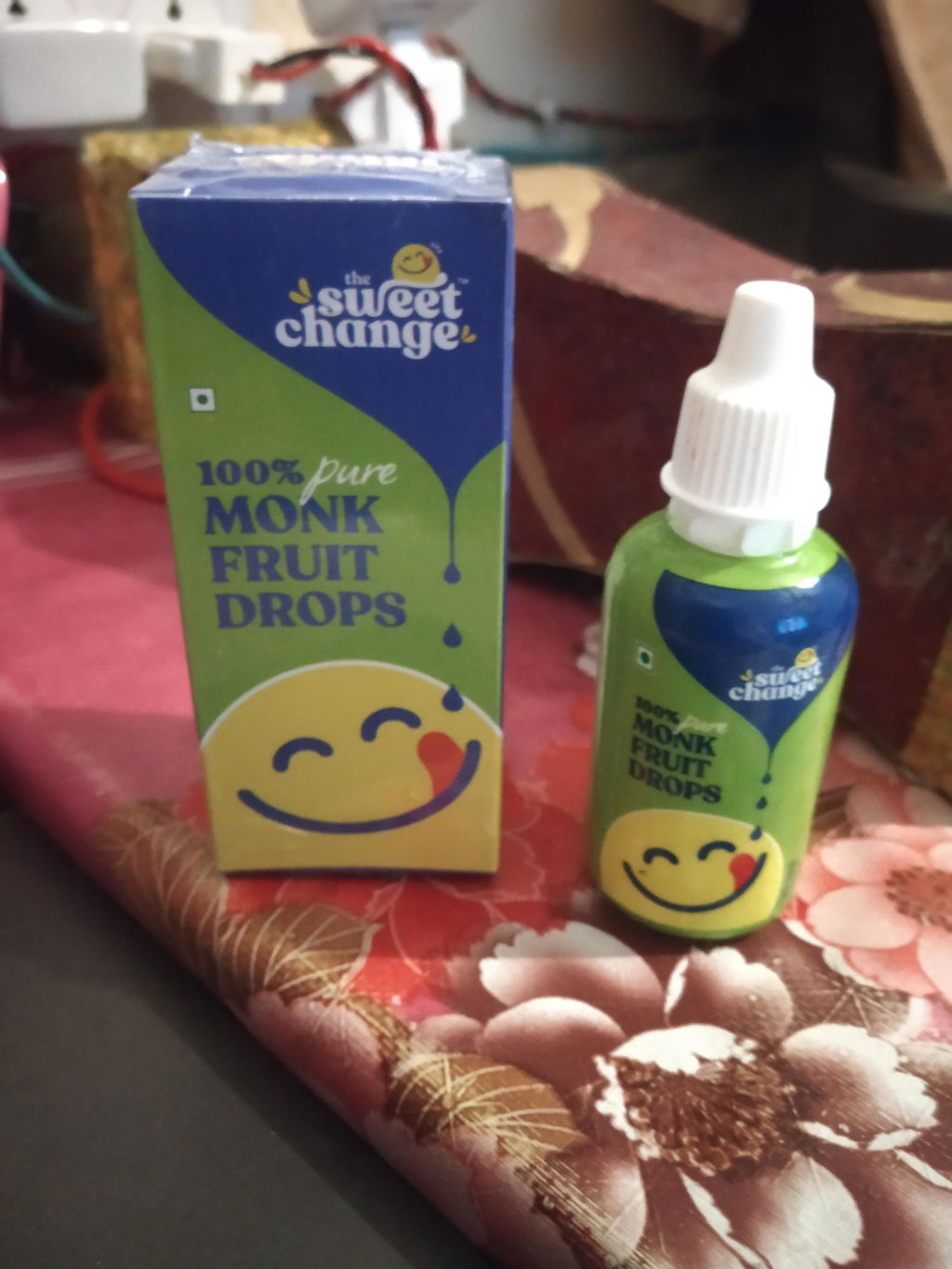
At The Sweet Change: we make monk fruit drops and powder, with sachets coming, and neither contains erythritol or other sugar alcohols. Two drops replace a teaspoon of sugar, and our powder is made with monk fruit, guar fibre and allulose, with no erythritol.
Making one change stick
Pick the cup you drink most often, usually the morning chai, and change that first. Once it feels normal, move to the next one.
Insulin resistance usually builds quietly, and the habits that push back against it are quiet too. That is good news: a walk, a katori of dal and a lighter spoon of sugar are things you already know how to do.
Cheat sheet: the page in five lines
- Measure your waist: soft tape, level with the navel; above 90 cm (men) or 80 cm (women) means screen early.
- Screen after 30: earlier with a family history, PCOS or high blood pressure.
- Treat a HOMA-IR number as a clue: insulin resistance has no single routine test, so take the report to your doctor.
- Walk most days: 150 minutes a week is five 30-minute walks.
- Change the plate gently: more dal and sabzi, millets in the atta, one spoon less in each chai.
Questions people ask
Insulin resistance kya hota hai?
It means the body's cells do not respond to insulin the way they should, so sugar from food has a harder time moving from the blood into the cells. The US National Institute of Diabetes and Digestive and Kidney Diseases (NIDDK) notes that most people with it have no symptoms, which is why a check-up matters.
Insulin resistance ke liye kya kare?
Start with the basics that have been tested: move most days, sleep enough, lose a little weight if you carry extra, and eat more whole grains, millets, pulses and vegetables, as ICMR-NIN advises. Trials in India and the US found that lifestyle change lowered the risk of diabetes, so ask your doctor whether you need anything more.
What is insulin resistance in Hindi?
The usual word for insulin resistance in Hindi is insulin pratirodh, though most people simply use the English words. The meaning is the same: the body's cells stop answering the hormone insulin as well as they should. The US NIDDK describes it as a condition in which the body does not respond to insulin the way it should.
Can you have insulin resistance with normal sugar?
Yes. As the cells answer insulin less well, insulin levels in the blood go up, and the US NIDDK explains that it is over time that the pancreas may fall short and glucose builds up in the blood. That is why waist size and family history matter even when a sugar reading is normal.
Is a HOMA-IR test enough to diagnose insulin resistance?
No. HOMA-IR is a calculation from fasting glucose and fasting insulin, and the 1985 paper that introduced it said its low precision limits its use. Mayo Clinic notes that there is no single routine clinical test for the condition, so a HOMA-IR value is a clue for your doctor to read alongside your other results.
Will insulin resistance turn into diabetes?
Not always. The US NIDDK notes that not everyone with prediabetes goes on to develop type 2, and an Indian prevention trial from 2006 found that lifestyle change lowered the rate of new diabetes in high-risk adults with impaired glucose tolerance. It lowered the risk rather than removing it, so regular check-ups still matter.
 Monk Fruit Drops (100 servings)
Rs. 497.00
Monk Fruit Drops (300 servings)
Rs. 1,197.00
 Monk Fruit Powder No Erythritol (100 servings)
Rs. 675.00
Monk Fruit Powder No Erythritol (300 servings)
Rs. 1,493.00
Related articles


Written by
Jatin Agnihotri · COO and Co-Founder
MBA, Indian School of Business · 12 years in technology and security
Jatin Agnihotri is COO and Co-Founder of The Sweet Change, where he runs operations, from manufacturers and vendors to shipping and logistics, and creates content for our Instagram. He spent 12 years in technology at Honda Cars India, Extramarks Education, where he was Vice President IT, and Jio Platforms. He holds an MBA from ISB.
Disclosure: Co-founder of The Sweet Change

Reviewed by
Kapil Groverr · Chief Business Officer and Co-Founder
IIM Lucknow alumnus · 18 years in marketing
Kapil Groverr is Co-Founder and Chief Business Officer of The Sweet Change, where he leads growth and marketing. He has 18 years in marketing, most recently as Vice President Marketing at Breathe Well-being and before that Head of Digital Marketing at King Koil. An IIM Lucknow alumnus, he writes our sweetener guides and comparisons.
Writes about: Sweetener guides and comparisons
Disclosure: Co-founder of The Sweet Change

Medically reviewed by
Manvi Agnihotri · CEO and Co-Founder
12 years in clinical nutrition, over 11,000 patients · M.Sc Food and Nutrition, silver medallist
Manvi Agnihotri is CEO and Co-Founder of The Sweet Change. She holds an M.Sc in Food and Nutrition, in which she was a silver medallist, and has led brand strategy and patient and doctor education at Breathe Well-being, a diabetes care programme. She reviews our health and nutrition pages before they go live.
Reviews: Nutrition and food science, Blood sugar and diabetes diet
Disclosure: Co-founder of The Sweet Change
Sources
- US National Institute of Diabetes and Digestive and Kidney Diseases (NIDDK). 2025. Insulin Resistance & Prediabetes (last reviewed March 2025). National Institutes of Health. https://www.niddk.nih.gov/health-information/diabetes/overview/what-is-diabetes/prediabetes-insulin-resistance
- US Department of Health and Human Services, Office on Women's Health. Polycystic ovary syndrome (accessed 10 October 2026). womenshealth.gov. https://womenshealth.gov/a-z-topics/polycystic-ovary-syndrome
- Indian Council of Medical Research. 2018. ICMR Guidelines for Management of Type 2 Diabetes 2018. ICMR, New Delhi. https://www.icmr.gov.in/icmrobject/custom_data/pdf/resource-guidelines/ICMR_GuidelinesType2diabetes2018_0.pdf
- Knowler WC, Barrett-Connor E, Fowler SE, et al.; Diabetes Prevention Program Research Group. 2002. Reduction in the incidence of type 2 diabetes with lifestyle intervention or metformin. New England Journal of Medicine 346(6):393-403. DOI 10.1056/NEJMoa012512. https://doi.org/10.1056/NEJMoa012512
- Ramachandran A, Snehalatha C, Mary S, Mukesh B, Bhaskar AD, Vijay V; Indian Diabetes Prevention Programme (IDPP). 2006. The Indian Diabetes Prevention Programme shows that lifestyle modification and metformin prevent type 2 diabetes in Asian Indian subjects with impaired glucose tolerance (IDPP-1). Diabetologia 49(2):289-297. DOI 10.1007/s00125-005-0097-z. https://doi.org/10.1007/s00125-005-0097-z
- ICMR-National Institute of Nutrition. 2024. Dietary Guidelines for Indians (English booklet). ICMR-NIN, Hyderabad. https://www.nin.res.in/downloads/DGI_Booklet_English_CMYK.pdf
- Mayo Clinic Press. 2026. Understanding insulin resistance (On Nutrition podcast page), 11 August 2026. Mayo Clinic. https://mcpress.mayoclinic.org/nutrition-fitness/understanding-insulin-resistance/
- Matthews DR, Hosker JP, Rudenski AS, Naylor BA, Treacher DF, Turner RC. 1985. Homeostasis model assessment: insulin resistance and beta-cell function from fasting plasma glucose and insulin concentrations in man. Diabetologia 28(7):412-419. DOI 10.1007/BF00280883. https://doi.org/10.1007/BF00280883
- World Health Organization. 2024. Diabetes, fact sheet, 14 November 2024. WHO, Geneva. https://www.who.int/news-room/fact-sheets/detail/diabetes
- Chauhan R, Jain S, Malukar N, Pathak J, Ajmera M, Mishra S, Verma M. 2026. Utility of Surrogate Markers for Insulin Resistance: HOMA-IR and TyG Index in Identifying Metabolic Syndrome Among Adults from Resource-limited Settings. touchREVIEWS in Endocrinology 22:45-53. DOI 10.17925/ee.2026.22.1.1. https://doi.org/10.17925/ee.2026.22.1.1
- Anjana RM, Unnikrishnan R, Deepa M, et al.; ICMR-INDIAB Collaborative Study Group. 2023. Metabolic non-communicable disease health report of India: the ICMR-INDIAB national cross-sectional study (ICMR-INDIAB-17). Lancet Diabetes & Endocrinology 11(7):474-489. DOI 10.1016/S2213-8587(23)00119-5. https://doi.org/10.1016/S2213-8587(23)00119-5
- American Diabetes Association Professional Practice Committee. 2026. 5. Facilitating Positive Health Behaviors and Well-being to Improve Health Outcomes: Standards of Care in Diabetes, 2026. Diabetes Care 49(Suppl 1):S89-S131. DOI 10.2337/dc26-S005. https://pmc.ncbi.nlm.nih.gov/articles/PMC12690188/
The Sweet Change makes the products mentioned on this page. How we write and review