Best flour for diabetes: how atta, millets and besan compare
 Written byManvi AgnihotriCEO and Co-Founder, The Sweet Change


No single flour is the best flour for diabetes. In Indian and international tests, whole wheat roti scored 45 to 62 on the glycemic index, while jowar, bajra and makki rotis scored 70 to 84, so a millet is not automatically gentler. What helps more reliably is more fibre and protein in the flour (besan, barley, whole atta with its bran) and fewer rotis eaten with dal or sabzi. Maida has a quarter of atta's fibre.
Key takeaways
- Whole wheat roti: tested at 45.1 in one Indian study and at 52 to 62 in other published tests [1] [2].
- Millet rotis: jowar, makki and bajra tested high, at 84.1, 74.8 and 70.1 [3].
- Atta against maida: 11.4 g of fibre per 100 g against 2.8 g [4].
- Blended atta: an "atta mix" kneaded into whole wheat flour brought one tested roti's GI from 45.1 to 27.3 [1].
- Official advice: India's national dietary guidelines ask for a combination of whole grains, pulses and millets, not one "best" atta [5].
Discuss with your doctor or dietitian before changing your diet, especially if you take diabetes medicines.
On this page
- Why there is no single best flour for diabetes
- Wheat flour for diabetes: atta against maida
- Low GI atta: millets, besan and barley in Indian studies
- Low GI flour list: GI and fibre of common Indian flours
- Best flour for diabetes in India: what ICMR-NIN advises
- Low GI flour for roti: how to make any roti raise sugar less
- Baking and sweets with these flours
- The short version for your kitchen
- Sources
Why there is no single best flour for diabetes
The diagnosis lands on one person, and the atta dabba belongs to the whole house. Someone comes home with a sugar report and a prescription, and by dinner the kitchen is doing the maths: how many rotis, which atta, should it be jowar now, or that multigrain pack the neighbour swears by.
So the honest question is a shopping question: which bag do I buy? The studies answer it sideways, because they test the roti (chapati) as eaten, not the flour.
The glycemic index (GI) ranks a carbohydrate food by how much it raises blood sugar compared with glucose. A score of 55 or less counts as low and 70 or more as high [2].
Here's the catch. The same whole wheat roti has tested anywhere from 45 to 62 depending on who made it and how [1] [2], and glycemic load adds the portion in. Two rotis and four rotis from the same atta are not the same meal.
So two things matter more than the name on the bag: the dietary fibre and protein in the flour, and how many rotis you eat with what. People search for a "diabetic friendly flour" as if one were sitting on a shelf. The useful answer is a method, not a brand.
In short: stop looking for one bag. Look at the fibre, the roti count and what is in the katori beside it.
What customers tell us
In our survey of our own buyers, 59% said someone at home keeps an eye on blood sugar [6]. Of those who named a food style, 31% said vegetarian and 20% said high protein, which is the besan-and-dal end of the comparison further down [6].
Wheat flour for diabetes: atta against maida
Start with the flour already in most Indian kitchens. Whole wheat atta is a reasonable everyday flour if you have diabetes, provided the bran stays in. That last clause is the whole story, because atta and maida come from the same wheat; the difference is what the mill takes out.
The numbers make the case. Atta carries 11.4 g of fibre per 100 g; maida, with the bran and germ milled away, carries 2.8 g [4]. Protein is close to equal, 10.6 g against 10.4 g, but maida ends up with more digestible carbohydrate, 74.3 g against 64.2 g per 100 g of flour [4].
Milled rice keeps maida company at 2.8 g of fibre per 100 g raw; rice flour itself is not listed [4]. As roti, whole wheat sits in the low to medium band you saw above. We found no verified GI for a maida roti, and we have not guessed one.
The chokar (bran) is where most of the fibre lives. So buy whole atta, or ask your chakki to keep the bran in, and do not sieve it out because the roti looks softer without it. Keep maida and white rice for occasions; the everyday roti is where the change pays off.

Low GI wheat flour: there is no such bag
You will see packs sold as low GI wheat flour. GI belongs to the food as eaten, not to the bag, which is why one roti carries three published values and all three are right.
One Indian test fed whole wheat roti to 18 healthy volunteers and measured 45.1 [1]. Other published values for the same food are 62 ±3 for "wheat roti" and 52 ±4 for "chapatti" [2].
The spread has causes. Whole-grain cereal foods vary widely from one test to the next, and the researchers put it down to manufacturing method, processing, food structure and preparation [7] [3].
One more honest caveat: GI tests are run in healthy volunteers, not in people with diabetes. Across 20 staple foods, the two groups' values moved together (r = 0.94), so the ranking holds even where the exact number does not [2].
What did test lower was a method, not a bag: a roti from the same Indian test, made with an "atta mix" kneaded into the wheat, which we come to below.
In short: read GI as a range, and read the label as a label. A higher-fibre, higher-protein flour kneaded into the atta changes the roti more than any word on the front of the pack.
Low GI atta: millets, besan and barley in Indian studies
This is where the family debate usually goes next: switch to jowar or bajra, because millets are "for sugar". It is a kind instinct, and the numbers are not on its side. Millet atta is not a low GI atta by default.
One Indian test fed traditional foods to 15 healthy adults and measured jowar roti at 84.1, makki roti at 74.8 and bajra roti at 70.1, all high; ragi mudde, the stiff porridge, came in at 98.2 [3]. The researchers' own words: "Merely being a whole grain-based food does not qualify for a lower GI." [3]
Millets still earn a place on your shelf, for their fibre: bajra carries 11.5 g per 100 g of grain, ragi 11.2 g and jowar 10.2 g [4]. Use them to vary the week's grain, knowing that millet rotis are not low GI on their own.
Besan changes the picture because it is not a grain at all. It is ground from Bengal gram dal (chana dal), and that shows: 21.6 g of protein and 15.2 g of fibre per 100 g [4]. Whole chickpea dishes test low; white chickpea sundal scored 24.1 in the same test as the millet rotis [3].
We found no primary study that tested a besan roti, so we give it no GI rather than borrow one from a ranking page.
Barley (jau) has the most fibre of the grains here, 15.6 g per 100 g [4]. Barley grain itself tested at 28 ±2, and we found no test of a barley-flour roti either [2]. Oats show how much processing matters: rolled-oat porridge tested at 55 ±2 and instant oat porridge at 79 ±3 [2].
In short: millets add fibre and variety, besan and barley add the protein and fibre atta lacks, and none of them is a free pass on the roti count.
Almond, coconut and kuttu flour
These turn up in low-carb recipes and vrat cooking, so they belong on the list even though none of them makes a roti. Whole almonds carry 3.0 g of available carbohydrate per 100 g, which is why almond flour appears in low-carb baking; coconut flour is not listed at all [4].
We found no verified GI for either in a primary source, and kuttu (buckwheat), the vrat staple, is unverified too. Use them as baking flours, and read the sugar in the recipe as closely as the flour.
Low GI flour list: GI and fibre of common Indian flours
Now that each flour has had its say, here is the comparison in one place. The lowest glycemic index flour in Indian roti tests is the blended atta; among single flours, whole wheat roti tested lowest.
How to read this table: the GI column is for the food as eaten, with the number of the test it comes from; fibre and protein are per 100 g of the raw flour or grain; where no primary study has tested a flour, the cell says so.
Flour glycemic index as eaten, and fibre and protein per 100 g. Lower GI is gentler. Each number jumps to its source.
| Flour | GI as eaten (food tested, source) | Fibre g/100 g [4] | Protein g/100 g [4] |
|---|---|---|---|
| Whole wheat atta | Roti 45.1, India [1]; wheat roti 62 ±3, chapatti 52 ±4 [2] | 11.4 | 10.6 |
| Blended atta (whole wheat + "atta mix") | Roti 27.3 [1] | not listed | not listed |
| Maida (refined wheat flour) | No verified Indian roti GI | 2.8 | 10.4 |
| Jowar (sorghum) | Roti 84.1 [3] | 10.2 (grain) | 10.0 |
| Bajra (pearl millet) | Roti 70.1 [3] | 11.5 (grain) | 11.0 |
| Makki (maize) | Roti 74.8 [3] | 12.2 (dry grain) | 8.8 |
| Ragi (finger millet) | Mudde (stiff porridge) 98.2, not roti [3] | 11.2 (grain) | 7.2 |
| Besan (Bengal gram dal) | No verified besan roti GI; whole chickpea sundal 24.1 [3] | 15.2 (dal) | 21.6 |
| Barley (jau) | Barley grain 28 ±2 [2]; flour roti not verified | 15.6 (grain) | 10.9 |
| Oats | Rolled-oat porridge 55 ±2; instant 79 ±3 [2] | not listed | not listed |
| Kuttu (buckwheat) | No verified value | not listed | not listed |
| Almond flour | No verified value | not listed | not listed |
| Coconut flour | No verified value | not listed | not listed |
The Indian GI values in the table were measured in healthy volunteers [1] [3]; the other values are averages from studies in different laboratories [2].

Best flour for diabetes in India: what ICMR-NIN advises
When a family wants one official answer, the place to look is the ICMR-National Institute of Nutrition, and it names no winner.
Its Dietary Guidelines for Indians (2024) say: "Use a combination of whole grains of cereals, pulses and millets", "Prefer whole grains and millets to refined grains / ultra-processed foods", and "Include more fibre-rich foods such as whole grains, millets, pulses, nuts & vegetables" [5].
The same booklet says: "Sugar should be less than 5% of the total energy per day for adults" [5]. That line belongs on a flour page because a besan ladoo is still mostly decided by its sugar.
Turned into a thali, the advice reads: two rotis made from whole atta or a blend, a katori of dal, a sabzi and a katori of curd. Not a new flour, a fuller plate.
Low GI flour for roti: how to make any roti raise sugar less
You do not need a special low GI flour for roti. The studies above point to five changes you can make with the atta already in your kitchen, starting with tonight's dinner.
Mix your atta with a higher-fibre flour
The clearest lead we have is a single tested blend: an "atta mix" kneaded into whole wheat flour took the roti's GI from 45.1 to 27.3 [1]. The published summary does not say what was in the mix, so we cannot hand you the recipe [1].
Two flours from the comparison above have the most to add, besan for protein and fibre and barley for fibre [4]. The official advice above points the same way.
Keep the bran
The fibre gap you saw between atta and maida is the whole case. Buy whole atta, or ask the chakki to keep the bran, and leave the sieve in the drawer.
Count the rotis, not only the flour
Glycemic load is GI multiplied by the grams of carbohydrate in the portion, divided by 100. In the millet tests above, about 105 to 116 g of cooked millet or maize roti carried 50 g of carbohydrate [3]. A fourth roti adds a fourth portion of carbohydrate whatever the flour.
If you take insulin or tablets for diabetes, talk to your doctor before you change your roti count.
Eat roti with dal, sabzi and curd
The researchers behind the millet tests note that low-GI legume accompaniments, which in our kitchens means dal, may favourably change the blood sugar response to a high-GI staple [3]. So the roti eaten with a katori of dal is a different meal from the roti eaten dry with achaar. Methi paratha, a mixed roti, tested medium at 60.2 [3].

Check your own response
GI values are averages from healthy volunteers, and nobody eats as an average. A glucometer reading of your post-meal blood sugar, at the time your doctor suggests, shows how your body answers a particular roti. Ask your doctor what reading to aim for, and change one thing at a time so you know what moved it.
Cheat sheet
- Buy whole atta: keep the chokar; 11.4 g of fibre per 100 g against 2.8 g in maida [4].
- Blend it: knead besan or barley flour into the atta for more fibre and protein [4]; one tested "atta mix" blend, recipe unpublished, took roti GI from 45.1 to 27.3 [1].
- Do not count on millets alone: jowar, bajra and makki rotis tested 70 to 84 [3].
- Count the rotis: two carry half the carbohydrate of four, whatever the flour.
- Serve with dal: the researchers behind the millet tests say low-GI legumes beside a high-GI staple may help [3].
Baking and sweets with these flours
Besan ladoo, almond-flour cake and oat cookies all start with a flour from the table above, and in sweets the sugar in the recipe decides as much as the flour does. A ladoo does not become a different food because the besan is good; the two katoris of sugar still go in.
Of the buyers who told us where their sweetener goes, 15% said baking and 14% said Indian sweets [6]. Keep the flour you chose, and check how much sugar the recipe asks for.
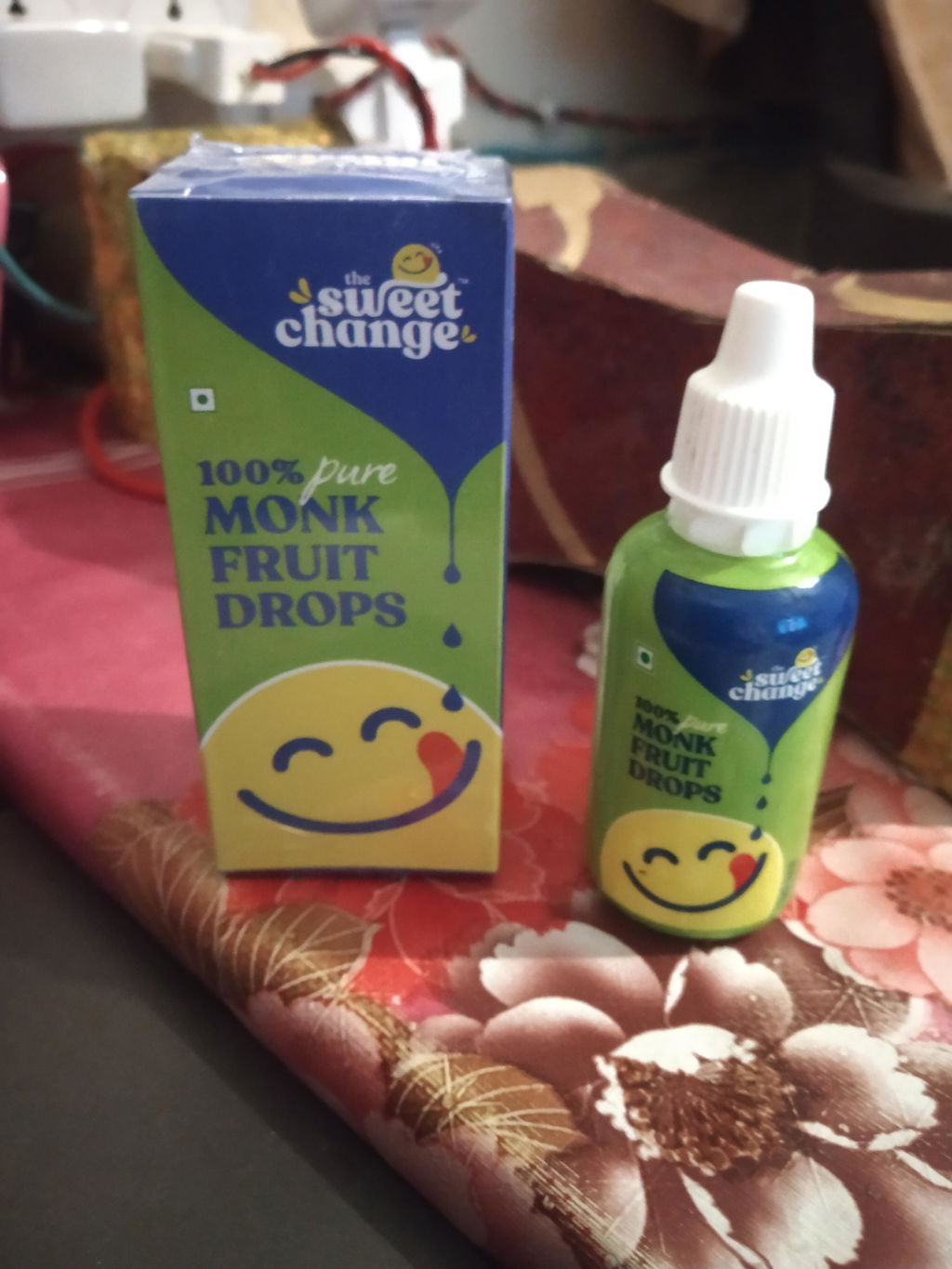
Where TSC fits: Monk Fruit Drops are made with monk fruit extract, water and vitamin C. Two drops replace a teaspoon of sugar. Contains no erythritol or other sugar alcohols. See Monk Fruit Drops
Commercial disclosure: The Sweet Change makes and sells Monk Fruit Drops. The flour and roti sections on this page are written from the studies cited and do not depend on any product.
The short version for your kitchen
The best flour for diabetes turns out to be a method: whole atta with its bran, a higher-fibre flour kneaded in, two rotis rather than four, and dal beside them. Every figure here points to its source, and where none exists we have said so.
Questions people ask
Which flour is best for diabetics?
No single flour is best for people with diabetes, because the studies rank dishes rather than flours. Whole wheat atta with its bran, besan and barley carry the most fibre and protein per 100 g (IFCT 2017), and whole wheat roti tested lower than millet rotis in Indian labs. The roti count and what you eat with it matter more.
Which atta is good for diabetes?
Whole wheat atta tested low to medium as roti, 45 to 62, in Indian and international studies, a sound everyday choice. Millet attas are not automatically lower: jowar, bajra and makki rotis tested high in 2022. For the best atta for sugar patients in the family, knead besan or barley flour into whole wheat for more fibre and protein.
Is chickpea flour good for diabetics?
Besan (chickpea flour) is high in protein and fibre, 21.6 g and 15.2 g per 100 g (IFCT 2017), and whole chickpea dishes test low on the glycemic index, with sundal at 24.1 in a 2022 Indian study. We found no primary study of a besan roti and give it no GI. In a blend, it adds what atta lacks.
Is almond flour good for diabetics?
Almond flour is low in starch: whole almonds carry 3.0 g of available carbohydrate per 100 g (IFCT 2017), so it suits cakes and cookies. We found no verified glycemic index for it in a primary source, and it does not make a roti, so keep it for baking. Read the sugar in the recipe as closely as the flour.
Which flour roti is good for diabetes?
Whole wheat roti tested lowest of the single-flour rotis in Indian studies, at 45.1, while jowar, bajra and makki rotis tested 70 to 84. A blended whole wheat roti tested lower still, at 27.3. Two rotis carry half the carbohydrate of four, whatever the flour, and a katori of dal beside them may help, as the 2022 authors note.
Is multigrain atta better for diabetes?
It depends on what is in the pack and in what order; the first ingredient on the label is the one there is most of. One Indian study found an "atta mix" added to whole wheat flour lowered roti GI from 45.1 to 27.3 (2010), but that was one tested blend. Turn your pack over and read the list.
Sugar ke liye best atta kaun sa hai?
There is no single best atta for anyone with diabetes. Whole wheat atta with its bran is a sound base, and kneading in besan or barley flour adds fibre and protein (IFCT 2017). Millet attas are not automatically gentler, since jowar and bajra rotis tested high in 2022. Count your rotis and eat them with dal and sabzi.
 Monk Fruit Drops (100 servings)
Rs. 497.00
Monk Fruit Drops (200 servings)
Rs. 971.00
Monk Fruit Drops (100 servings)
Rs. 497.00
Monk Fruit Drops (200 servings)
Rs. 971.00
 Monk Fruit Powder No Erythritol (100 servings)
Rs. 675.00
Monk Fruit Powder No Erythritol (300 servings)
Rs. 1,493.00
Monk Fruit Powder No Erythritol (100 servings)
Rs. 675.00
Monk Fruit Powder No Erythritol (300 servings)
Rs. 1,493.00
Related articles


Written by
Manvi Agnihotri · CEO and Co-Founder
12 years in clinical nutrition, over 11,000 patients · M.Sc Food and Nutrition, silver medallist
Manvi Agnihotri is CEO and Co-Founder of The Sweet Change. She holds an M.Sc in Food and Nutrition, in which she was a silver medallist, and has led brand strategy and patient and doctor education at Breathe Well-being, a diabetes care programme. She reviews our health and nutrition pages before they go live.
Reviews: Nutrition and food science, Blood sugar and diabetes diet
Disclosure: Co-founder of The Sweet Change
Sources
- Radhika G, Sumathi C, Ganesan A, Sudha V, Henry CJK, Mohan V (2010). Glycaemic index of Indian flatbreads (rotis) prepared using whole wheat flour and 'atta mix'-added whole wheat flour. British Journal of Nutrition, 103(11), 1642-1647 (abstract). DOI https://doi.org/10.1017/S0007114509993680 and abstract https://pubmed.ncbi.nlm.nih.gov/20100375/
- Atkinson FS, Foster-Powell K, Brand-Miller JC (2008). International tables of glycemic index and glycemic load values: 2008. Diabetes Care, 31(12), 2281-2283. DOI https://doi.org/10.2337/dc08-1239 and full text https://pmc.ncbi.nlm.nih.gov/articles/PMC2584181/
- Shobana S, Geetha G, Bai MR, et al. (2022). Carbohydrate profiling & glycaemic indices of selected traditional Indian foods. Indian Journal of Medical Research, 155(1), 56-65. DOI https://doi.org/10.4103/ijmr.IJMR_1935_19 and full text https://pmc.ncbi.nlm.nih.gov/articles/PMC9552392/
- Longvah T, Ananthan R, Bhaskarachary K, Venkaiah K (2017). Indian Food Composition Tables 2017. ICMR-National Institute of Nutrition, Hyderabad. https://www.nin.res.in/ebooks/IFCT2017.pdf
- ICMR-National Institute of Nutrition (2024). Dietary Guidelines for Indians (English booklet). ICMR-NIN, Hyderabad. https://www.nin.res.in/downloads/DGI_Booklet_English_CMYK.pdf
- The Sweet Change (2026). Post-purchase survey of our own buyers. Internal data; percentages are whole-number shares of the buyers who answered each question.
- Atkinson FS, Brand-Miller JC, Foster-Powell K, Buyken AE, Goletzke J (2021). International tables of glycemic index and glycemic load values 2021: a systematic review. American Journal of Clinical Nutrition, 114(5), 1625-1632 (abstract). https://doi.org/10.1093/ajcn/nqab233
The Sweet Change makes the products mentioned on this page. How we write and review