Methi seeds for diabetes: what Fenugreek seeds studies show
 Written byJatin AgnihotriCOO and Co-Founder, The Sweet Change
 Reviewed byKapil GroverrChief Business Officer and Co-Founder, The Sweet Change
 Medically reviewed byManvi AgnihotriCEO and Co-Founder, The Sweet Change


Methi (fenugreek) seeds are rich in soluble fibre, and in trials of people with type 2 diabetes or prediabetes they brought modest falls in fasting sugar, two-hour sugar and HbA1c [1]. An Indian trial linked processed methi powder to fewer new diabetes cases over 3 years [2]. Trials were mostly small and of low quality, and only 5 g a day or more showed an effect, so methi for diabetes is a useful food, not a medicine [3].
Key takeaways
- What the pooled trials found: across 10 trials and 706 people, fenugreek lowered fasting sugar, two-hour sugar and HbA1c [1].
- The Indian prediabetes trial: in a 3-year trial of 140 adults, those given a processed methi powder were less likely to develop diabetes [2].
- The catch: most trials were small and of low quality, and the evidence is not yet strong enough to say methi is useful for diabetes [3] [4].
- Safety: methi can upset the stomach, and large amounts may drop blood sugar too far; in pregnancy, stay with food amounts [4].
- In the kitchen: in a methi thepla or a methi ladoo, the oil, the ghee and the sugar matter more than the methi.
Discuss with your doctor or dietitian before changing your diet, especially if you take diabetes medicines.
On this page
- Is methi good for diabetes? The honest short version
- Fenugreek seeds, blood sugar and the gummy fibre
- What the studies on methi seeds for diabetes tested
- Fenugreek seeds for diabetes: how to use methi water, soaked seeds or powder
- Methi in everyday Indian food
- Who should be careful with methi
- Can diabetics eat methi ladoo? The sugar is the issue
- Where The Sweet Change fits
- Methi for diabetes: the kitchen version
- Sources
This is general information. If you take diabetes medicines or insulin, are pregnant or have a health condition, talk to your doctor before taking methi in large amounts.
Is methi good for diabetes? The honest short version
There is a glass on many Indian kitchen counters every morning: methi dana soaked overnight, the water drunk first thing, the seeds chewed or tipped into the dal. Maybe it is your mother's glass. Maybe a relative has just forwarded you a message promising that methi brings sugar down for good.
So is fenugreek good for diabetes? As a food, yes: fenugreek for diabetes has been tested in human trials, not just passed down in kitchens. Most of the trials point one way, towards modest falls in sugar, and the sections below show how modest and in whom.
Methi cannot stand in for your tablets. There is not yet enough high-quality evidence to tell whether fenugreek is useful for diabetes, even though research suggests it may help lower blood sugar in type 2 diabetes [4].
So keep the glass if you like it, and keep your medicines, your sugar checks and your doctor in the picture too. Methi for diabetes works best as one good food among many. Our guide to what to eat with diabetes puts it on the wider plate.
Fenugreek seeds, blood sugar and the gummy fibre
Soak a spoon of methi seeds overnight and they swell and turn slippery. That slipperiness is most of the story.
Soluble fibre is the kind of fibre that dissolves in water into a thick gel. Fenugreek (Trigonella foenum-graecum, methi) seeds carry plenty of fibre, including a gum called galactomannan [1].
In animal studies, this soluble fibre slowed how fast carbohydrate was digested and how much glucose was absorbed from the gut [3]. Researchers think the gum explains most of the quick effect methi has on post-meal sugar [3].
The seeds also hold an unusual amino acid, 4-hydroxyisoleucine. In lab work on isolated pancreas cells from rats and from people, it set off insulin release that depended on how much glucose was around [3]. That is a lab finding; it does not show that a spoon of methi does the same inside your body.
In your kitchen, the gel works on the food it meets, so the timing in the trials below, with meals or just before them, makes sense.
What the studies on methi seeds for diabetes tested
The research on methi seeds for diabetes covers very different people, forms and amounts. Read it as a ladder: who took it, in what form, how much and for how long.
- Type 1 diabetes, a very large amount: people with type 1 diabetes ate 100 g of defatted methi powder a day, split between lunch and dinner, for 10 days. Fasting blood sugar fell, the glucose tolerance test improved and sugar lost in urine dropped by 54% [5].
- Type 2 diabetes, a small extract: 25 adults newly diagnosed with mild type 2 diabetes took 1 g a day of a methi seed extract or a placebo for 2 months. Fasting and two-hour sugar ended up no different between the groups, though the overall glucose and insulin curves were lower [6].
- Type 2 diabetes, the methi water study: 24 adults took 10 g of powdered seeds a day for 8 weeks, soaked in hot water or stirred into yoghurt, and 18 were analysed. Fasting sugar fell 25% in the hot-water group and did not change significantly with yoghurt; nobody went without methi for comparison [7].
- Prediabetes, India, 3 years: at a Hyderabad hospital, 140 adults aged 30 to 70 with prediabetes joined a randomised controlled trial with a methi group and a control group, and both had lifestyle advice every 3 months [2].
- Prediabetes, a mixed supplement: 100 adults with prediabetes took a capsule combining fenugreek with bergamot and olive leaf extracts, or a placebo, for 6 months; 87 finished. HbA1c, fasting sugar and insulin did not change in either group [8].
The Indian trial ran the longest, so it deserves a closer look. The methi group took 5 g twice a day, half an hour before meals, of a debitterised, defatted methi powder with added vitamins and minerals, not seeds from the dabba [2]. Controls had 4.2 times the chance of developing diabetes over the 3 years [2].
Pooled reviews tell the same story with more caution. A 2014 review of 10 trials found lower fasting sugar, two-hour sugar and HbA1c, saw effects only at 5 g a day or more in people with diabetes, and judged most trials to be of low quality [3].
A 2023 review of 10 trials and 706 people found the same three falls, but no change in a standard score of how well the body responds to insulin [1]. The newest review, from 2025, pooled 26 trials, found lower fasting sugar, two-hour sugar and HbA1c again, and asked for better-quality studies [9].
At home, that changes the picture for methi for diabetes: every result above came from a measured amount, taken daily for weeks or years. A pinch in the tadka is a different thing, so read these trials as what a measured habit did, not what your sabzi does.
In short: real, modest evidence, mostly from small trials of measured daily amounts.

| Study | Who was studied | Form, amount, length | What changed |
|---|---|---|---|
| 1990 [5] | People with type 1 diabetes | 100 g defatted powder a day, 10 days | Fasting sugar fell |
| 2001 [6] | 25 adults, new type 2 diabetes | 1 g extract a day, 2 months | Fasting sugar no different from placebo |
| 2009 [7] | 18 adults analysed, type 2 diabetes | 10 g seeds a day in hot water or yoghurt, 8 weeks | Fasting sugar down 25%, hot-water group only |
| 2015 [2] | 140 adults with prediabetes, India | 5 g processed powder twice a day, 3 years | Fewer developed diabetes |
| 2019 [8] | 100 adults with prediabetes | Mixed capsule with fenugreek, 6 months | No change |
Fenugreek seeds for diabetes: how to use methi water, soaked seeds or powder
You have read the trials and you would like to try methi at home. This section shows how the trials used it and what the kitchen version looks like. It gives no dose: the amounts above were studied under supervision, and how much suits you is a question for your doctor.
Search "methi for sugar" and most pages tell you to soak a spoon overnight. That habit leans on small studies like the 2009 one above, so enjoy it as a food habit and keep your expectations modest.
Is fenugreek water good for diabetes?
It can be part of a good routine, with thin evidence behind it. The kitchen version:
- Soaked methi seeds: soak the seeds overnight in a glass of warm water; in the morning drink the water and chew the softened seeds, or add them to dal or sabzi.
- Sprouted methi: leave soaked seeds in a damp muslin cloth until they sprout, then add them to salad, raita or poha.
- Roasted powder: dry-roast the seeds lightly, cool them and grind; keep the powder in a small airtight jar.

Methi powder for diabetics: in the atta, not by the spoon
At home, the easiest place for methi powder is the atta tin, kneaded into roti or thepla dough. Our guide to flours and atta for diabetes covers what else can go in that tin: flours and atta for diabetes.
Bitterness is the main complaint. It is the reason the Indian trial used a debitterised powder, since the bitter taste and strong smell have long limited how much methi people will eat [2]. Start with a little in the dough, so the family does not give up on the roti.
Methi in everyday Indian food
Methi for diabetes does not have to mean a glass of bitter water. Methi leaves and seeds are already on many Indian plates: methi thepla packed for a long train ride, aloo methi, methi dal, kasuri methi crushed over paneer. These are food amounts, the amounts believed to be safe for adults and children [4].

A methi paratha tested in healthy Indian volunteers had a glycaemic index of about 60 [10]. That number belongs to the whole paratha, the wheat flour and the way it was cooked, more than to the leaves inside.
So in these dishes the methi is not the lever. The potato in aloo methi, the ghee on the paratha and how many you eat matter more. A methi thepla with dahi and a bowl of sabzi is a different meal from three theplas with pickle.
Most of these dishes are vegetarian, which suits many of our readers: in our survey of our own buyers, 31% said they eat vegetarian [11]. If eggs are on your plate too, our page on eggs and diabetes covers the protein side of breakfast.
Who should be careful with methi
Methi in food is fine for most adults. Larger, measured amounts are where the cautions start, and these are the ones to know.
- Diabetes medicines or insulin: large doses of methi may cause a harmful drop in blood sugar (hypoglycaemia) [4]. If you take diabetes medicines or insulin, talk to your doctor before taking methi in measured amounts, and never change a medicine on your own.
- Pregnancy: stay with the amounts found in food; larger amounts have been linked to birth defects [4].
- Allergy: methi can cause allergic reactions, some of them serious, and it belongs to the legume family [4] [1].
- Digestion: diarrhoea, nausea and other stomach upsets are the usual side effects; the pooled trials reported mild stomach complaints in some studies and no severe harm [4] [1].
If your gut is sensitive anyway, our IBS guide explains why some foods trouble it more than others.
Can diabetics eat methi ladoo? The sugar is the issue
Winter brings methi ladoo: methi roasted in ghee, wheat flour, dry fruit and a good amount of jaggery or sugar. The methi is the smallest part of the problem. The gur or sugar and the ghee are what make it a sweet.
India's dietary guidelines ask adults to keep sugar under 5% of the day's energy [12]. A ladoo or two can use up much of that before the chai has even started.
If a recipe needs sweetness, a monk fruit sweetener made without sugar alcohols is our pick. Monk fruit extract is reported to be 100 to 250 times sweeter than sugar, depending on its mogroside content, and the US FDA has not questioned the GRAS notices filed for it [13].
Our page on whether monk fruit is safe goes through the research.
Keep the methi, measure the ghee, and roll the ladoos small. One with your evening chai is a different thing from three.
Where The Sweet Change fits
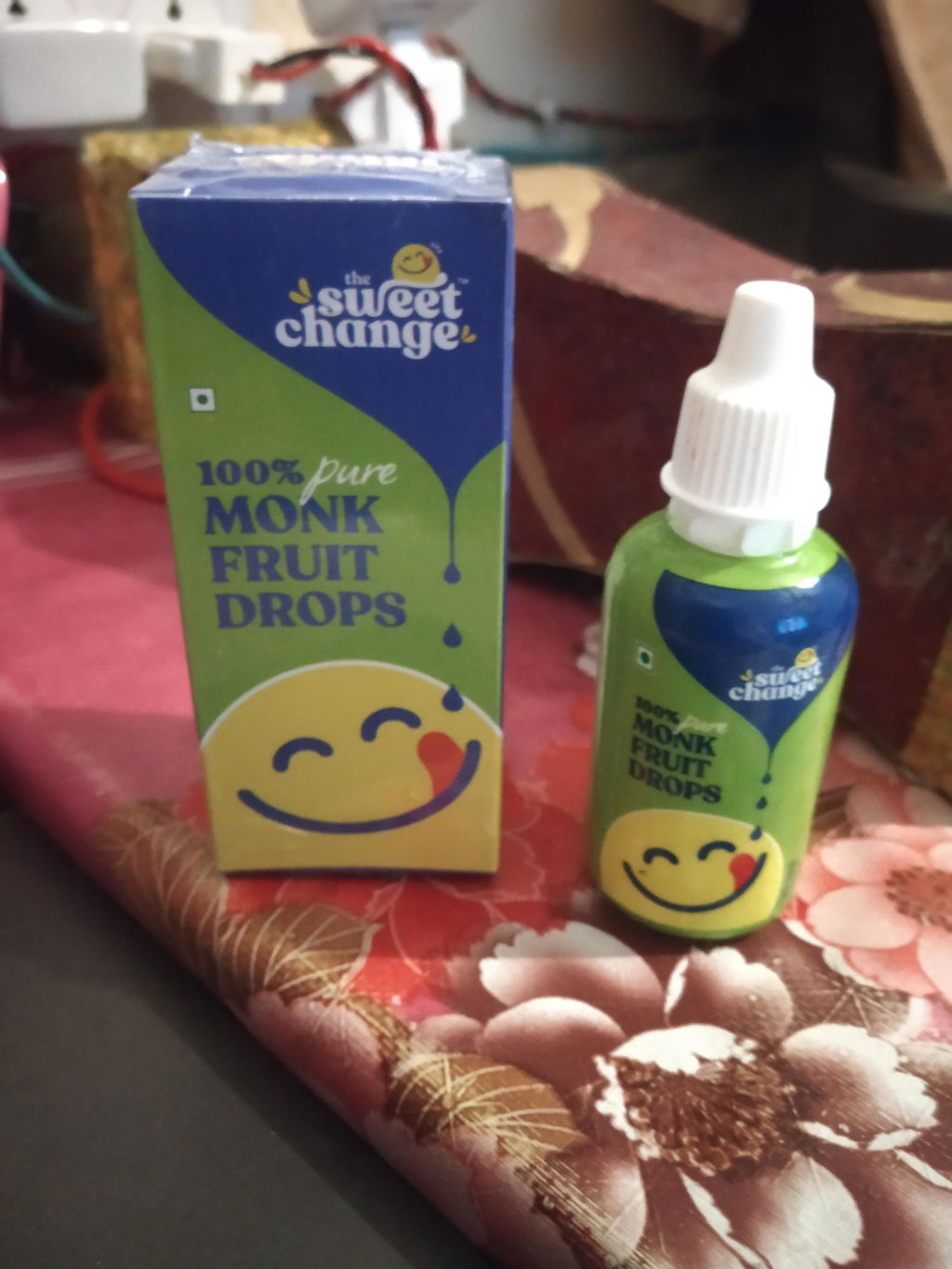
At The Sweet Change: our monk fruit sweetener comes as drops and powder, with sachets coming. The Powder is made with monk fruit, guar fibre and allulose (30% / 35% / 35%), with no erythritol, and both the Drops and the Powder contain no erythritol or other sugar alcohols. With the Drops, two drops replace a teaspoon of sugar.
Methi for diabetes: the kitchen version
Methi for diabetes earns its place as a food: the seeds bring a gummy fibre, the trials show modest falls in sugar at measured amounts, and the honest limits are small, low-quality studies and real cautions with medicines and pregnancy.
For the bigger picture, from diagnosis to check-ups, our diabetes guide is the next read.
Cheat sheet
- Food amounts: methi in thepla, dal and sabzi is food, and fine for most people.
- Trial amounts: effects showed at 5 g a day or more in people with diabetes, measured out daily for weeks or years.
- Methi water: small studies only; enjoy the habit and keep expectations modest.
- Medicines: ask your doctor before measured amounts, and never swap a tablet for methi.
- The sweet: in a methi ladoo, cut the sugar, not the methi.
Monk fruit sweetener, drops and powder, with sachets coming. Contains no erythritol or other sugar alcohols. See the monk fruit sweetener
Questions people ask
Can diabetic patient eat methi?
Yes. Methi leaves and seeds in everyday food, such as thepla, methi dal or aloo methi, are fine for most people with diabetes, and the US National Institutes of Health's fenugreek fact sheet says food amounts are believed to be safe. Larger, measured amounts are different: if you take diabetes medicines or insulin, ask your doctor before you start.
Is fenugreek bad for diabetes?
Not in food amounts. The US National Institutes of Health lists stomach upset, such as diarrhoea and nausea, as a possible side effect, and warns that large doses may push blood sugar too low, which matters if you take diabetes medicines or insulin. In pregnancy, it advises staying with the amounts found in food.
Can diabetics eat methi ladoo?
Now and then, and small. The methi is the least of it; the jaggery or sugar and the ghee make the ladoo a sweet. ICMR-NIN's 2024 dietary guidelines ask adults to keep sugar under five per cent of the day's energy, so count a methi ladoo as your sweet for the day.
Does methi seeds reduce blood sugar?
In trials, a little. A 2023 review of ten randomised trials in people with type 2 diabetes or prediabetes found modest falls in fasting sugar, two-hour sugar and HbA1c. Most trials were small and gave measured daily amounts, so methi works as part of your food, alongside your medicines and checks.
Is fenugreek good for type 2 diabetes?
It can be a useful food. Most fenugreek trials were in people with type 2 diabetes, and pooled results show modest falls in sugar levels, but the US National Institutes of Health says there is not yet enough high-quality evidence to call it useful for diabetes. Use it in meals and stay with the plan your doctor set.
Diabetes me methi kha sakte hai?
Yes, in food: methi in dal, thepla or sabzi is fine for most people with diabetes. A three-year Indian trial in adults with prediabetes gave a processed methi powder twice a day and saw fewer people develop diabetes. Before taking measured amounts, check with your doctor, especially if you take diabetes medicines.
 Monk Fruit Drops (100 servings)
Rs. 497.00
Monk Fruit Drops (300 servings)
Rs. 1,197.00
 Monk Fruit Powder No Erythritol (100 servings)
Rs. 675.00
Monk Fruit Powder No Erythritol (300 servings)
Rs. 1,493.00
Related articles


Written by
Jatin Agnihotri · COO and Co-Founder
MBA, Indian School of Business · 12 years in technology and security
Jatin Agnihotri is COO and Co-Founder of The Sweet Change, where he runs operations, from manufacturers and vendors to shipping and logistics, and creates content for our Instagram. He spent 12 years in technology at Honda Cars India, Extramarks Education, where he was Vice President IT, and Jio Platforms. He holds an MBA from ISB.
Disclosure: Co-founder of The Sweet Change

Reviewed by
Kapil Groverr · Chief Business Officer and Co-Founder
IIM Lucknow alumnus · 18 years in marketing
Kapil Groverr is Co-Founder and Chief Business Officer of The Sweet Change, where he leads growth and marketing. He has 18 years in marketing, most recently as Vice President Marketing at Breathe Well-being and before that Head of Digital Marketing at King Koil. An IIM Lucknow alumnus, he writes our sweetener guides and comparisons.
Writes about: Sweetener guides and comparisons
Disclosure: Co-founder of The Sweet Change

Medically reviewed by
Manvi Agnihotri · CEO and Co-Founder
12 years in clinical nutrition, over 11,000 patients · M.Sc Food and Nutrition, silver medallist
Manvi Agnihotri is CEO and Co-Founder of The Sweet Change. She holds an M.Sc in Food and Nutrition, in which she was a silver medallist, and has led brand strategy and patient and doctor education at Breathe Well-being, a diabetes care programme. She reviews our health and nutrition pages before they go live.
Reviews: Nutrition and food science, Blood sugar and diabetes diet
Disclosure: Co-founder of The Sweet Change
Sources
- Kim J, Noh W, Kim A, Choi Y, Kim YS (2023). The Effect of Fenugreek in Type 2 Diabetes and Prediabetes: A Systematic Review and Meta-Analysis of Randomized Controlled Trials. International Journal of Molecular Sciences, 24(18), 13999. DOI https://doi.org/10.3390/ijms241813999 and full text https://pmc.ncbi.nlm.nih.gov/articles/PMC10531284/
- Gaddam A, Galla C, Thummisetti S, Marikanty RK, Palanisamy UD, Rao PV (2015). Role of Fenugreek in the prevention of type 2 diabetes mellitus in prediabetes. Journal of Diabetes and Metabolic Disorders, 14, 74. DOI https://doi.org/10.1186/s40200-015-0208-4 and full text https://pmc.ncbi.nlm.nih.gov/articles/PMC4591578/
- Neelakantan N, Narayanan M, de Souza RJ, van Dam RM (2014). Effect of fenugreek (Trigonella foenum-graecum L.) intake on glycemia: a meta-analysis of clinical trials. Nutrition Journal, 13, 7. DOI https://doi.org/10.1186/1475-2891-13-7 and full text https://pmc.ncbi.nlm.nih.gov/articles/PMC3901758/
- National Center for Complementary and Integrative Health, US National Institutes of Health (2025). Fenugreek. NCCIH, last updated February 2025. https://www.nccih.nih.gov/health/fenugreek
- Sharma RD, Raghuram TC, Rao NS (1990). Effect of fenugreek seeds on blood glucose and serum lipids in type I diabetes. European Journal of Clinical Nutrition, 44(4), 301-306. PMID 2194788. https://pubmed.ncbi.nlm.nih.gov/2194788/
- Gupta A, Gupta R, Lal B (2001). Effect of Trigonella foenum-graecum (fenugreek) seeds on glycaemic control and insulin resistance in type 2 diabetes mellitus: a double blind placebo controlled study. Journal of the Association of Physicians of India, 49, 1057-1061. PMID 11868855. https://pubmed.ncbi.nlm.nih.gov/11868855/
- Kassaian N, Azadbakht L, Forghani B, Amini M (2009). Effect of fenugreek seeds on blood glucose and lipid profiles in type 2 diabetic patients. International Journal for Vitamin and Nutrition Research, 79(1), 34-39. DOI https://doi.org/10.1024/0300-9831.79.1.34
- Florentin M, Liberopoulos E, Elisaf MS, Tsimihodimos V (2019). No effect of fenugreek, bergamot and olive leaf extract on glucose homeostasis in patients with prediabetes: a randomized double-blind placebo-controlled study. Archives of Medical Science: Atherosclerotic Diseases, 4, e83-e90. DOI https://doi.org/10.5114/amsad.2019.86756 and full text https://pmc.ncbi.nlm.nih.gov/articles/PMC6704765/
- Chehregosha F, Fakhr L, Tarighat-Esfanjani A, Maghsoumi-Norouzabad L (2025). The effects of fenugreek (Trigonella foenum-graecum) seed on glycemic parameters: an updated systematic review and meta-analysis of randomized controlled trials. Avicenna Journal of Phytomedicine. DOI https://doi.org/10.22038/ajp.2025.26043 and full text https://pmc.ncbi.nlm.nih.gov/articles/PMC12777671/
- Shobana S, Geetha G, Bai MR, et al. (2022). Carbohydrate profiling and glycaemic indices of selected traditional Indian foods. Indian Journal of Medical Research, 155(1), 56-65. DOI https://doi.org/10.4103/ijmr.IJMR_1935_19 and full text https://pmc.ncbi.nlm.nih.gov/articles/PMC9552392/
- The Sweet Change (2026). Post-purchase survey of our own buyers. Internal data; percentages are whole-number shares of the buyers who answered each question. https://www.thesweetchange.com/
- ICMR-National Institute of Nutrition (2024). Dietary Guidelines for Indians, English booklet. ICMR-NIN, Hyderabad. https://www.nin.res.in/downloads/DGI_Booklet_English_CMYK.pdf
- US Food and Drug Administration (2025). Aspartame and Other Sweeteners in Food. FDA, content current as of 27 February 2025. https://www.fda.gov/food/food-additives-petitions/aspartame-and-other-sweeteners-food
The Sweet Change makes the products mentioned on this page. How we write and review