The Sweet Change: your questions answered

Written by Kapil Groverr, Chief Business Officer and Co-Founder · Health and Nutrition answers reviewed by Manvi Agnihotri, CEO and Co-Founder · Last updated 9 October 2026

The Sweet Change: your questions answered

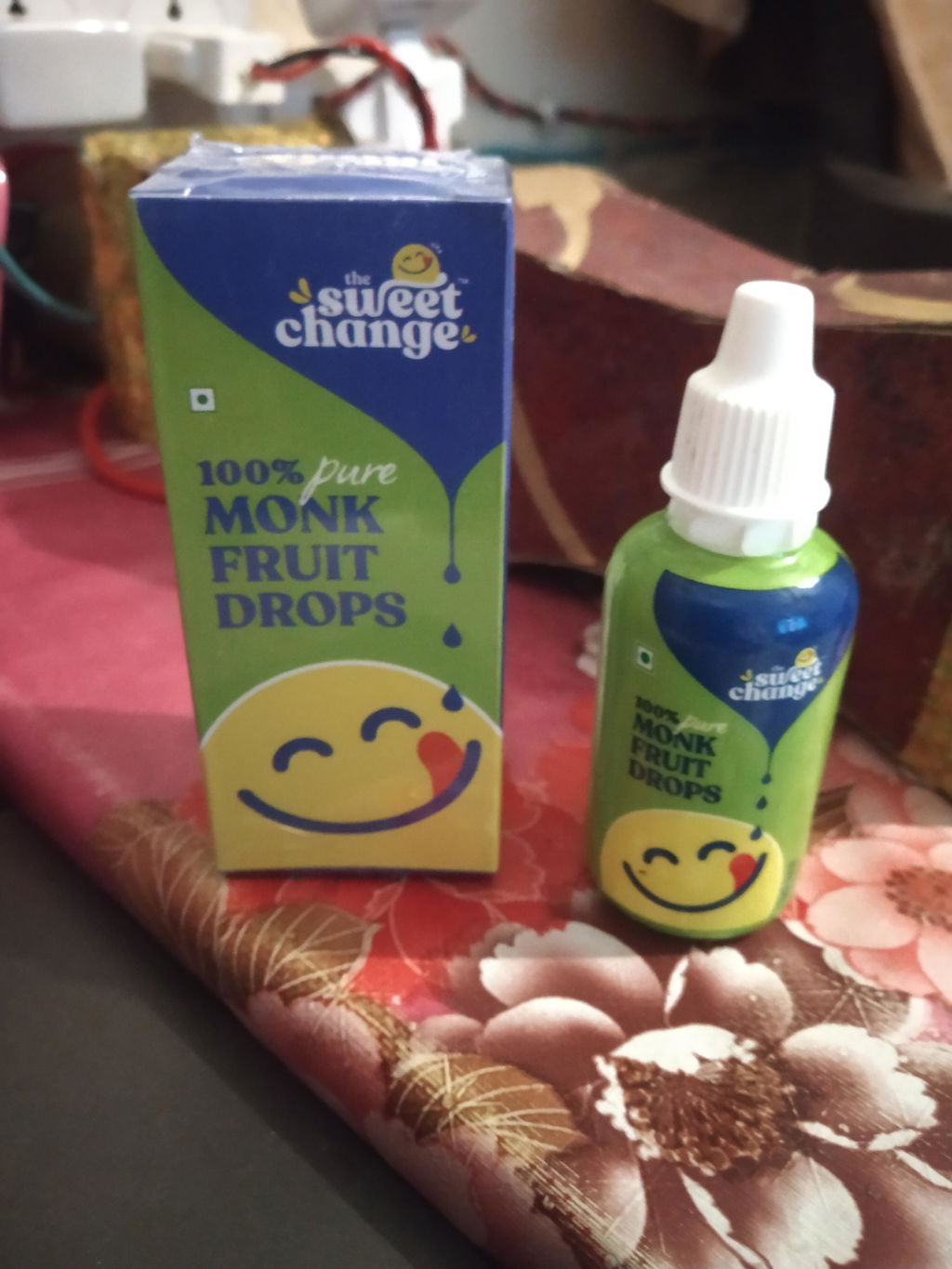
The Sweet Change is a monk fruit sweetener brand from New Delhi, run by Natrtreets Private Limited. We make two things: Monk Fruit Drops, with three ingredients, and a Monk Fruit Powder made with monk fruit, guar fibre and allulose. Neither contains erythritol. This page collects the questions customers send us by email, in reviews and on Amazon, and answers each one in a few lines, with a link wherever another page on our site goes deeper. The health answers are reviewed by Manvi Agnihotri, Clinical Nutritionist and co-founder. Where we do not yet have a fact, we say so rather than guess.

About the brand

Who is The Sweet Change, and where are you based?

The Sweet Change is the sweetener brand of Natrtreets Private Limited, a company incorporated in 2024 and registered in New Delhi. Four co-founders run it: Manvi Agnihotri (Clinical Nutritionist, product), Kapil Groverr (Co-Founder and Chief Business Officer), Jatin Agnihotri (COO and Co-Founder) and Sheen Hitaishi (Chief Brand Officer and Co-Founder). Our sweetener was first listed on this website in January 2025, and by July 2026 we had delivered 50,000+ orders across India (Shopify order data, July 2026). More on our About page.

Who makes the sweetener, and where?

Our sweetener is made for us by licensed food manufacturers in India; we do not run a factory of our own. The main unit is Nclever India Private Limited at the MSME Green Industrial Park in Choutuppal, Telangana (FSSAI licence 13624999000449). Natrtreets Private Limited holds the brand owner's licence, FSSAI Lic. No. 13324999000606. Addresses are on our manufacturing units page.

Who checks the health information on this site?

Manvi Agnihotri, Clinical Nutritionist and co-founder, with 12 years in clinical nutrition and 11,000+ patients, reviews every health answer on this page and on our guides. She holds a Master's degree in Food and Nutrition. Her job is to check that what we say about sugar, sweeteners and the body is accurate and sourced. We never present her review as a recommendation of our products.

The products: drops and powder

Should I buy the drops or the powder?

Buy the drops if most of your sugar goes into chai, coffee or cold drinks, and the powder if you also cook or bake with it. The drops are a liquid you measure by the drop, so they suit a cup. The powder measures by the scoop, so it suits a katori of kheer or a halwa where you want something to stir in. One Amazon buyer who could not decide bought both and found both worked. Both formats are on our product page.

How long does one bottle or pack last?

A pack lasts as long as its serving count: the drops come in 100-serving and 200-serving bottles, and the powder in 100 g (100 servings) and 300 g (300 servings) packs. One serving replaces a teaspoon of sugar. If you take two cups of chai a day with one spoon each, a 100-serving pack runs about seven weeks and a 300-serving pack about five months. Sizes are listed on the product page.

What is the shelf life of the drops, and is it printed on the bottle?

The drops have a shelf life of 18 months from the date of manufacture, and the powder a best-before of 24 months from manufacture, according to the manufacturer's certificates for batches MFL0019 and MFA0003 (drops certificate; powder certificate). Each batch certificate states its manufacturing and expiry dates. Every pack carries a batch code, and the certificate for that batch is under "View Batch Reports" on the product page. If the date on your pack is unreadable, send a photo of the batch code to support@thesweetchange.com.

Can the powder lose its sweetness after a few months, and how should I store it?

Keep the powder in a closed, airtight container after opening, in a cool, dry place away from sunlight and heat, around 25°C, as the manufacturer's certificate for batch MFA0003 advises (powder certificate). One customer told us in October 2026 that a second powder pack tasted bland. If that happens to you, keep the pack, note the batch code, and write to us through the contact page so we can check that batch.

Ingredients

What exactly is in the drops? Is it only monk fruit, with no erythritol, allulose or stevia?

The drops contain monk fruit extract, RO purified water and vitamin C, and nothing else, as printed on the label. There is no erythritol, allulose or stevia in them, and no sucralose, aspartame or saccharin. Vitamin C keeps the drops fresh as a preservative. The powder is a different recipe, made with monk fruit, guar fibre and allulose, and it has no stevia either. Both ingredient lists are under "Ingredients & Allergens" on the product page.

What is in the powder, and why does it have allulose and guar fibre?

The powder is made with monk fruit, guar fibre and allulose (30% / 35% / 35%), with no erythritol. Monk fruit extract is concentrated, so a powder needs bulk, and these two supply it. Allulose is a monosaccharide, a type of sugar, not a sugar alcohol like erythritol. Guar fibre is a soluble fibre that gut bacteria ferment, studied at 5 g doses in a 2020 trial of 20 healthy adults (Reider et al., Nutrients 2020); a 1 g scoop has about 0.35 g of it.

What is the mogroside V percentage, and can I see a COA or lab report?

We have not yet published the mogroside V or total mogroside percentage of our extract; if you need it, email support@thesweetchange.com and we will ask the manufacturer for the specification. What we publish today: every batch has a certificate of analysis from our manufacturer, and we also had independent tests done by Equinox Labs; both are on the product page. Reports: the product page.

Is it tested for heavy metals and microbes like lead, arsenic, E. coli and Salmonella?

Every batch has a certificate of analysis from our manufacturer, Nclever India Private Limited, under "View Batch Reports" on the product page; each covers lead, cadmium, arsenic, mercury and Salmonella, and the powder certificates also E. coli, Shigella and coliforms. Equinox Labs also tested drops batch MFL0010 (metals, microbiology, nutrition) and powder batch MFA0001 (metals, microbiology) independently: nine metals, all below the reporting level, and nine microbiology markers, including E. coli, absent or below the detection limit.

Where does the monk fruit come from, and how is it extracted?

We will add the origin of our extract and how it is made once our supplier confirms both in writing. What is documented: monk fruit (Siraitia grosvenorii, also called luo han guo) is a plant native to southern China, and its extract is sweet because of compounds called mogrosides (US FDA, 2025). It has a long documented history of use in traditional Chinese medicine (Huang et al., 2024).

How much extract is in the liquid, and does the extract contain carriers or fillers not on the label?

We have not published the share of monk fruit extract in the drops, or a supplier specification for the extract. The label lists everything we add: monk fruit extract, RO purified water and vitamin C, which keeps the drops fresh as a preservative. If you need the supplier specification for a medical or allergy reason, write to us through the contact page and we will ask the manufacturer.

Taste and how to use

Does it have a bitter or chemical aftertaste like stevia or sugar-free tablets?

Reviewers on our site are split: some say they noticed no aftertaste, and some find the taste strong, so start with less. On Amazon, taste is the most-mentioned aspect in the review summary, and one reviewer found the drops "very strong even with just 2 drops". We make no "no aftertaste" promise, because monk fruit tastes different from sugar to some people. Put one drop in your first cup, taste, then add. Formats: the product page.

How many drops equal one spoon of sugar? (chai mein kitne drops?)

Two drops replace a teaspoon of sugar. The how-to-use table on the pack says 1 to 2 drops for a cup of chai or coffee, and many reviewers find two drops sweeter than the spoon they used to take, so begin with one. A 100-serving bottle holds about 200 drops. Hold the bottle upright and squeeze once; the drops are concentrated, and one extra changes the cup. Dosage table: the product page.

How much powder replaces a teaspoon of sugar? (powder kaise use kare?)

A 1 g scoop of powder replaces a teaspoon of sugar. Sweetness is personal, so taste your first cup and adjust by half a scoop. For a katori of kheer or halwa the pack suggests a quarter teaspoon; in baking, 1 g of powder stands in for 4 g of sugar. Dosage table: the product page.

Does it dissolve properly in tea, coffee and cold drinks?

Yes in hot drinks, and reviewers report the same for cold ones. Twenty-two site reviews mention dissolving, with comments like "no lumps or stirring required". The drops are a liquid, so they mix the moment they land in the cup. The powder dissolves in hot chai or coffee with a stir; in nimbu paani or cold milk, stir it in before you add ice. Formats: the product page.

Cooking and Indian sweets

Can I use it in Indian sweets like kheer, halwa and gulab jamun chashni?

Yes, and the pack gives the starting amounts: 2 to 3 drops or a quarter teaspoon of powder for a katori of halwa or kheer. Forty-four of our site reviews talk about desserts; one reviewer made the chashni for gulab jamun with the drops and was happy with it. Sugar also gives a chashni its thickness, which a sweetener does not, so expect a thinner syrup and adjust by taste.

Can I bake cakes and biscuits with it?

You can, with changes to the recipe. On the pack, 2 drops or 1 g of powder replace 4 g of sugar in baking. Sugar in a cake also adds volume, moisture and browning, which a few drops cannot, so a straight swap gives a flatter, paler bake; many home bakers replace only part of the sugar, or use the powder, which adds some bulk. We have not yet published tested baking recipes.

Health questions

Will it spike my blood sugar?

In a 2017 trial in 30 healthy men, a drink sweetened with monk fruit did not cause the blood-sugar and insulin spike that a sugar-sweetened drink caused in the first hour (Tey et al., Int J Obes 2017). For the powder's allulose, the US FDA has concluded allulose produces only a negligible rise in blood glucose and insulin (US FDA guidance, 2020). Both are findings about ingredients in small studies; your own glucometer readings count most. Talk to your doctor before changing what you use.

Is it safe for people with diabetes to use every day, including type 1?

That is a decision for you and your doctor; we make no claim that our sweetener suits diabetes. About 1 in 4 Indian adults has diabetes or prediabetes (ICMR-INDIAB, 2023), so we hear this question most of all. For type 1, show the label to your care team. Please consult your doctor before daily use.

Can I use it if I have PCOS?

We make no PCOS claim for our products, and nothing on this site should be read as one. If your doctor or dietitian has asked you to cut added sugar, the sugar in your chai is one practical place to start, and the rest of the plan they gave you matters more than the sweetener. Please talk to your doctor before changing your diet.

Does it fit a keto or low-carb diet?

The drops declare 0 g sugar and 0 kcal per serving on the pack's nutrition panel. The powder declares 0 kcal and 0 g sugar per 1 g scoop. Allulose, one of the powder's three ingredients, is a monosaccharide, a type of sugar; US labels count it at 0.4 kcal per gram, about a tenth of sugar's 4 kcal (US FDA, 2020). Check with your doctor if you follow keto for a medical reason.

Does it help with weight loss?

No; we make no weight-loss claim. The World Health Organization's 2023 guideline recommends against using non-sugar sweeteners to control body weight, because its review found no long-term benefit for body fat (WHO, 15 May 2023). WHO adds that this advice does not apply to people with pre-existing diabetes. In a 2017 trial, 30 healthy men ate back at later meals the calories a monk-fruit-sweetened drink had saved (Tey et al., Int J Obes 2017). Talk to your doctor or a dietitian about weight.

Can I use it in pregnancy or while breastfeeding?

There is little research on monk fruit sweeteners in pregnancy or young children; check with your doctor first. The same goes for breastfeeding, where the research is as thin. If your doctor is fine with it, both ingredient lists are printed on the pack so you can show them at your next visit. Please consult your doctor before using any sweetener in pregnancy.

Can children or a baby have it?

There is little research on monk fruit sweeteners in pregnancy or young children; check with your doctor first. For a baby or a child of any age, ask your paediatrician before adding any sweetener at all, ours included, and follow their advice on how much and how often.

Is it suitable for elderly parents switching from sugar?

Many customers buy for a parent, and nine site reviews describe a parent moving from sugar to the drops without fuss; we still make no claim that it suits any age or condition. Two practical points. Start with one drop in their chai, so the first cup tastes like theirs. And if your parent takes regular medicines, mention the switch to their doctor at the next visit. Please consult their doctor first.

Safety and side effects

Is monk fruit safe? Are there side effects?

Regulators have reached different conclusions. In 2010 the US FDA raised no questions about a GRAS notice for monk fruit extract as a sweetener (FDA GRAS Notice 301) and has set no acceptable daily intake for it (US FDA, 2025). In 2019 the European Food Safety Authority found the toxicity data "insufficient to conclude on the safety" of monk fruit extract as a food additive (EFSA Journal, 2019). One Amazon reviewer felt unwell after two days; if anything feels off, stop and tell your doctor.

Does it cause bloating?

We make no bloating claim either way, because nobody has studied our product for it. What we can say about the ingredients: the drops contain no erythritol or other sugar alcohols. The powder has about 0.35 g of guar fibre per 1 g scoop, a soluble fibre that gut bacteria ferment (Reider et al., Nutrients 2020). If you notice gas or discomfort, use less or stop, and talk to your doctor if it continues.

Is it really monk fruit, or a gimmick? How do I know it is genuine?

Check the two things we publish: the ingredient list and the batch certificates. The drops list monk fruit extract, RO purified water and vitamin C and nothing else; the powder lists monk fruit 30%, prebiotic guar fibre 35% and allulose 35%. Every batch has a certificate of analysis from our manufacturer, and we also had independent tests done by Equinox Labs; the certificate for your batch code is on the product page. The mogroside content of the extract will appear here once the supplier confirms it. Reports: the product page.

Comparisons

Monk fruit or stevia: which is better, and are they the same thing?

They are different plants with different sweet compounds. Stevia's sweetness comes from steviol glycosides in the leaf of Stevia rebaudiana; monk fruit's comes from mogrosides in the fruit of Siraitia grosvenorii, reported to be 100 to 250 times sweeter than sugar depending on mogroside content (US FDA, 2025). Several of our reviewers say they moved to monk fruit from stevia, some because of stevia's aftertaste, but neither sweetener is better for everyone.

How is it different from sugar-free tablets like sucralose, aspartame and saccharin?

Sucralose, aspartame and saccharin are synthetic sweeteners; monk fruit extract comes from a fruit. Our drops and powder contain none of the three, as printed on the pack. All of them, synthetic and plant-derived alike, count as non-sugar sweeteners in the WHO's 2023 guideline, so its advice on weight applies to every one of them (WHO, 2023). The difference people report most is taste: nine site reviews and one Amazon review mention switching from tablets because of the aftertaste.

Why no erythritol, and how is this different from other monk fruit sweeteners?

Many monk fruit sweeteners are about 98% erythritol with a trace of monk fruit. Ours has none. Erythritol is a sugar alcohol (polyol) used as a bulk sweetener; in 2023 the European Food Safety Authority set an acceptable daily intake of 0.5 g per kg of body weight, because high intakes can cause diarrhoea (EFSA Journal, 2023). Our drops and powder contain no erythritol or other sugar alcohols. Turn any pack over: the first ingredient listed is the one there is most of. Ingredients: the product page.

Is it better than jaggery, khaand or honey?

Jaggery (gur), khaand, mishri and honey are all sugars, each with its own taste and process. If your goal is to cut added sugar, swapping white sugar for gur changes the flavour and leaves the sugar in the cup. One reviewer wrote that they had tried stevia, khaand and organic jaggery before monk fruit. Our article compares the three on calories and more: jaggery vs sugar vs monk fruit.

Is monk fruit sweetener any different from regular sugar?

Yes. Sugar is sucrose, which gives 4 kcal per gram; monk fruit extract is sweet because of mogrosides and is reported to be 100 to 250 times sweeter than sugar, so you use a fraction of the amount (US FDA, 2025; US FDA, 2020). Our drops declare 0 g sugar and 0 kcal per serving on the pack's nutrition panel.

Buying, price, delivery and returns

How much does it cost, and is there a bigger, cheaper pack?

On 9 October 2026 the drops are ₹497 for 100 servings and ₹971 for 200; the powder is ₹675 for 100 g and ₹1,493 for 300 g, at 1 g a serving. With code B2G1 you pay for two packs out of three. For three packs of the same size, drops 100 come to ₹994 for 300 servings (₹3.31 each), drops 200 to ₹1,942 for 600 (₹3.24), powder 100 g to ₹1,350 for 300 (₹4.50) and powder 300 g to ₹2,986 for 900 (₹3.32). Current prices: the product page.

How do I order Buy 2 Get 1, and what do I get?

Add three packs to your cart and apply code B2G1 at checkout; you pay for two. The product page says "Add 3 items in cart to avail Buy 2 Get 1 free". Packs of different sizes qualify too. Your order confirmation lists every pack, so check that it shows three. Offer details: the product page.

Where is my order, and why is delivery taking so long?

Orders are processed in 1 to 2 business days and delivered in 3 to 7 business days depending on your location, under our shipping policy; a tracking link is sent by email or SMS once the parcel ships. Public holidays and courier disruptions can add days. If your tracking has not moved for several days, email support@thesweetchange.com with your order number or call +91 9667821665. Read the shipping policy.

Tracking says "delivered" but I have not received it. What now?

Tell us the same day, with your order number, at support@thesweetchange.com or on +91 9667821665, and check with family, neighbours and your building's security first, since couriers sometimes mark a parcel delivered when it is left with someone else. Contact: contact page.

Tracking says the parcel is returning to you. Can you redeliver or refund?

Yes, with conditions set in the shipping policy. If a parcel could not be delivered because the address was incorrect or incomplete, or nobody received it, reshipping costs ₹150. If a returned parcel stays unclaimed for 7 days we cancel the order and refund it, minus the shipping charge. If you refused the delivery, the refund policy deducts a ₹150 return-to-origin fee. Write to us with your order number as soon as tracking shows a return, so we can reship before the 7 days run out. Read the shipping policy.

How do I return the product and get a refund?

We do not accept returns of food products, but we will replace or refund a product that arrives damaged. Record a video while you open the package, then send it with your order number to support@thesweetchange.com within 48 hours of delivery, or call us on +91 9667821665. If the product is damaged, we will replace it. Approved refunds reach your original payment method within 5 to 7 business days. Read the refund policy.

I received the wrong product, or a damaged one. What do I do?

Record a video while you open the package, so it shows what arrived and its condition. Then send it with your order number to support@thesweetchange.com, or call us on +91 9667821665, within 48 hours of delivery. If the product is damaged, we will replace it. If you received the wrong product, include a photo of what arrived and we will resolve it. Read the refund policy.

Can I change the delivery address or phone number, or cancel after ordering?

You can cancel within 3 hours of placing the order, with a 2% cancellation fee deducted from the refund; after that we process the order and cannot cancel it, and once it ships no cancellation is possible. For an address or phone change, email or call us as soon as you notice, quoting the order number. Once an order has been dispatched we cannot recall it, but call us on +91 9667821665 and we will try to help. Reshipping after an incorrect address costs ₹150. Read the refund policy.

Do you sell in bulk, or to businesses like cafés and ice-cream makers?

Yes, we take bulk and business enquiries. Email orders@thesweetchange.com with what you make, the volume you need and your city, and we will reply with what we can supply and at what price. Three businesses asked us in 2026, including one looking for concentrated liquid monk fruit for cocktail mixers. Our consumer packs and prices are on the product page.

Do you sell on Amazon, and is it the same product?

Yes. Both formats are on Amazon.in: Monk Fruit Drops on Amazon and Monk Fruit Powder, 100 g, on Amazon. Amazon buyers leave their own ratings there. Prices and offers on Amazon can differ from our website, and Buy 2 Get 1 with code B2G1 is a website offer. Whatever pack you hold, its ingredient list is printed on it, and the batch code finds its certificate of analysis on our product page.

If your question is not here, write to support@thesweetchange.com, call +91 9667821665, or use the form on our contact page. We add new questions to this page as customers ask them.

Sources

  • World Health Organization. WHO advises not to use non-sugar sweeteners for weight control in newly released guideline. News release, 15 May 2023. (source)
  • Tey SL, Salleh NB, Henry J, Forde CG. Effects of aspartame-, monk fruit-, stevia- and sucrose-sweetened beverages on postprandial glucose, insulin and energy intake. International Journal of Obesity, 2017. (source)
  • Anjana RM et al. Metabolic non-communicable disease health report of India: the ICMR-INDIAB national cross-sectional study (ICMR-INDIAB-17). The Lancet Diabetes & Endocrinology, 2023. (source)
  • US Food and Drug Administration. The Declaration of Allulose and Calories from Allulose on Nutrition and Supplement Facts Labels: Guidance for Industry, 2020. (source)
  • US Food and Drug Administration. Aspartame and Other Sweeteners in Food, 2025. (source)
  • US Food and Drug Administration. GRAS Notice 301: Siraitia grosvenorii Swingle (Luo Han Guo) fruit extract, 2010. (source)
  • EFSA Panel on Food Additives and Flavourings. Re-evaluation of erythritol (E 968) as a food additive. EFSA Journal, 2023. (source)
  • EFSA Panel on Food Additives and Flavourings. Safety of use of Monk fruit extract as a food additive in different food categories. EFSA Journal, 2019. (source)
  • Huang H et al. A comprehensive review of Siraitia grosvenorii (Swingle) C. Jeffrey: chemical composition, pharmacology, toxicology, status of resources development, and applications. Frontiers in Pharmacology, 2024. (source)
  • Reider SJ et al. Prebiotic Effects of Partially Hydrolyzed Guar Gum on the Composition and Function of the Human Microbiota: Results from the PAGODA Trial. Nutrients, 2020. (source)
  • The Sweet Change. Shipping Policy. (source)
  • The Sweet Change. Refund Policy (Cancellation, Return and Refund Policy). (source)
  • The Sweet Change. Terms and Conditions. (source)
  • Nclever India Private Limited. Certificate of analysis, Monk Fruit Liquid, batch MFL0019 (manufactured 04-08-2026, shelf life 18 months). (source)
  • Nclever India Private Limited. Certificate of analysis, Monk Fruit Powder, batch MFA0003 (manufactured 18-07-2026, best before 24 months; heavy metals, microbiology, storage conditions). (source)
  • Equinox Labs Private Limited, Navi Mumbai. Test report, drops batch MFL0010: nutrition panel, 22 May 2026. (source)
  • Equinox Labs Private Limited, Navi Mumbai. Test report, drops batch MFL0010: microbiology, 21 May 2026. (source)
  • Equinox Labs Private Limited, Navi Mumbai. Test report, drops batch MFL0010: heavy metals, 20 May 2026. (source)
  • Equinox Labs Private Limited, Navi Mumbai. Test report, powder batch MFA0001: heavy metals, 17 July 2026. (source)
  • Equinox Labs Private Limited, Navi Mumbai. Test report, powder batch MFA0001: microbiology, 17 July 2026. (source)
  • The Sweet Change. Monk Fruit Sweetener without Erythritol (ingredients, dosage table, batch certificates, prices read 9 October 2026). (source)