This guide explains polycystic ovary syndrome and menopause; it does not diagnose them. If your periods change or you notice these signs, see a gynaecologist.
Somebody in the family says it in passing. "PCOS bimari hai, sugar kam karo," and the subject moves on before you can ask what the four letters mean, or why the sugar came into it.
That is where this page starts. It is the hub of our women's health guides, so it takes the long view: what the condition is, how doctors confirm it, how common it is in India, what it means for the years ahead, and what changes as hormones shift towards menopause.
It reaches more homes than it looks. In our survey of our own buyers, 10% said someone at home keeps an eye on hormones or PCOS [8].
The condition, in plain words
Polycystic ovary syndrome is a common hormone condition in which higher than normal levels of androgens lead to irregular periods and ovulation, and often to extra facial or body hair or acne [1]. Worldwide, an estimated 10 to 13 in every 100 women of reproductive age have it [1].
Androgens are sometimes called male hormones, which is misleading: women make them too. In this condition the level is higher than normal, and the knock-on effects reach the cycle, the skin, the hair and, for many women, the way the body handles insulin [1].
Many Indian women first meet it under a different name. The scan report says PCOD, the clinic says PCOS, and the newest papers use a third name, which is why the next section sorts the names out before anything else.
If PCOD is the word you were given, our guide to what PCOD means walks through it in full.
In short: a condition of hormones and metabolism, not a problem with the ovaries alone.
Three names for one condition
Medical guidelines say PCOS. Your aunt, your scan report and most Indian clinics say PCOD. Since 2026 there is a third name, and all three describe the same condition.
The 2023 international guideline written for doctors uses only that name, and a 2023 review lists polycystic ovary disease among the other names for the same syndrome, calling the whole set of names misleading and confusing [2] [9].
So if your doctor says PCOD, ask whether they mean the same condition. If the answer is yes, everything on this page applies to you.
Why the name changed in 2026
In 2026 a global group of academic, clinical and patient organisations agreed a new name, polyendocrine metabolic ovarian syndrome, because the old one wrongly suggests harmful ovarian cysts and adds to delayed diagnosis and stigma [4]. The new name is being phased in through a transition period with education, so you will hear all three for a while [4].
A name is a filing label. The condition underneath, and the care for it, stay the same whichever one your doctor uses.
| Name |
Where you will hear it |
| PCOD |
Scan reports, Indian clinics, everyday talk |
| PCOS |
Medical guidelines, research papers, most websites |
| PMOS |
The new name agreed in 2026, now being phased in |
The signs, and what causes them
Maybe your periods come at odd gaps and you blamed exams or a new job. Maybe it is the chin hair you pluck every week, or the acne that stayed on past your teens.
The signs most often listed are periods that skip, stop or come at odd intervals, extra hair on the face, chest or belly (hirsutism), acne that does not clear, weight gain around the waist, oily skin and patches of dark, velvety skin [10]. Hair thinning on the scalp and difficulty conceiving are on the list too [1].
Not everyone has all of them. In teenagers several of these can be part of puberty itself, especially early on [10].
Then the quieter question, the one nobody asks out loud: whether you brought this on yourself.
The honest answer on causes is that nobody knows the exact one. Genes and environment both contribute, and the symptoms tend to run in families, so a mother or sister with the same story is common [11].
Two things stand out in that research: higher androgen levels, which interfere with the brain's signals that control ovulation, and trouble with insulin [11].
Insulin resistance means the body's cells stop responding normally to insulin, so the level in the blood rises; by some estimates more than half of women with the condition have it [12] [10].
Nothing in the research we read says that sweets, or anything you ate, caused it [11].
Before you see anyone, note your cycle dates for a few months and what else you have noticed. The pattern is what a gynaecologist needs.
How is PCOS diagnosed?
The diagnosis rests on two of three findings under the Rotterdam criteria, not on a scan alone [2].
- Irregular or absent ovulation: cycles too far apart, too close together or missing altogether [2].
- Signs of high androgens: on the skin as hair growth or acne, or measured in a blood test [2].
- Polycystic ovaries on ultrasound: the picture that gave the condition its old name [2].
Any two of the three, and the PCOS diagnosis stands. That is why two women with quite different signs can both have the same condition.
When the first two are present, the scan is not needed at all, and in adults a blood test for AMH (anti-Müllerian hormone) can stand in for the ultrasound; the swap is not allowed in teenagers [2].
A teenager with some features but not enough for a diagnosis may be told she is at increased risk and reassessed later, rather than carrying a label she may not need [2].
So if the only thing you hold is a scan report with "polycystic ovaries" written on it, you do not yet have a diagnosis. You have one finding out of three, and a reason to ask for the other two to be checked.
How common is it in India?
Common enough that most readers know someone with it, whether or not she knows. A national study funded by the Indian Council of Medical Research screened 8,993 women aged 18 to 40 across the country and found the condition in 7.2%, 13.6% or 19.6% of them, depending on which diagnostic criteria were applied [3].
Three figures from one study is not a mistake. Each set of criteria asks for a different combination of the same signs, so the stricter the definition, the smaller the count, and any page that gives you one Indian number without naming the criteria is giving you half the story [3].
Worldwide, up to 70% of women with the condition do not know they have it [1].
Picture a wedding hall with 100 women in it. By the Indian figures, somewhere between 7 and 20 of them have the condition, and if the worldwide pattern holds, many of those have never been told.
What it means for long-term health
The long-term picture is mostly about sugar, the heart and mood, and it is the reason the condition deserves care long after the periods settle down.
Blood sugar and heart
Regardless of age and body weight, women with the condition have a higher risk of impaired glucose tolerance and type 2 diabetes, and doctors are asked to assess every one of them for heart-disease risk factors [2].
By some estimates, about 25% to 45% of women with it have metabolic syndrome, a cluster of risk factors for heart disease and type 2 diabetes [10].
The Indian national study saw the same cluster in its own numbers.
Among the 1,224 women with the condition it identified, 24.9% had metabolic syndrome, 9.1% had impaired glucose tolerance and 3.3% had diabetes [3]. These were found alongside the condition, not shown to be caused by it.
What it means for you is simple: a sugar test at diagnosis and then on a schedule your doctor sets, whatever the weighing scale says. Guide: Read the guide
Mood and mental health
PCOS and mental health belong in the same appointment. Symptoms of depression and anxiety are significantly more common in women with the condition, and doctors are asked to screen every one of them for both [2].
The screening only works if you answer honestly. If your mood has been low for weeks, say so at the same visit as the scan.
One more line, and only one, on fertility: the condition is the most common cause of cycles without ovulation worldwide and a leading cause of infertility, so if getting pregnant is on your mind, a gynaecologist is the right person to talk to [1]. This page stays out of that conversation.
How hormones change through a woman's life
Female hormones are not a single thing, and they do not stay still. Oestrogen helps regulate the menstrual cycle, breast health and bone development, androgens contribute to hair growth, and women with the condition make more androgen and may make less oestrogen [11].
Puberty switches the cycle on. The reproductive years run it month after month. Then, usually somewhere in the forties, the cycle starts to change, and that is the stretch most Indian families have no name for.
Perimenopause and menopause
Menopause is reached after 12 consecutive months without a period, with no other cause, and most women reach it between 45 and 55 as a natural part of ageing [5]. Perimenopause is the stretch before it, from the first changes in the cycle until one year after the final period, and it can last several years [5].
An Indian guideline estimates the mean age at menopause in India at 46, earlier than in Caucasian women, though individual studies vary [13].
Hot flushes, night sweats, broken sleep and changes in mood are the symptoms most people know [5]. After menopause the fall in oestrogen gradually removes women's earlier advantage over men on heart disease, and loss of bone density contributes to osteoporosis and fractures [5].
A range of hormonal and non-hormonal options exists for troublesome symptoms; which suits you is a conversation with your doctor, and this guide does not go into medicines [5].
After the reproductive years
PCOS and menopause are often talked about as if one ends where the other begins. They do not: the condition is a long-term metabolic one that persists beyond the reproductive years [1].
The same Indian guideline puts the aim plainly: care through the years, lifestyle changes among it, so that women with the condition enter menopause with a healthy metabolic profile [13]. So the sugar and heart checks from the section above do not stop when the periods do.
| Stage |
What changes |
What to watch |
| Reproductive years |
Cycles and ovulation; androgen-driven skin and hair signs |
The two-of-three diagnosis; a sugar check at any weight |
| Perimenopause |
Cycles change first; can last several years |
Hot flushes, sleep and mood |
| Menopause and after |
Periods end; oestrogen falls |
Heart and bone health; the metabolic picture carries over |
Living with it, day to day
The aim is to live well with it over decades, and the everyday levers are plainer than the internet suggests.
Healthy eating and regular movement are recommended for every woman with the condition, whatever her weight, for general health and quality of life [2]. For women with overweight, losing some weight can improve both insulin and cholesterol levels [14].
Weight, without blame
PCOS and weight is the conversation most women dread, and doctors are now asked to be aware of weight stigma when they discuss lifestyle [2]. The scale is one measure among several, and the habits are recommended whether or not it moves.
On an Indian plate that means a combination of whole grains, pulses and millets, with whole grains and millets preferred over refined grains [6]. Bajra roti instead of maida, dal in every meal, and the sabzi taking up more of the plate than the rice.
Mood and sleep belong in the plan too, and so does the question from the mental health section above. Guide: Read the guide.
Sugar in an Indian kitchen: chai, mithai and the jaggery myth
ICMR-NIN advises adults to keep sugar under 5% of total daily energy [6]. The World Health Organization's limit is under 10% of energy, about 12 level teaspoons a day for a person of healthy weight eating about 2,000 calories, and free sugars include what the cook adds as well as the sugar in honey and syrups [15].
Now count a day. Two spoons in each of three cups of chai is six teaspoons before a single biscuit, and the kaju katli at a cousin's engagement is counted by nobody.

Gur (jaggery) is the swap most families believe in, and it is still sugar: 84.3 g of free sugars in every 100 g [7]. The minerals are real, but a teaspoon carries far more sugar than mineral [7].
Cut gradually rather than all at once. One spoon less this month, half a spoon next month, and the tongue follows within weeks.
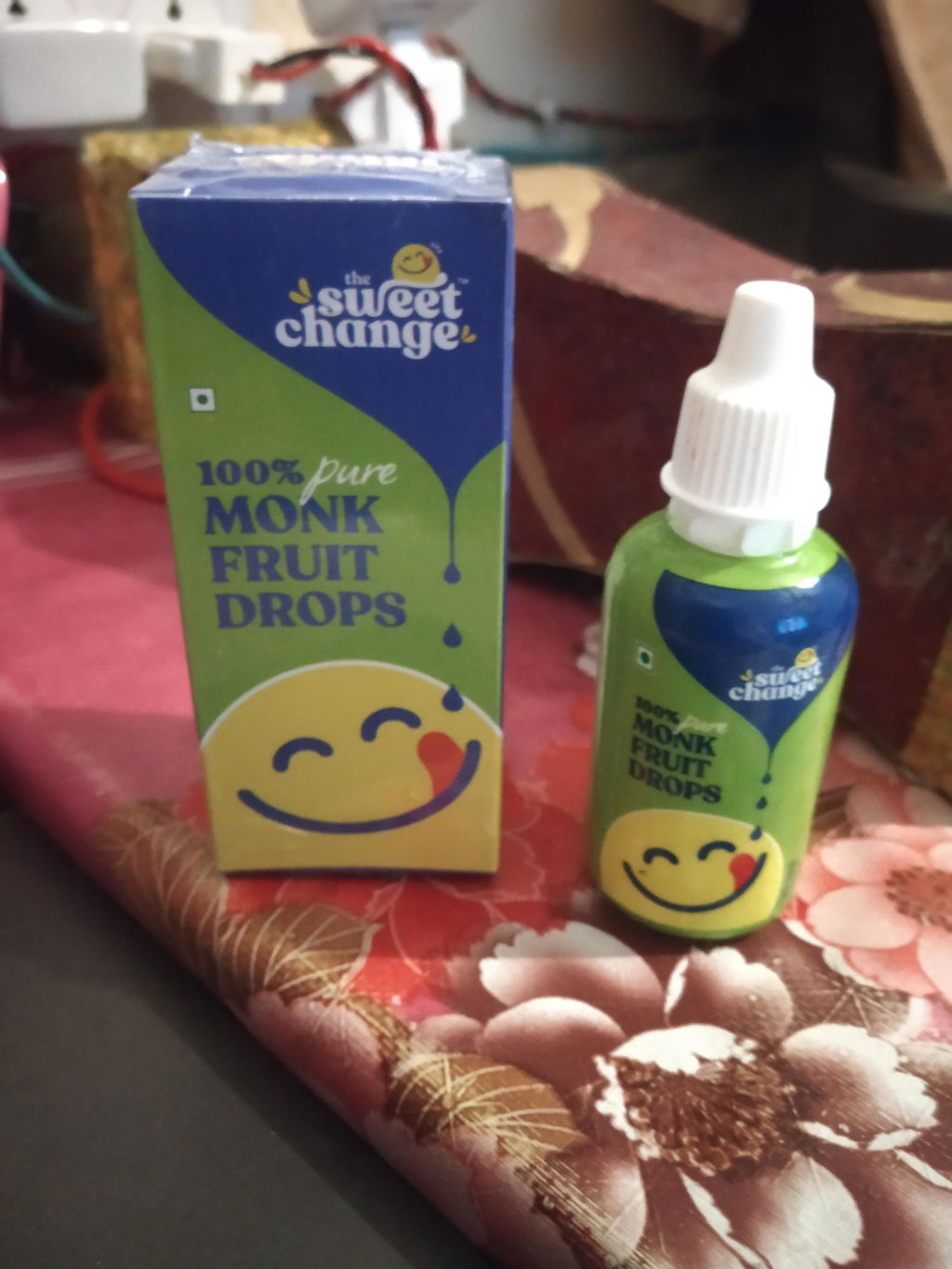
If you want your chai sweet without the sugar, our pick is a monk fruit sweetener made without sugar alcohols; ours comes as drops and powder, with sachets coming. Our guide to sweeteners explains each type, with its downsides, and the reading map below has our sweetener guides for each life stage.
Our women's health guides: where to go next
These are the questions that usually come next, each with a short answer. For the naming question, the PCOD guide linked in the first section covers the name, the confusion around it and what a scan report is really saying.
Which signs get missed?
The well-known signs are listed above. The quieter ones get left out of the conversation: periods that are heavy, and bleeding that comes without ovulation, are on the symptom list too, not only periods that stop [10].
Current guidelines also count sleep apnoea among the broader features of the condition [2]. So a heavy period, or a sleep problem a doctor has already named, belongs in the same notebook as your cycle dates.
When does an irregular period count as irregular?
At home "irregular" covers everything, including a cycle that ran late after a week of wedding travel. For an adult, from three years after her first period, a cycle counts as irregular when it is shorter than 21 days or longer than 35, or when there are fewer than eight periods in a year [2].
Teenagers get more room. In the first year after the first period, irregular cycles are a normal part of puberty, and for the next two years the range widens to 21 to 45 days [2].
A single cycle longer than 90 days, from a year after the first period, is irregular at any age, and so is no period at all by 15 [2]. Outside these numbers, doctors are asked to consider the condition and assess it, so that is the moment to book the gynaecologist [2].
Why do slim women get it too?
The causes section above has the short version: genes, androgens and insulin, with no single cause found. The next question is often about weight, because so many women are told, or tell themselves, that the condition is their own doing.
The Indian national study answers part of it. Among the women it found with the condition, 43.2% had obesity, which means more than half did not [3]. A slim woman with irregular cycles deserves the same checks as anyone else.
What does an Indian diet chart for it look like?
Search for a diet chart for the condition and you will find lists that ban dairy, wheat, rice and fruit in one go. The guidelines read differently: any way of eating that follows the healthy-eating advice for everyone brings health benefits, and doctors are asked to steer women away from diets that are unduly restrictive or unbalanced [2].
In an Indian kitchen that advice points towards more fibre-rich food: whole grains, millets, pulses, nuts and vegetables [6]. Day to day, that looks like a katori of dal at lunch and dinner, a handful of roasted chana at four o'clock instead of biscuits, and fruit as the sweet at the end of the meal. Read the guide
How much exercise do guidelines suggest?
For keeping healthy and avoiding weight gain, the advice is 150 to 300 minutes a week of moderate activity or 75 to 150 minutes of vigorous activity, and some activity is better than none [2]. Replacing sitting time with movement of any intensity, light included, brings health benefits as well [2].
Thirty minutes of brisk walking on five days reaches the lower end. Any activity that meets the guidelines has health benefits, so yoga, dance or evening badminton all qualify, and doctors are asked to advise the kind a woman can keep up, based on her own preferences and goals [2].
What helps when perimenopause starts?
Perimenopause rarely announces itself, and the mood side is the part families miss. Depression and anxiety are among its symptoms, alongside the hot flushes, so a low patch in your mid-forties may have a hormonal side worth raising with a doctor [5].
For mild hot flushes, an Indian guideline says lifestyle changes may be recommended to ease them [13]. Eating well, exercising and looking after your mental wellbeing can all help with symptoms through perimenopause and menopause [16].
What should you eat around menopause?
The symptoms and the usual age are in the menopause section above; food is the question that follows. Calcium-rich foods such as milk and yoghurt are part of the advice for eating well at this stage, within an otherwise healthy, balanced diet [16].
In an Indian kitchen that is a bowl of dahi with lunch and the milk you already put in your chai. No special menopause diet is needed on top of the plate described in the diet chart answer above.
Can a diet or yoga routine fix your hormones?
Search for a hormone diet and the promises pile up: seed cycling, special teas, a yoga pose for every gland. The evidence is plainer. For hormonal outcomes, as for weight and metabolism, there is no evidence that any one type of diet works better than another [2].
So the plain version of a hormone diet is the ordinary one above, eaten regularly, with sleep and movement beside it. Yoga earns its place the same way walking does: as activity you will keep doing, not as a pose with a special job.
What do the AMH and testosterone tests measure?
Testosterone is the androgen the lab measures first. To check for high androgens in the blood, doctors are asked to use total and free testosterone, and the free level can be estimated by a calculation you may see on the report as the free androgen index (FAI) [2].
In adults, AMH is read as a stand-in for the scan's picture of polycystic ovaries. It should not be used as the only test for the diagnosis, and doctors are asked to use either AMH or the ultrasound, not both, to avoid over-diagnosis [2].
A test result means little on its own. Take your report to your doctor, who reads it alongside your cycles and symptoms.
What can go in your chai instead of sugar?
Our pick, with PCOS and at menopause alike, as above, is a monk fruit sweetener made without sugar alcohols. Monk fruit extract is reported to be 100 to 250 times sweeter than sugar, depending on how much mogroside it contains, and the US FDA has not questioned the GRAS notices filed for it [17].
In a trial of 30 healthy men, the sugar drink caused large spikes in blood glucose and insulin within the first hour, and the monk fruit drink caused no such spike [18]. One caveat: human research on it is still thin, especially large, long-term trials [19]. In the cup, start small: a sweetener this strong is easy to overdo.
Cheat sheet
- PCOS in one line: a common, long-term hormone and metabolism condition, diagnosed on two of three signs; a scan alone is not a diagnosis.
- Three names, one condition: PCOD, the guideline name and the 2026 name; ask your doctor which they mean.
- Check your sugar at any weight: the risk of type 2 diabetes is higher whatever the scale says.
- Menopause is a stage, not an exit: the condition carries on, so the sugar and heart checks continue.
- Count the spoons: chai and mithai first; gur is still sugar.