What is inflammation? Inflammation explained, from sujan to the slow kind
 Written bySheen HitaishiChief Brand Officer and Co-Founder, The Sweet Change
 Reviewed byJatin AgnihotriCOO and Co-Founder, The Sweet Change
 Medically reviewed byManvi AgnihotriCEO and Co-Founder, The Sweet Change


Inflammation explained simply: it is your body's defence response to an injury or an infection, and in that role it helps you [1]. Short-lived (acute) inflammation brings swelling, redness and pain, then settles as you heal. It turns harmful when it fires in healthy tissue or does not switch off, and the long-running (chronic) kind, which can last months or years, is linked with heart disease, type 2 diabetes and other long-term conditions [1].
Discuss with your doctor or dietitian before changing your diet, especially if you take diabetes medicines.
On this page
- What does inflammation mean?
- Inflammation meaning in Hindi: is it just sujan?
- The five signs of inflammation
- Acute vs chronic inflammation explained
- What causes inflammation, and what is it linked with?
- What does "inflammatory" mean, and "anti-inflammatory"?
- A desk-job day through the inflammation lens
- When to see a doctor
- Everyday habits worth building
- Cheat sheet
- Sources
- Protective at heart: inflammation helps you heal; trouble starts when it fires in healthy tissue or does not switch off [1].
- Sujan is one sign of five: swelling sits beside redness, heat, pain and loss of function, and the chronic kind can show no outward signs [1][2].
- Everyday risk factors: physical inactivity, poor diet, psychological stress, infections and toxicants can promote long-running inflammation [3].
- Movement counts: in a pooled analysis of 24 trials in sedentary adults without diabetes, aerobic plus strength training lowered C-reactive protein (CRP) [4].
This is general information, not a diagnosis. If swelling, pain or fever does not settle, or you live with a long-term condition, see your doctor, and ask your doctor about treatment before taking any medicine for inflammation.
What does inflammation mean?
Maybe the word turned up on a blood report. Maybe a doctor used it about your sore knee, or a reel blamed it for everything from tiredness to belly fat. So what is inflammation, really, and should the word worry you?
Start with the inflammation meaning in plain words. Inflammation is a normal part of how your body defends itself against an injury or an infection, and in that role it does you good [1].
The word itself is a clue. It comes from the Latin inflammare, to set alight or burn, and anyone who has had an angry, swollen cut knows the feeling [2].
Here's the catch. The same response turns damaging when it switches on in healthy tissue or carries on for too long [1].
So think of inflammation as a repair crew, not an illness in itself. You want the crew to arrive when you cut your finger. You do not want it camping in your body for years.
If you want a one-line inflammation definition, that is it: a defence that helps when it is brief and well aimed, and harms when it is not. Our inflammation guide brings food, movement and the rest of the topic together in one place.
Inflammation meaning in Hindi: is it just sujan?
Look up the meaning of inflammation in Hindi, or ask at home, and most people say sujan (सूजन). Sujan means swelling, and swelling is real inflammation. But it is only one of the five classic signs.

That matters, because inflammation can also run with no outward signs at all: no puffy ankle, no red patch, nothing you could point to [1].
So the absence of sujan does not tell you much on its own. And tiredness or body aches do not prove inflammation either; those are questions for a doctor, not for a word search.
So, sujan kya hai? It is swelling, the part of inflammation you can see, while inflammation is the whole defence response behind it.
The five signs of inflammation
Picture chopping onions for dinner and nicking your finger. Soon the skin around the cut swells, turns red and hurts, and usually that settles within a few hours [1].
People have described this for about 2,000 years. Celsus, who lived around the first century, listed four signs: redness, swelling, heat and pain. In the 19th century, Virchow added a fifth, loss of function [2].
Loss of function is the one people forget. It is the swollen finger that will not bend, or the twisted ankle you cannot stand on.
Here are the five at a glance. Tumor here is Latin for swelling, not a growth [2].
| Sign | Latin name | What you notice |
|---|---|---|
| Redness | rubor | The skin around the spot looks red or darker than usual |
| Swelling (sujan) | tumor | Puffiness around the spot |
| Heat | calor | The area feels warm to the touch |
| Pain | dolor | Throbbing or tenderness |
| Loss of function | functio laesa | A finger or joint that will not move as usual |
Acute vs chronic inflammation explained
There are two main types of inflammation, and the difference is mostly about time. One is a quick fire that does its job and goes out. The other is a low smoulder that keeps going.
Acute inflammation: the quick fire
Acute inflammation fights infection and starts the work of repairing tissue [1]. It is the cut finger or the twisted ankle: local, easy to see or feel, and gone once the job is done.
That is the version you want. Without it, a small wound would have no repair crew at all.
Chronic inflammation: the slow burn
This kind can carry on for months or years [1].
Researchers also describe a whole-body (systemic) form. Social, environmental and lifestyle factors can promote it, and over time it can lead to several long-term diseases [3].
When people talk about inflammation and long-term health, this slow kind is the one they mean.
Acute and chronic inflammation at a glance
| Type | How long | Example | Helps or harms |
|---|---|---|---|
| Acute | Usually hours | A cut finger that swells, then settles | Helps you heal |
| Chronic | Months or years | Low-level inflammation that does not switch off | Linked with long-term conditions |

What causes inflammation, and what is it linked with?
Short-lived inflammation has the obvious triggers we met above: an injury or an infection. The long-running kind is harder to pin on one thing.
Several risk factors can promote the long-running kind: infections, physical inactivity, poor diet, environmental and industrial toxicants, and psychological stress [3].
Long-running inflammation is associated with a wide range of conditions [1]:
- autoimmune conditions
- heart and blood vessel disease
- gut conditions such as inflammatory bowel disease
- lung conditions such as asthma and COPD
- depression
- type 2 diabetes
- neurodegenerative conditions and some cancers
The US National Institute of Environmental Health Sciences (NIEHS) goes further and calls the chronic kind a contributing factor to more than half of deaths worldwide [1].
Linked with is not the same as caused by. Inflammation is one thread among several, which is why no single food or habit is the whole story. If the heart part of that list is the one on your mind, read how cholesterol and the heart connect.
What does "inflammatory" mean, and "anti-inflammatory"?
You will see both words on medicine strips, in diet posts and in news headlines, and they do not always mean the same thing.
In health writing, "inflammatory" describes something that causes inflammation or is part of it: an inflammatory condition, or an inflammatory marker in a blood report. In a headline, an inflammatory speech is one meant to make people angry, which has nothing to do with your body.
The anti-inflammatory meaning is simpler: something that calms or reduces inflammation. Medicines that reduce inflammation exist; ask your doctor about treatment rather than picking one off a shelf.
When a food or drink is sold as "anti-inflammatory", it is fair to ask what the claim rests on: a test-tube result, a trial in people, or nothing at all.
A desk-job day through the inflammation lens
Picture a day many of us know. A 50-minute commute sitting in a cab or the metro, nine hours at a desk, chai with two biscuits at 11 and again at 4, a deadline call at 7, and the phone in bed until past midnight.

Hold that day up against the risk-factor list above and some of it lines up. This is our own reading of that list, not a finding about any one habit:
- The sitting: the commute and the desk hours are physical inactivity, one of the listed risk factors.
- The chai-and-biscuit round: twice a day, it is the part of the day where diet comes in.
- The 7 pm deadline: pressure that returns day after day is the kind of psychological stress the list names. If that is also when the biscuits come out, our guide to stress eating looks at why.
You are not alone in that cup. In our survey of our own buyers, 64% said their sweetener goes into chai and 66% into coffee [5].
So does a day like this raise your inflammation? We cannot tell you that from one day, and we would not pin it on any single habit. The trials show something narrower, and more useful.
- Regular training: in a pooled analysis of 24 randomised trials in sedentary adults without diabetes, combined aerobic and strength training lowered CRP, a blood marker of inflammation, and TNF-alpha, though not IL-6 [4].
- Short breaks: in experiments, changes in markers such as IL-6 and CRP after light activity breaks during long sitting did not reach statistical significance; the authors see promise but call the evidence early, and the studies came from high- and upper-middle-income countries [6].
- The guideline: the WHO still advises every age group to limit time spent sitting, and its global recommendation for adults is at least 150 minutes of moderate-intensity activity a week [7].
So move most days, in proper sessions you can count. Stand up often too, because it is good for a desk body anyway, not because a two-minute stretch is a proven fix. We have written up what hours of sitting do to the body separately.
When to see a doctor
Most everyday inflammation, like the cut finger or the stubbed toe, settles on its own. Some does not, and it is not worth waiting out.
See your doctor if you notice:
- swelling, pain or fever that does not settle, or keeps coming back
- a wound that looks worse each day instead of better
- joint pain or stiffness that goes on for weeks
- something new, if you already live with a long-term condition
Everyday habits worth building
Only one habit on this list has direct evidence on inflammation markers on this page: the training result above. The others are India's and the WHO's everyday eating advice, worth following for their own sake.
- Regular movement: combined aerobic and strength training gave the clearest result we found, so it comes first.
- Whole grains, pulses and millets: the ICMR-National Institute of Nutrition advises Indians to prefer whole grains and millets to refined grains, and to combine whole grains, pulses and millets [8].
- Less free sugar: the WHO advises keeping free sugars under 10% of daily energy, about 50 g or 12 level teaspoons for an adult of healthy weight on about 2,000 calories [9]. Two teaspoons in each of three cups of chai is already six, half of that limit before any mithai.
Whether sugar itself drives inflammation is a separate question, and the evidence deserves more than one line. We look at it in our guide to sugar and inflammation.
In a lunch dabba, the grains advice looks like bajra or whole-wheat roti with dal and sabzi rather than maida and white bread. For a week of desk lunches, try these office lunch ideas that keep you full.
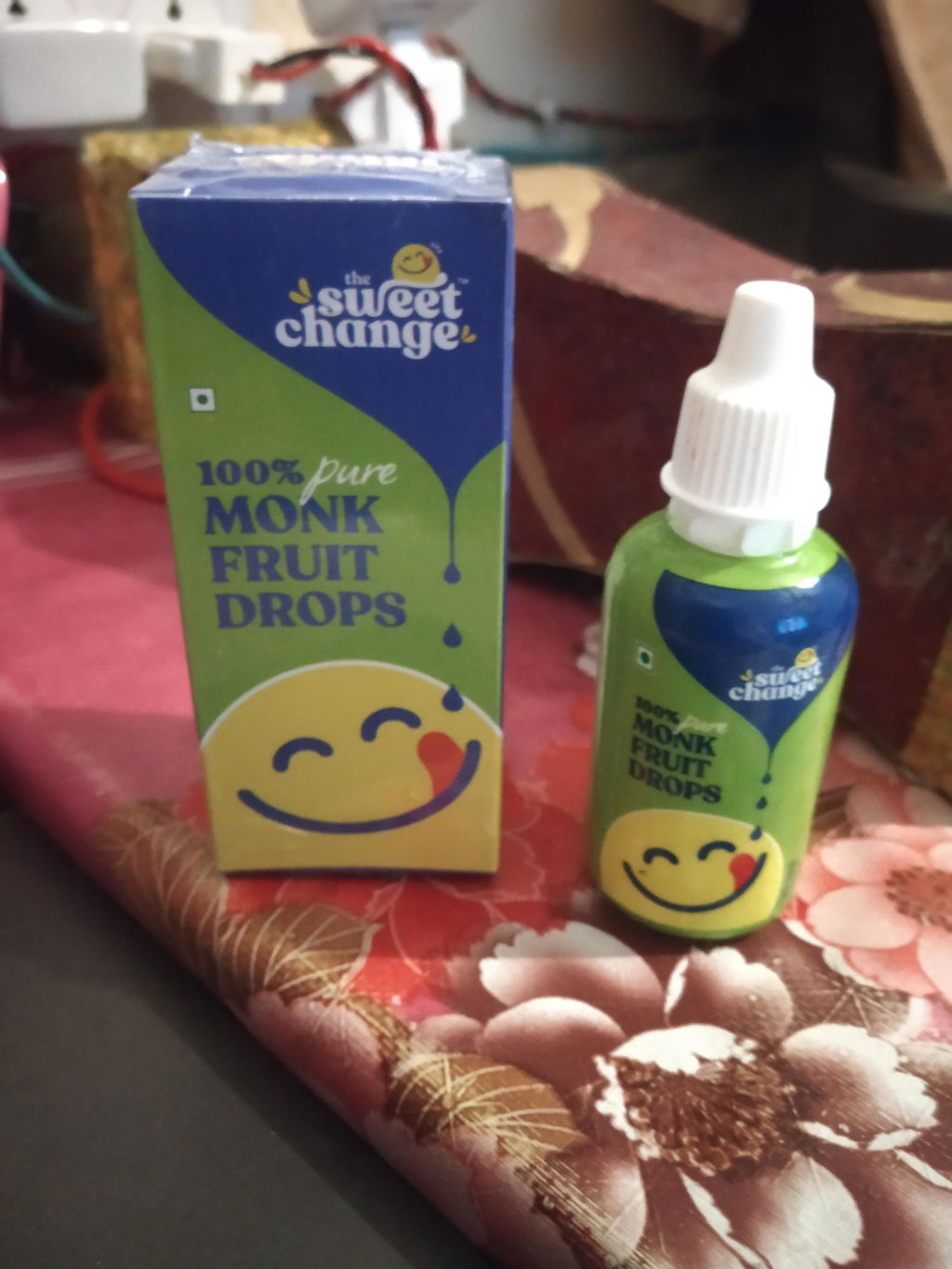
At The Sweet Change, we make a monk fruit sweetener with no erythritol or other sugar alcohols, as drops and powder, with sachets coming. It keeps the office chai sweet while the sugar spoon stays in the dabba.
Cheat sheet
- Inflammation explained in one line: a defence that helps when it is short and well aimed, and harms when it fires in healthy tissue or lingers.
- Sujan is one sign: redness, heat, pain and loss of function count too, and the chronic kind may show none.
- Time is the difference: acute usually settles in hours; chronic runs for months or years.
- Move most days: combined aerobic and strength training is where the evidence on CRP is clearest.
- Mind the cup: trim the sugar spoon in your daily chai and keep free sugars well under the WHO limit.
Questions people ask
Inflammation kya hai in Hindi?
Inflammation is the body's defence response to an injury or an infection. Most people translate it as sujan, which means swelling, but swelling is only one of the classic signs, alongside redness, heat, pain and loss of function. The US National Institute of Environmental Health Sciences notes that inflammation may also show no outward signs at all.
Body inflammation kya hota hai?
When people say body inflammation, they usually mean the long-running, whole-body kind that researchers call systemic inflammation. A large review of the research describes how infections, inactivity, poor diet, toxicants and psychological stress can promote it, and links it with heart disease, diabetes and other long-term conditions. You cannot confirm it by feel; a doctor can advise you.
Anti inflammatory kya hota hai?
Anti-inflammatory describes anything that reduces inflammation. Doctors use medicines that do this for some conditions, and the choice of medicine and dose is theirs to make with you. When a food, drink or supplement is sold as anti-inflammatory, it is fair to ask whether the claim rests on a trial in people or only on a laboratory result.
What is good for inflammation?
The clearest everyday evidence is for regular exercise. A pooled analysis of randomised trials in sedentary adults without diabetes found that combined aerobic and strength training lowered C-reactive protein, a blood marker of inflammation. Beyond that, ICMR-NIN's advice to favour whole grains, pulses and millets and the WHO's advice to limit free sugars are sensible patterns for anyone.
What fruits help with inflammation?
No single fruit switches inflammation off. ICMR-NIN's dietary guidelines for Indians advise eating more fibre-rich foods such as whole grains, millets, pulses, nuts and vegetables, and a varied plate built on those is a better bet than one fruit eaten for its reputation. Fruit still belongs on that plate; it is not a treatment on its own.
What does inflammatory mean?
In health, inflammatory describes something that causes inflammation or is part of it, such as an inflammatory condition or an inflammatory marker in a blood report. In everyday English the same word also describes speech or writing meant to provoke anger, which is why a search for its meaning can bring up both senses side by side.
> CTA · product · P4: Monk fruit sweetener, drops and powder, with sachets coming. Contains no erythritol or other sugar alcohols. See the monk fruit sweetener
Our sweetener mention on this page is our view as the makers of The Sweet Change Monk Fruit Drops and Powder. This page is not medical advice: if you have a health condition or take medicine, talk to your doctor before changing how you eat or how active you are.
 Monk Fruit Drops (100 servings)
Rs. 497.00
Monk Fruit Drops (300 servings)
Rs. 1,197.00
 Monk Fruit Powder No Erythritol (100 servings)
Rs. 675.00
Monk Fruit Powder No Erythritol (300 servings)
Rs. 1,493.00
Related articles


Written by
Sheen Hitaishi · Chief Brand Officer and Co-Founder
4 years in content writing · Sri Venkateswara College, University of Delhi
Sheen Hitaishi is Chief Brand Officer and Co-Founder of The Sweet Change, which she started with her sister, Manvi Agnihotri. She runs our social media, customer retention and customer care. Before The Sweet Change she spent four years as a content writer, most recently Senior Content Writer at Univest. She studied at Sri Venkateswara College, University of Delhi.
Disclosure: Co-founder of The Sweet Change

Reviewed by
Jatin Agnihotri · COO and Co-Founder
MBA, Indian School of Business · 12 years in technology and security
Jatin Agnihotri is COO and Co-Founder of The Sweet Change, where he runs operations, from manufacturers and vendors to shipping and logistics, and creates content for our Instagram. He spent 12 years in technology at Honda Cars India, Extramarks Education, where he was Vice President IT, and Jio Platforms. He holds an MBA from ISB.
Disclosure: Co-founder of The Sweet Change

Medically reviewed by
Manvi Agnihotri · CEO and Co-Founder
12 years in clinical nutrition, over 11,000 patients · M.Sc Food and Nutrition, silver medallist
Manvi Agnihotri is CEO and Co-Founder of The Sweet Change. She holds an M.Sc in Food and Nutrition, in which she was a silver medallist, and has led brand strategy and patient and doctor education at Breathe Well-being, a diabetes care programme. She reviews our health and nutrition pages before they go live.
Reviews: Nutrition and food science, Blood sugar and diabetes diet
Disclosure: Co-founder of The Sweet Change
Sources
- National Institute of Environmental Health Sciences (NIEHS), US National Institutes of Health. Inflammation (health topic page). NIEHS, Research Triangle Park. https://www.niehs.nih.gov/health/topics/conditions/inflammation
- Oronsky B, Caroen S, Reid T (2022). What exactly is inflammation (and what is it not?). International Journal of Molecular Sciences 23(23):14905. doi:10.3390/ijms232314905. https://pmc.ncbi.nlm.nih.gov/articles/PMC9738871/
- Furman D, Campisi J, Verdin E, et al. (2019). Chronic inflammation in the etiology of disease across the life span. Nature Medicine 25(12):1822-1832. doi:10.1038/s41591-019-0675-0. https://doi.org/10.1038/s41591-019-0675-0
- Silva FM, Duarte-Mendes P, Teixeira AM, Soares CM, Ferreira JP (2024). The effects of combined exercise training on glucose metabolism and inflammatory markers in sedentary adults: a systematic review and meta-analysis. Scientific Reports 14:1936. doi:10.1038/s41598-024-51832-y. https://doi.org/10.1038/s41598-024-51832-y
- The Sweet Change (2026). Post-purchase survey of our own buyers. Internal data; percentages are whole-number shares of the buyers who answered each question. https://www.thesweetchange.com/
- Sahabudhee A, Rao CR, Chandrasekaran B, Pedersen SJ (2023). Dose-response effects of periodic physical activity breaks on the chronic inflammatory risk associated with sedentary behavior in high- and upper-middle income countries: a systematic review and meta-analysis. Diabetes & Metabolic Syndrome: Clinical Research & Reviews 17(3):102730. doi:10.1016/j.dsx.2023.102730. https://doi.org/10.1016/j.dsx.2023.102730
- World Health Organization (2024). Physical activity, fact sheet, 26 June 2024. WHO, Geneva. https://www.who.int/news-room/fact-sheets/detail/physical-activity
- ICMR-National Institute of Nutrition (2024). Dietary Guidelines for Indians, English booklet. ICMR-NIN, Hyderabad. https://www.nin.res.in/downloads/DGI_Booklet_English_CMYK.pdf
- World Health Organization (2026). Healthy diet, fact sheet. WHO, Geneva. https://www.who.int/news-room/fact-sheets/detail/healthy-diet
The Sweet Change makes the products mentioned on this page. How we write and review