>
Short bursts are normal: stress that passes quickly is part of life; trouble starts when it runs for weeks with no break [2] [1].
Habits come first: a daily routine, sleep, movement and time with people you trust are what health guidance keeps naming [1] [5].
Meditation helps a little: one large review found small to moderate easing, and no sign it beat exercise or therapy [3].
The 4 pm biscuit has a pattern: in two small studies of women, stress went with more snacking, mainly in those who reacted most strongly [6] [7].
Help is a phone call away: if stress stops you coping, talk to a doctor; India has a free government helpline [8].
<
This is general information, not a diagnosis. If stress lasts for weeks or starts to affect your sleep, eating or work, talk to your doctor, and ask your doctor about treatment before taking any medicine or supplement for stress.
It is 9:40 and the inbox already has a few dozen unread mails. The auto is stuck at the signal, the 10 o'clock call has moved to 9:45, and your shoulders have crept up towards your ears without asking you.
This stress management guide is for that day. It is the hub of our everyday health guides on stress, desk life and inflammation, so it starts with what stress is and ends with when to get help, with the habits that have real evidence in between.
We cannot promise you a week without pressure. Nobody honestly can. What we can do is show you which small habits have research behind them, how big their effect really is, and where each one fits in an Indian office day.
What stress management actually means
Stress management is the set of everyday habits you use to notice stress early and bring your body and mind back down after it, so that a hard day does not turn into a hard month.
Stress itself is a state of worry or mental tension caused by a difficult situation, and it is a natural human response that pushes us to deal with challenges. Everyone feels it, and how we respond makes a big difference to how we feel [1]. The response is also the part you can practise.
Think of the whistle on a pressure cooker. It is useful, because it tells you something is happening. The trouble starts when it keeps whistling long after the dal is cooked.
Good stress, bad stress
Not all stress is the enemy. A little of it helps you get through the day's tasks, like the focus before a presentation, while too much can cause problems in both body and mind [1].
Stress comes in two main kinds. Acute stress is short-term and passes quickly, like the jolt before a review meeting. Chronic stress lasts for weeks or months, like a loan you worry about every night [2].
So the goal is not zero stress. It is an off-switch: a way back to calm after the jolt, before it settles in as the chronic kind.
Why managing it matters
Stress that never switches off does not stay in your head. Chronic stress can make existing health problems worse, and it may push up the use of alcohol, tobacco and other substances [1].
Research also suggests that long-running stress contributes to high blood pressure [2]. That is why stress management is important: a few daily habits are worth more than one long weekend off.
In short: you will not remove stress from a desk job, but you can give it an off-switch.
How stress shows up in a desk day
Stress rarely announces itself by name. It shows up as signs in your mood, your body and your habits, and on a desk day they tend to arrive at predictable times.
These are the common signs [1]:
- In the mind: finding it hard to relax, feeling anxious or irritable, struggling to concentrate.
- In the body: headaches or other body pains, an upset stomach.
- In your habits: trouble sleeping, and losing your appetite or eating more than usual.
Now place them on an ordinary office day. The headache that arrives during the 11 am meeting. The stomach that knots up before a review, and the 1 am ceiling-staring while you replay an email you sent at 6.
If the stomach is where stress lands for you, note when it happens for a couple of weeks; that pattern is useful to a doctor if it carries on. Guide: Read the guide
The desk-day stress map
Good stress management starts with knowing when stress turns up, so here is the same day as a map. The moments are typical examples, not survey data, and the habit in each row comes from the evidence on this page.
| Desk-day moment |
What stress often looks like |
One thing to try |
Source |
| 9:30, commute and inbox |
racing thoughts, tight shoulders |
two minutes of box breathing |
[2] |
| 11:00, back-to-back meetings |
headache, poor focus |
stand up and move between calls |
[9] |
| 1:30, lunch skipped for a call |
irritability, then the canteen samosa |
lunch at a set time |
[1] |
| 4:00, chai and biscuit |
the sweet craving |
notice the pattern; a short walk |
[6] [7] |
| 8:00, commute home |
low mood, tiredness |
call or meet someone you trust |
[1] |
| 12:30 am, reels in bed |
cannot switch off |
screens down, fixed bedtime |
[1] |
Once you can see where stress lands in your day, you know where the first habit should go.

Stress, the sweet tooth and the 4 pm biscuit
For some people, stress and the urge to snack travel together. The research shows a pattern in some people, not a rule for everyone.
The chai trolley comes round at 4. The biscuit packet is already open on the next desk, and on a bad day your hand is in it before you have decided anything.
So is it stress, or is it you? Mostly it is a pattern worth understanding, and the studies are more specific than the headlines.
What the studies saw
In one lab study of women, those whose cortisol rose most under a stressful task ate more calories on the stress day than low reactors, and more sweet food across both test days [6].
In a two-week diary study, women who logged more daily hassles also snacked more, but only those with a high cortisol response to stress [7].
Why would that be? When stress drags on, the body keeps releasing cortisol, which can increase appetite [10].
These were small studies of women only, and the ones we read did not measure weight. So they do not show that stress makes everyone eat more; they show that in some people, hard days and snacking go together.
What it means at 4 pm: the craving on your worst days is a signal, not a willpower failure. Noticing it is the first step, and a short walk before the packet gives you a moment to choose.
When stress turns into snacking
Eating because you feel stressed rather than hungry has a name, and our guide to what we know about stress eating walks through it. It explains why some people eat more under pressure while others lose their appetite.
Its 30-second check is for the moment the packet is in your hand: would any food do, or only that one? It then sets out what to do in the next 10 minutes and a few changes over the week. If the 4 pm packet is a daily habit, start there.
Why the craving lands at 4 pm
Hunger will take almost any food; a craving wants one thing. Our piece on why sugar cravings hit at 4 pm explains the usual triggers, from a stressful afternoon and a short night to habit cues like the chai trolley.
It also covers what to do in the next 10 minutes, what is going on with a sweet tooth at night, and how to keep chai and coffee in your day without the sugar spoon taking over.
How sleep and stress feed each other
A short night and a long day stack up. After one night without sleep, healthy adults in a brain-scan study wanted high-calorie foods more than when they were rested [11].
On a desk day that can look like an extra chai at 11 and something sweet by evening. If you try one sleep habit first, make it a fixed bedtime, weekends included.
What your body does in a stressful moment
In a stressful moment the body releases adrenaline and cortisol, which push your heart rate up, quicken your breathing and tense your muscles [2]. That is the racing heart before a review.
It is useful for a sprint and tiring as a daily state, which is why the habits in this guide aim at the way back down.
In short: if the 4 pm craving lands on your worst days, that is a pattern worth noticing, not a character flaw.
Stress management techniques with real evidence
The techniques with the best support are simple: slow breathing, regular movement, yoga or meditation if they suit you, a steady sleep routine and time with people you trust. None of them makes stress vanish, and the honest effect sizes are modest, which is why small daily doses matter.
Our stress management tips for a desk day come down to one rule. Pick one technique, fit it into a moment you already have, and keep it for a week.
Slow breathing and box breathing
Between two calls you have perhaps three minutes. That is enough.
Box breathing is one of the relaxation techniques that calm the body's stress response: breathe in for a count of 4, hold for 4, breathe out for at least 4, and wait for 4 before the next breath [2].
Repeat it for two minutes with the laptop lid down. Slow, deep breathing is also the easiest habit to hide in an office, because nobody needs to know you are doing it.
Move, even in short bursts
Adults are advised to get 150 to 300 minutes of moderate activity a week [9]. Walking counts, and regular daily exercise can help reduce stress [1].
The weekly figure sounds like a lot until you split it. A 10-minute walk after lunch and another after the evening commute, five days a week, already adds up to 100 minutes. Take the stairs to the canteen and you are closer still.
Yoga, from a park class to a desk day
Yoga is the technique many Indian readers already know from a parent or a park class.

One review of 42 studies found that practices including yoga asanas were associated with lower evening and waking cortisol, lower daytime systolic blood pressure and a lower resting heart rate, compared with other active programmes. The programmes varied widely, so this is a link with calmer stress markers, not proof that one routine works for everyone [4].
You do not need a perfect routine to start. A beginner class, or a 15-minute routine before the laptop opens, is a fair first step.
Meditation and mindfulness
Mindfulness means paying attention to the present moment on purpose, without judging it. Mindfulness-based stress reduction (MBSR), one structured version, teaches breathing meditation, a body scan and gentle yoga-style movement [5].
How much does it help? One large review of 47 trials with 3,515 people found meditation programmes brought small to moderate easing of anxiety and depression, while the evidence for stress itself was weaker. It found no evidence that meditation did better than exercise, medicines or talking therapies [3].
That is the honest picture: it helps some people a little, and it does not replace care when stress is serious. If ten minutes of sitting still makes you more restless, a walk may suit you better.
Sleep and a fixed routine
The 12:30 am reel scroll feels like winding down. It mostly eats into the sleep you need.
A daily schedule, with set times for things like family, exercise and chores, can help you use your time well and feel more in control. Good sleep habits include the same bedtime and wake time every day, a quiet, dark and comfortable room, less screen time before bed, and no large meals, caffeine or alcohol close to bedtime [1].
Aim for at least seven hours a night [2]. That late chai or coffee counts as caffeine, and for a desk worker the easiest change is often the phone: charge it outside the bedroom, or at least out of reach.
People, and saying no
Keep in touch with family and friends, and share what is worrying you with people you trust; connecting with others can lift your mood and help you feel less stressed. If hours of news on TV and social media add to your stress, limit them [1].
At the office, social support can also mean saying no to an extra task when the week is already full, or telling your manager early what is realistic. That is a work-life balance habit, and it is as practical as any breathing count.
The techniques at a glance
The stress management techniques side by side, with an honest note on how strong the evidence is for each:
| Technique |
How long |
When in a desk day |
How strong the evidence is |
| Box breathing |
2 minutes |
between calls |
a widely taught relaxation method [2] |
| Walking and activity |
10 minutes at a time; 150 to 300 minutes a week |
after lunch, the commute |
health-body advice [9] [1] |
| Yoga |
a beginner class or a 15-minute routine |
before work |
linked with calmer stress markers in one review [4] |
| Meditation, mindfulness |
start with a few minutes |
morning or lunch break |
small to moderate benefit in one review [3] |
| Sleep routine |
7 hours or more, fixed times |
every night |
health-body advice [1] [2] |
| Time with people |
one call or chat |
the commute home |
health-body advice [1] |
In short: pick one technique for one week, not six for one day.
The desk-life side: sitting, lunch and the long day
Stress management for office workers starts with the chair and the clock: long hours of sitting and a lunch that keeps moving make a stressful day harder to carry.
Worldwide, 31% of adults do not get the recommended amount of physical activity, and every age group is advised to limit the time spent sitting. Some activity is better than none [12].
For a desk job, that can be the whole day in a chair, from the cab to the cubicle to the sofa. The fix is less dramatic than a gym membership: small breaks, more often.
How much sitting is enough to worry about
The WHO's 2020 guideline did not set a safe number of sitting hours, because the evidence was not strong enough to put a figure on it [9]. So the practical habit is to break the sitting up rather than count it.
Stand up between calls, walk to refill your water bottle, and take one call a day on your feet.
A less sedentary day, step by step
If your day is mostly chair time, our guide to a less sedentary day is the practical next read. It explains what counts as sedentary in plain words and gives a quick check you can run on your own day.
It then lists small breaks that fit into office hours, what changes at home and on weekends, and what India's own numbers show about how much we sit.
The desk drawer
The drawer is where many afternoons are won or lost. A small box of roasted chana or makhana next to the laptop gives the 4 pm moment another option besides the open biscuit packet.
Keep it within reach and keep the biscuits out of sight; the easier choice is usually the one you make on a busy day.
Lunch on time
Lunch is the anchor of a desk day, and the first thing a long call pushes aside. Our Indian office lunch ideas give 15 boxes that travel, from roti and sabzi to chilla and leftovers remade.
That guide also covers what to pack when there is no microwave, a one-week rota, and keeping food safe in Indian heat. Pack the tiffin the night before, and the 1:30 call has one less thing to take from you.

In short: the stress plan and the desk plan are the same plan: get up often, and eat on time.
Food, chai and a sweet tooth on stressful days
On a stressful day, the basics of eating still apply: try to eat a balanced diet at regular intervals, drink enough fluids, and eat plenty of fresh fruit and vegetables when you can [1].
The call runs over, lunch gets pushed to 3, and the canteen samosa wins by default. Then comes the third chai of the afternoon, partly for the warmth and partly for the break.
Our view: keep the chai break. Ten minutes away from the screen, on your feet, talking to a colleague, brings two of the habits in this guide into one cup.
Chai is near the top of the list for our own buyers, too. In our survey of our own buyers, 64% said their sweetener goes into chai and 66% into coffee [13].
What you can change is the spoon. Two teaspoons in each of three cups is six teaspoons of sugar before dinner.
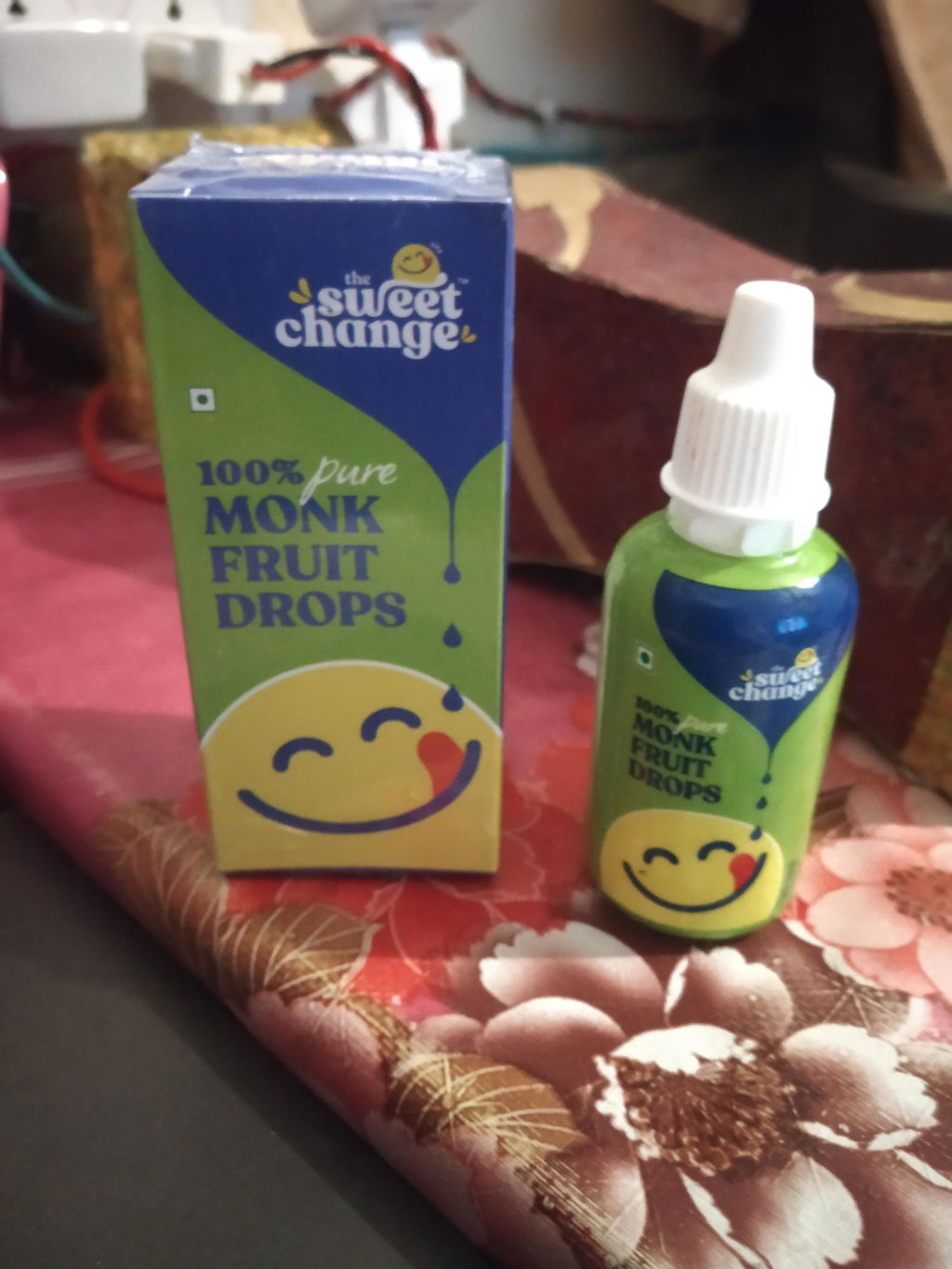
At The Sweet Change, we make a monk fruit sweetener with no erythritol or other sugar alcohols, as drops and powder, with sachets coming. It keeps the office chai sweet while the sugar spoon stays in the dabba.
In short: keep the chai ritual; the pause is the part worth protecting.
Where inflammation fits in
Research suggests chronic stress can shift the immune system towards a long-running, low-grade inflammatory state [2]. It is a link worth knowing about, not a diagnosis, and one more reason to give stress an off-switch.
You have probably seen the word everywhere: on reels, on snack packs, in a relative's WhatsApp forward. It helps to know what it really means before you buy anything because of it.
What inflammation is, in plain words
Our explainer on what inflammation is starts with the basics: it is the body's defence response, and in that role it protects you.
It then separates the quick, protective kind (acute) from the slow kind that lingers (chronic), walks through the classic signs, explains why the word turns up on so many labels, and says when swelling or pain needs a doctor.
Eating with inflammation in mind
Food is where most of the inflammation advice online ends up, often as one powder, juice or "superfood" sold as the fix. Be wary of that framing.
A plate is eaten every day for years, and no single ingredient, ours included, is a treatment.
Signs that need a doctor
Some aches come and go with a long day. Pain, swelling or redness that keeps getting worse, or arrives with a fever, is for a doctor to look at rather than a search bar.
In short: you cannot feel low-grade inflammation, but you can practise the daily habits that keep stress from running all day.
When stress needs more than self-help
Self-help stress management has limits. If stress stays for weeks, or starts to affect your sleep, eating, work or relationships, talk to a doctor or a counsellor; that is a sensible step, not a failure.
When coping gets hard, the advice is to seek help from a trusted health-care provider or another trusted person. Stressful situations can also bring on or worsen mental health conditions, most often anxiety and depression, which need health care [1].
Signs it is time to ask for help:
- It has lasted: you have felt this way for weeks, and a weekend off no longer brings you back.
- Daily life has changed: sleep, appetite or work has shifted and stayed that way.
- You are leaning on something: alcohol, tobacco or other substances are getting you through the day.
- It is getting in the way: panic, low mood or constant worry is crowding out ordinary life.
If you have thoughts of harming yourself, or panic that will not settle, you do not have to wait. Call Tele MANAS, the free mental health line of the Ministry of Health and Family Welfare, Government of India, on 14416 or 1-800 891 4416 to talk to a counsellor [8].
If you are in immediate danger, go to the nearest emergency department.
Cheat sheet
- Breathe in a box: in for 4, hold for 4, out for at least 4, wait for 4, for two minutes between calls [2].
- Move in pieces: 150 to 300 minutes of moderate activity a week, built from 10-minute walks [9].
- Fix the bedtime: same time every night, phone out of reach, no late chai [1].
- Watch the 4 pm pattern: in some people, hard days and snacking go together; notice it before the packet [6] [7].
- Ask early: stress that lasts weeks and touches sleep, food or work is worth a doctor's visit [1].
Where to go from here
Stress management is not one big fix. It is a handful of small habits, repeated until they run on their own. A few more parts of the desk day are worth a closer look.
What sets stress off in the first place
Common triggers include a job interview, an exam, an unrealistic workload, an insecure job, or conflict with family, friends or colleagues [1].
Once you know a trigger, the four A's give you a way to sort it: avoid it if you can, alter it if you cannot avoid it, adapt your expectations if it will not change, and accept what is out of your hands [14].
Writing down your own top three triggers for a week turns a vague feeling into a short list you can work on.
When the pressure comes from the job
When the job itself is the source, every habit in this guide still applies. The extra step is a written one.
Keep a note for a week of which tasks drain you most and which could move or be shared. A list on paper makes the conversation with your manager shorter and calmer.
Exercises you can do at your desk
You do not need a gym to move more on a working day. All physical activity counts, so shoulder rolls, a stretch between meetings and standing for calls all add up [12].
Eating well on an office schedule
Most office eating goes wrong at the edges of the day: a rushed breakfast, a late lunch and a heavy dinner after a long commute.
Plan those three anchors, with the tiffin packed the night before, and the rest of the day gets easier to manage.
Drinks people ask about
Haldi doodh (turmeric milk), ginger tea and green tea are the drinks people most often ask about when inflammation comes up. Our view: enjoy them as drinks, not as treatment, and watch how much sugar or honey goes into the cup.
Fruit on the desk
A piece of whole fruit on the desk is an easy alternative to the biscuit packet at 4 pm. Which fruits people ask about, and what the studies on them really show, deserves a careful look rather than a forwarded list.
Monk fruit sweetener, drops and powder, with sachets coming. Contains no erythritol or other sugar alcohols. See the monk fruit sweetener
Our sweetener mention on this page is our view as the makers of The Sweet Change Monk Fruit Drops and Powder. This page is not medical advice: if you have a health condition or take medicine, talk to your doctor before changing how you eat or how active you are.