Stress eating: why it happens and how to stop it
 Written byJatin AgnihotriCOO and Co-Founder, The Sweet Change
 Reviewed byKapil GroverrChief Business Officer and Co-Founder, The Sweet Change
 Medically reviewed byManvi AgnihotriCEO and Co-Founder, The Sweet Change


Stress eating means eating because you feel stressed rather than hungry, often reaching for food high in sugar, fat or both. A sudden shock can switch appetite off, but when stress drags on, the hormone cortisol can turn appetite up, more in some people than in others [1][2][3]. A quick hunger check, a 10-minute pause, regular meals and enough sleep are practical first steps.
Discuss with your doctor or dietitian before changing your diet, especially if you take diabetes medicines.
On this page
- What is stress eating?
- Why do I stress eat, and why do some people eat less?
- Is it hunger or is it stress? A 30-second check
- What happens when it becomes a habit?
- How to stop stress eating: a 10-minute plan
- Late nights, short sleep and the 11 pm snack
- When it needs more than tips
- The Indian kitchen version: chai, mithai and the 4 pm slump
- Where to start this week
- Sources
- It varies: stress can blunt appetite at first, while long-running stress can raise it, most in people whose cortisol rises most [1][2][3].
- Not everyone eats more: in one student survey, 38% ate more under stress and 42% ate less [4].
- The tell: real hunger can be settled by almost any food; a stress urge wants one particular food [5].
- Sleep matters: after one night without sleep, high-calorie food looked more tempting in a lab study [6].
- Know when to ask: frequent loss of control around food, with low mood, is a reason to talk to a professional.
If stress eating feels out of control, or comes with low mood or worry most days, please talk to your doctor or a mental health professional.
What is stress eating?
It is 4 pm, the deadline has moved up, and your hand is already in the biscuit packet. You had lunch two hours ago. You are not hungry, and you know it.
That is the pattern this page is about: eating to cope with a feeling rather than to answer hunger. Its plain name is stress eating, also called emotional eating or comfort eating, and eating when stressed is common. It is not a character flaw.
In one online survey of 1,234 German adults, 48% called themselves stress-eaters, and 69% of that group said they often eat more than usual when under stress [7]. That was a self-selected sample, mostly young women, so it does not tell us how common it is in India. It does tell you that you are far from alone.
It is a pattern of behaviour, not a diagnosis. When it starts to feel out of your hands, the help section further down is for you.
Why do I stress eat, and why do some people eat less?
Stress acts on appetite in two phases. In the short term, adrenaline drives the fight-or-flight response and puts eating on hold. If the stress goes on, the adrenal glands release cortisol, which can raise appetite and the drive to eat [1].
Stress also seems to pull people toward food high in fat, sugar or both, though much of that evidence comes from animal studies [1]. That is the biscuit, not the dal.
The people who feel this most are the ones whose cortisol rises most. In a lab study of 59 women, those with the biggest cortisol response ate more on the stressful day than the others, and chose more sweet food across both days [2].
A diary study found the same thing in daily life. Over 14 days, 50 women logged their hassles and snacks; busier days went with more snacking only in the women whose cortisol rose most under stress [3].
Here's the part that often gets skipped. In one survey of 212 students, 73% said stress made them snack more. Asked about the total amount they ate, though, 42% said they ate less under stress and 38% said more [4].
So stress does not push everyone the same way: in that survey, snacking went up while meal-type foods such as fruit, vegetables, meat and fish went down [4]. The urge for something sweet in particular is its own question.
Is it hunger or is it stress? A 30-second check
Before you open the packet, ask yourself four quick questions. They take less time than finding the scissors, and that small pause is often enough to break a stress eating loop.
Would any food do?
Real hunger can be settled by almost any food. A stress urge usually feels as if only one particular food will do [5].
What happens if you wait 10 minutes?
An urge you do not act on tends to build for a while and then fade, while hunger is settled by eating [5].
When did you last eat?
If your last meal was four or five hours ago, you are probably hungry, and that is fine. Eat a proper snack and move on.
What just happened?
A tense call, a message from the boss, an argument at home. Triggers like these are worth noticing: if the urge arrived right after one of them, stress is the likelier cause.
| Physical hunger | Stress hunger | |
|---|---|---|
| What settles it | Almost any food | One particular food |
| After a 10-minute wait | Still there | Often weaker |
| Last meal | Hours ago | Often recent |
| What set it off | An empty stomach | A tense moment |
What happens when it becomes a habit?
One packet on a bad day is just one packet. The question is what years of it add up to.
In a US national study of 1,138 adults aged 34 to 84, people who said they stress eat had worse blood sugar markers and slightly higher odds of prediabetes, and waist size helped explain the link [8]. That is an association measured at one point in time, not proof that stress eating causes diabetes.
Closer to home, one recent study of 3,150 Indian university students from six regions linked a pattern of eating to cope with feelings and reacting to food adverts with a higher BMI. Students with healthier habits, such as having milk and fruit regularly, tended to have a lower BMI [9].
The takeaway is calm, not alarming. The habit is worth working on for how you feel day to day, and the next section shows how.
How to stop stress eating: a 10-minute plan
You cannot delete stress from a working week. What you can change is the gap between the urge and the packet. That gap is where stress overeating gets decided.
In the moment
- Name it: say "this is stress, not hunger" and rate the urge from 1 to 10.
- Wait 10 minutes and rate it again: noting the number every 10 minutes lets you watch the urge change [5].
- Do something else with your hands: pour a glass of water, or walk to the stairs and back for 5 minutes.
- Decide on purpose: if you still want it, have a small, planned portion on a plate, sitting down, and taste it. That is mindful eating in practice: no food is forbidden, and eating on autopilot is the habit you are changing.
Your urge log
- Urge right now (1 to 10): ___
- After 10 minutes: ___
- After 20 minutes: ___
Over the week
- Regular meals: long gaps make real hunger and stress hunger harder to tell apart. Our office lunch ideas that keep you full help with the midday gap.
- A stocked dabba: keep the snacks you would be happy to eat within reach, so the easy choice is a good one.
- A food diary with a mood column: for one week, jot down what you ate, when, and how you felt. Patterns show up fast, such as boredom after lunch or tension before a review.
- Move a little, often: if your day is mostly chair, our guide to what a sedentary lifestyle does to your body has simple desk-day breaks.
Late nights, short sleep and the 11 pm snack
The laptop is still open at 11, and the biscuit tin is calling. Stress eating at night is often as much a sleep problem as a willpower one.
In a lab study, after one night without sleep, people wanted high-calorie foods more, and activity fell in the front parts of the brain that help weigh up choices [6]. The more sleep-deprived they felt, the bigger the pull.
So a tired brain is worse at saying "not now". Protecting your sleep is one of the quieter ways to make the late-night urge easier to handle.
If deadlines keep you up, set a kitchen closing time, brush your teeth after dinner, and keep the biscuit tin out of sight of your desk.
When it needs more than tips
Some stress eating during a hard patch is a common reaction. Sometimes it is a sign that you need more support than a plan on a page can give.
Please talk to someone if you notice any of these:
- Losing control: eating a large amount in one go and feeling you cannot stop.
- Secrecy: eating in private or hiding food or wrappers.
- Low mood: guilt, shame or low mood after eating, most days.
- Worry: constant worry about your weight, your eating or your health.
Some of these can point to an eating disorder such as binge eating disorder, which a professional can assess properly. A doctor, a counsellor or a registered dietitian can help, and asking early is a sensible step, not a last resort.
The Indian kitchen version: chai, mithai and the 4 pm slump
The 4 pm office chai arrives with a plate of biscuits. In exam season the namkeen packet lives on the study table. At a tense family function, the mithai box goes round twice.
For many of us, comfort eating has a cup of chai at its centre. In our survey of our own buyers, 64% said their sweetener goes into chai and 66% into coffee [10].
Keep a few easy options handy for those moments:
- Roasted chana: a katori on your desk instead of the biscuit plate.
- Fruit: a cut guava, an apple or a banana.
- Dahi: a small bowl of curd in the office fridge.
- Nuts: a small handful, not the whole jar.
ICMR-NIN advises choosing whole grains and millets over refined grains and eating more fibre-rich foods such as pulses, nuts and vegetables [11]. In the German survey, fresh fruit was the swap people named most often for chocolate [7].
If your comfort ritual is a sweet chai, keep the chai and cut the added sugar, a spoon at a time. The WHO advises keeping free sugars under 10% of daily energy, and 5% or less for possible further benefit [12].
Chai bina chain kahan, so keep the cup. If you want to know how the sweetener options differ, start with our guide to sweetener types.
Where to start this week
Stress eating is a common response to pressure, and it shifts with small, repeatable changes more than with willpower. Pick one change, such as the 10-minute wait, a stocked dabba or a kitchen closing time, and keep it for a fortnight before adding the next. For more on daily habits, browse our everyday health guides.
Cheat sheet
- Ask for help early: loss of control, secrecy or low mood most days is a reason to talk to a professional.
- Check first: if any food would do, it is probably hunger; if only one food will do, it is probably stress.
- Wait 10 minutes: rate the urge, wait, rate it again.
- Do not skip meals: regular meals make stress hunger easier to spot.
- Guard your sleep: a tired brain finds high-calorie food harder to resist.
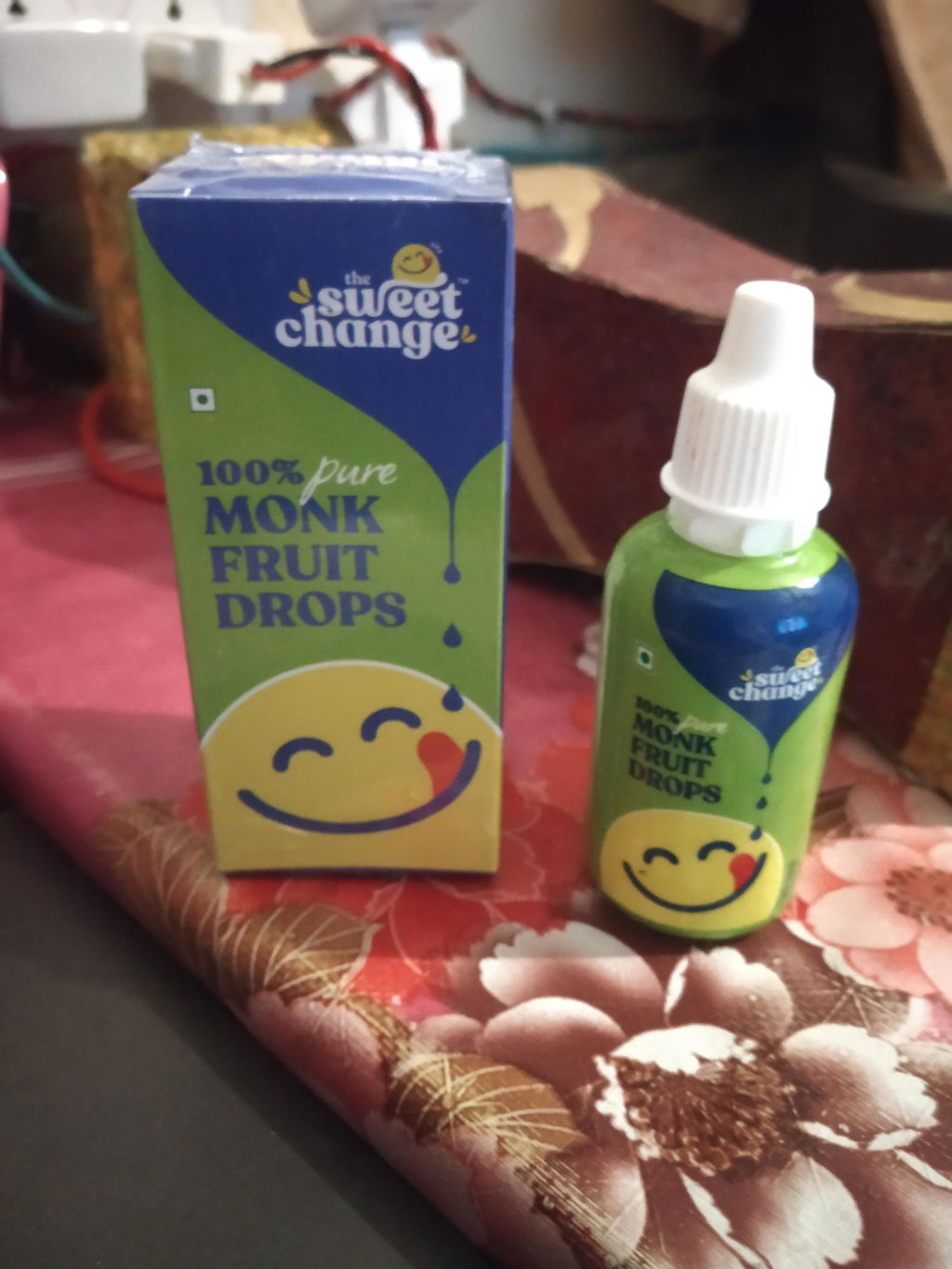
Monk fruit sweetener, drops and powder, with sachets coming. Two drops replace a teaspoon of sugar, and the Powder is made with monk fruit, guar fibre and allulose, with no erythritol. See the monk fruit sweetener
Our sweetener mention on this page is our view as the makers of The Sweet Change Monk Fruit Drops and Powder.
Questions people ask
Can stress affect your eating habits?
Yes, stress can change how much you eat, what you choose and when you eat. A 1999 survey of university students found most said they snacked more under stress, while some ate more overall and others ate less. The same students said they ate fewer meal-type foods such as fruit and vegetables when stressed.
How does stress affect eating habits?
In the short term, adrenaline tends to put appetite on hold. If stress lasts, the hormone cortisol can raise appetite and the pull toward sweet and fatty food, as Harvard Health Publishing explains. A lab study and a diary study in women found the effect was strongest in those whose cortisol rose most under stress.
Does stress make you eat more?
Not always. In a 1999 survey of university students, roughly as many people said they ate less under stress as said they ate more, though most said they snacked more. Small lab and diary studies in women suggest people whose cortisol rises most under stress are the ones likeliest to eat more.
Is eating under stress an eating disorder?
Not by itself: eating a bit more, or differently, during a hard week is a common response to stress. It becomes a concern when eating feels out of control, happens in secret or in large amounts, or leaves you low most days. Then a doctor, counsellor or registered dietitian can help you work out what is going on.
Why do I stress eat at night?
Late nights add tiredness to stress. In a 2013 lab study, people kept awake for one night wanted high-calorie foods more, and the brain areas that weigh up choices were less active. Long gaps since dinner and snacks kept near the desk make the late-night urge harder to resist.
Why do I crave sweets when I am stressed?
When stress lasts, cortisol can raise appetite, and stress seems to push people toward food high in sugar, fat or both, as Harvard Health Publishing describes. In a 2001 lab study, women whose cortisol rose most under stress chose more sweet food.
 Monk Fruit Drops (100 servings)
Rs. 497.00
Monk Fruit Drops (300 servings)
Rs. 1,197.00
 Monk Fruit Powder No Erythritol (100 servings)
Rs. 675.00
Monk Fruit Powder No Erythritol (300 servings)
Rs. 1,493.00
Related articles


Written by
Jatin Agnihotri · COO and Co-Founder
MBA, Indian School of Business · 12 years in technology and security
Jatin Agnihotri is COO and Co-Founder of The Sweet Change, where he runs operations, from manufacturers and vendors to shipping and logistics, and creates content for our Instagram. He spent 12 years in technology at Honda Cars India, Extramarks Education, where he was Vice President IT, and Jio Platforms. He holds an MBA from ISB.
Disclosure: Co-founder of The Sweet Change

Reviewed by
Kapil Groverr · Chief Business Officer and Co-Founder
IIM Lucknow alumnus · 18 years in marketing
Kapil Groverr is Co-Founder and Chief Business Officer of The Sweet Change, where he leads growth and marketing. He has 18 years in marketing, most recently as Vice President Marketing at Breathe Well-being and before that Head of Digital Marketing at King Koil. An IIM Lucknow alumnus, he writes our sweetener guides and comparisons.
Writes about: Sweetener guides and comparisons
Disclosure: Co-founder of The Sweet Change

Medically reviewed by
Manvi Agnihotri · CEO and Co-Founder
12 years in clinical nutrition, over 11,000 patients · M.Sc Food and Nutrition, silver medallist
Manvi Agnihotri is CEO and Co-Founder of The Sweet Change. She holds an M.Sc in Food and Nutrition, in which she was a silver medallist, and has led brand strategy and patient and doctor education at Breathe Well-being, a diabetes care programme. She reviews our health and nutrition pages before they go live.
Reviews: Nutrition and food science, Blood sugar and diabetes diet
Disclosure: Co-founder of The Sweet Change
Sources
- Harvard Health Publishing (2012, updated 15 February 2021). Why stress causes people to overeat. Harvard Medical School. https://www.health.harvard.edu/healthy-aging-and-longevity/why-stress-causes-people-to-overeat
- Epel E, Lapidus R, McEwen B, Brownell K (2001). Stress may add bite to appetite in women: a laboratory study of stress-induced cortisol and eating behavior. Psychoneuroendocrinology 26(1):37-49. doi:10.1016/s0306-4530(00)00035-4. https://doi.org/10.1016/s0306-4530(00)00035-4
- Newman E, O'Connor DB, Conner M (2007). Daily hassles and eating behaviour: the role of cortisol reactivity status. Psychoneuroendocrinology 32(2):125-132. doi:10.1016/j.psyneuen.2006.11.006. https://doi.org/10.1016/j.psyneuen.2006.11.006
- Oliver G, Wardle J (1999). Perceived effects of stress on food choice. Physiology & Behavior 66(3):511-515. doi:10.1016/s0031-9384(98)00322-9. https://doi.org/10.1016/s0031-9384(98)00322-9
- Cambridge University Hospitals NHS Foundation Trust. Dealing with food cravings (patient information leaflet). https://www.cuh.nhs.uk/patient-information/dealing-with-food-cravings/
- Greer SM, Goldstein AN, Walker MP (2013). The impact of sleep deprivation on food desire in the human brain. Nature Communications 4:2259. doi:10.1038/ncomms3259. https://doi.org/10.1038/ncomms3259
- Gemesi K, Holzmann SL, Kaiser B, et al. (2022). Stress eating: an online survey of eating behaviours, comfort foods, and healthy food substitutes in German adults. BMC Public Health 22:391. doi:10.1186/s12889-022-12787-9. https://doi.org/10.1186/s12889-022-12787-9
- Tsenkova V, Boylan JM, Ryff C (2013). Stress eating and health: findings from MIDUS, a national study of US adults. Appetite 69:151-155. doi:10.1016/j.appet.2013.05.020. https://pmc.ncbi.nlm.nih.gov/articles/PMC3733123/
- Mahra GS, Joshi P, Satyapriya, et al. (2026). Psychosocial and dietary influences on eating behaviors and body mass index among geographically diverse Indian university students. Scientific Reports 16:23865. doi:10.1038/s41598-026-48491-6. https://doi.org/10.1038/s41598-026-48491-6
- The Sweet Change (2026). Post-purchase survey of our own buyers. Internal data; percentages are whole-number shares of the buyers who answered each question. https://www.thesweetchange.com/
- ICMR-National Institute of Nutrition (2024). Dietary Guidelines for Indians (booklet). ICMR-NIN, Hyderabad. https://www.nin.res.in/downloads/DGI_Booklet_English_CMYK.pdf
- World Health Organization. Healthy diet, fact sheet. WHO, Geneva. https://www.who.int/news-room/fact-sheets/detail/healthy-diet
The Sweet Change makes the products mentioned on this page. How we write and review