Sugar cravings: what they mean and what to do in the moment
 Written byKapil GroverrChief Business Officer and Co-Founder, The Sweet Change
 Reviewed byJatin AgnihotriCOO and Co-Founder, The Sweet Change
 Medically reviewed byManvi AgnihotriCEO and Co-Founder, The Sweet Change


A sugar craving is a strong urge for something sweet that feels as if only that food will do, unlike hunger, which almost any food can settle [1]. Sugar cravings, or sweet cravings as many people call them, can follow stress, a sleepless night or a habit cue such as the 4 pm chai [2][3][4]. They tend to build and then fade, so waiting a few minutes is a fair first step [1].
Discuss with your doctor or dietitian before changing your diet, especially if you take diabetes medicines.
On this page
- What does a sugar craving mean?
- Why cravings show up: the short version
- Is sugar a drug?
- Sugar craving deficiency: what the evidence shows
- Craving sugar at night
- How to stop sugar cravings in the next 10 minutes
- Chai, coffee and fruit: an Indian kitchen guide
- When a craving is worth checking with a doctor
- In short: what to do next time
- Sources
- Craving or hunger: a craving wants one food, while hunger settles for almost any food [1].
- Two common triggers: stress and a sleepless night can both raise the pull of sweet or high-calorie food in some people [2][3].
- Is sugar a drug: one careful review found little evidence that sugar is addictive in people [5].
- Deficiency: we found no good evidence that a vitamin or mineral shortfall causes sugar cravings.
- Ride it out: a craving tends to build and then fade, so a 10-minute pause is a fair first test [1].
If you have strong cravings along with constant thirst, frequent urination or shaky spells, please check with your doctor and get your blood sugar tested.
What does a sugar craving mean?
It is 4 pm. Lunch was fine, you are not hungry, and yet nothing will do except a biscuit. Or two.
A sugar craving is a strong, specific urge for something sweet. Hunger can be settled by almost any food, while a craving feels as if only the food you have in mind will do [1].
That is the plain sugar cravings meaning, and it is why a plate of dal-chawal does nothing for a craving for one gulab jamun in a katori. Sweet cravings are about one food and one taste, and often one moment of the day.
Cravings can also be learned. Researchers describe a craving as a conditioned response, and what is learned can also be unlearned [4]. So if your chai has always come with a biscuit, the chai on its own can start the urge.
The 10-minute plan further down is one way to start unlearning it.
| Hunger | Sugar craving | |
|---|---|---|
| What settles it | Almost any food | Only the food you have in mind [1] |
| What it is about | Your body's need for food | One taste, usually sweet |
| What sets it off | Time since your last meal | A cue: a feeling, a time of day, a habit [4] |
| If you wait | You are still hungry | It often builds, then fades [1] |
Why cravings show up: the short version
No single cause explains all sugar cravings, and on a bad day a few of them stack up. Four come up again and again.
Stress
A tense day at work, or a deadline that will not move. That is often when the hand reaches for the tin.
In a lab study of 59 women, those whose stress hormone cortisol rose most under stress ate more sweet food than those whose cortisol rose less [2]. It was a small study in women only, so read it as a pattern in some people, not a rule for everyone.
A sleepless night
After one night without sleep, people in a brain-scan study wanted high-calorie foods more than when they were rested [3]. The study looked at high-calorie food in general rather than sugar alone, so treat it as a nudge toward the biscuit tin, not proof of a sugar effect.
Cutting one food out hard
Banning one food for a short time tends to raise cravings for that food, while eating less overall over the long term seemed to lower cravings in studies of overweight adults [4]. So a strict "no sweets ever" rule can backfire early on, before it ever gets easier.
Habit cues
Chai time, the mithai after dinner, the office cake on someone's birthday. Each of these is a cue, and a learned urge tends to arrive on cue.
Constant sugar cravings, or odd sugar cravings that feel new for you, are worth a closer look. Start with these four triggers, and read the doctor section below if the cravings come with other signs.
Is sugar a drug?
You may have read that sugar hits the brain the way a drug does. It makes a good headline, and the evidence in people tells a quieter story.
The theory that sugar changes the brain the way addictive drugs do has become popular, yet one careful review of the human and animal research found little evidence that sugar is addictive in people [5].
In animal studies, binge-like eating showed up only when sugar was given on and off. The authors think that on-and-off access to tasty food explains it, more than anything sugar does to brain chemistry [5].
That is one review, and the addiction idea still has supporters, so the debate is not settled. What it means for you: the pull you feel is real, and calling it an addiction mostly makes you feel worse about a habit you can change.
Sugar craving deficiency: what the evidence shows
Search this and you will be told you are low on magnesium, or iron, or something else that comes in a bottle.
We looked for human studies showing that a lack of magnesium or any other nutrient causes sugar cravings, and we did not find good evidence for it. The nearest research we found looks at dieting and cutting foods out, not at missing nutrients [4].
So the sugar craving deficiency idea is, for now, more search result than science. If you feel tired all the time, that is a reason to see a doctor and get checked, not to guess at the chemist's shelf.
Craving sugar at night
Dinner is done, the dishes are done, the TV is on, and the mithai tin starts calling. In many homes, "khane ke baad thoda meetha" is close to a family rule.
Sugar cravings at night are often several triggers meeting at once: a long day, tiredness and the after-dinner habit. After a sleepless night, the pull toward high-calorie food can be stronger the next day, as in the brain-scan study earlier.
A few changes that fit an Indian evening:
- Plan the evening bite: if dinner is late, a small planned snack at 6 or 7, such as a fruit or a handful of roasted chana for some protein, beats a raid on the tin at 11.
- Close the kitchen: brushing your teeth soon after dinner is a simple signal to yourself that eating is over for the day.
- Out of sight: keep the mithai box in a high cupboard, not on the dining table.
- Fix the afternoon first: a proper lunch makes the evening easier, and our lunches that keep you full through the afternoon are built for a desk day.
How to stop sugar cravings in the next 10 minutes
You cannot always prevent a craving, but you can often wait one out. A craving tends to build at first and then fade if you do not act on it, and riding it out this way is called urge surfing [1].
A 10-minute plan for dealing with sugar cravings as they hit:
- Rate it: give the urge a score from 1 to 10 right now [1].
- Name what you want: a sweet taste, a break from the screen, comfort after a hard call, or something to chew, in which case sugar-free chewing gum may do.
- Do something else: step out for a short walk, call someone, drink a glass of water or make a hot drink without sugar while the minutes pass.
- Rate it again: after ten minutes, score the urge again; it may well have eased by then [1].
- Allow a planned portion: if it is still strong, have one piece on a plate, sitting down, and eat it slowly with attention, the idea behind mindful eating.
The score lets you see the curve for yourself. After a few rounds, you may find that the urge at minute one is not the urge at minute ten.
Chai, coffee and fruit: an Indian kitchen guide
For many of us, the sweetest moment of the day comes in a cup. In our survey of our own buyers, 66% said their sweetener goes into coffee and 64% into chai [6].
Chai: when the craving is a tea habit
Two spoons in every cup, three cups a day, and the sweet taste becomes part of the chai itself. Some people cut one spoon at a time; others would rather keep the sweet taste and drop the added sugar. Before you change the cup, it helps to see how sweeteners compare.
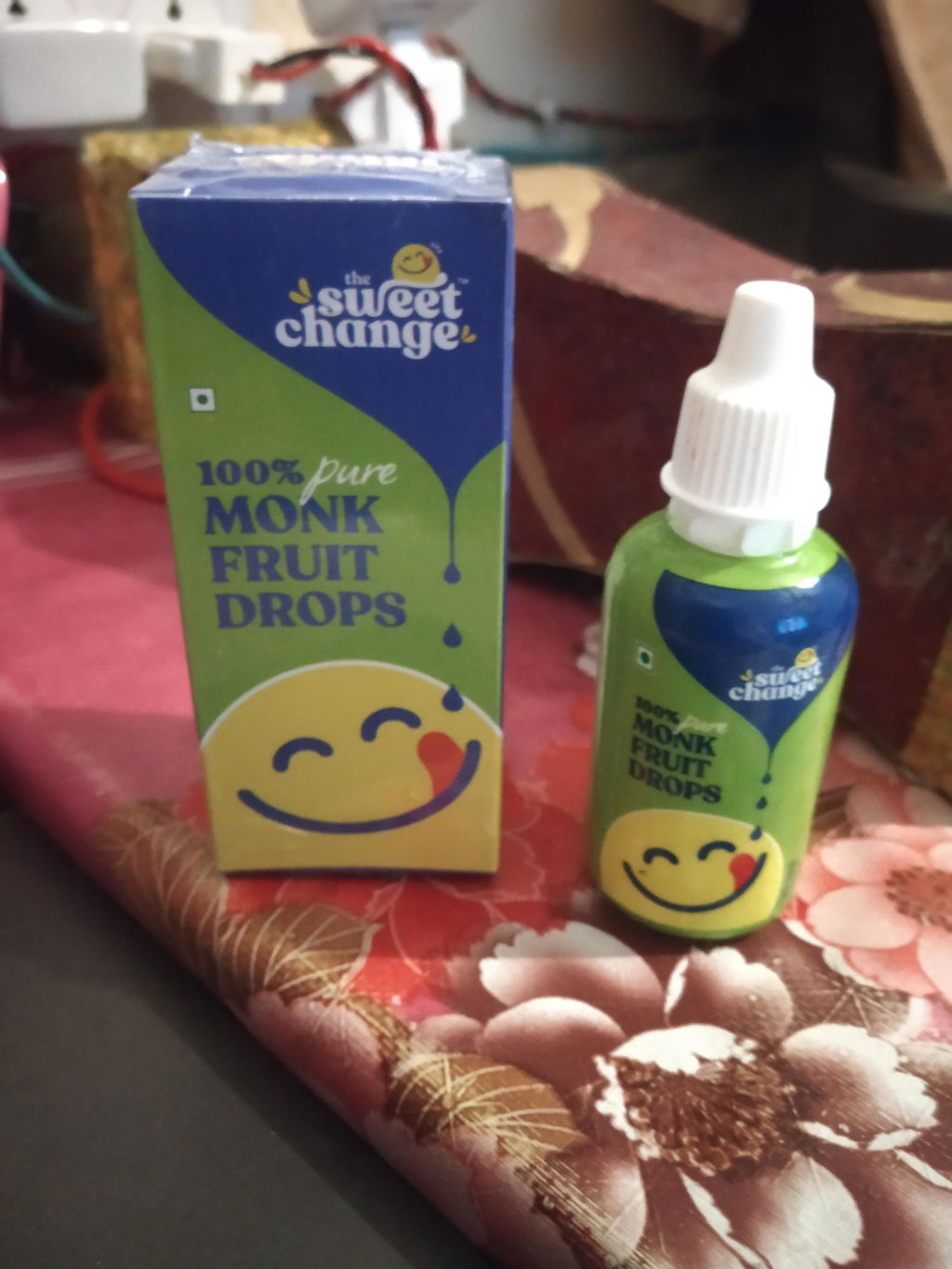
At The Sweet Change, we make a monk fruit sweetener with no erythritol or other sugar alcohols, as drops and powder, with sachets coming. Two drops of our Monk Fruit Drops replace a teaspoon of sugar, with zero sugar and zero calories per serving.
So a chai that took two spoons of sugar takes four drops. Taste, then adjust.
Coffee: the cup that "needs" a biscuit
Coffee sugar cravings often have less to do with the coffee than with what has always come with it: the biscuit and the break from work. That is the learned cue from earlier, at work in your mug.
Change one part of the ritual at a time. Swap the biscuit for a few roasted makhana, or take the coffee on a short walk instead of at the desk.
Fruit, dates and a ripe banana
Fruit is often already in the house. In an online survey of German adults, fresh fruit was the healthier swap people named most often for chocolate [7].
A ripe banana, two or three dates or a few slices of guava give you the sweet taste in a whole food, with its fibre. So is fruit good for sugar cravings? As a swap for a second piece of mithai, it is a sensible one.
Free sugars are sugars added to food or drink by the maker, the cook or you, plus the sugar in honey, syrups and fruit juice. The WHO advises keeping them under 10% of a day's energy, and says 5% or less may bring extra health benefits [8].
Gur stirred into chai still counts, and so does the juice, so eat the banana rather than drink it.
When a craving is worth checking with a doctor
Sometimes a craving travels with other signs, and then it deserves a blood test rather than a plan.
Feeling very thirsty, passing urine more often than usual, blurred vision, feeling tired and losing weight without trying are listed among the symptoms of diabetes [9]. Diabetes can be picked up early with a fairly inexpensive blood glucose test [9].
If strong sugar cravings come with any of these signs, see your doctor and ask for a blood sugar test. Shaky or sweaty spells are another reason to see your doctor soon.
If you already live with diabetes or prediabetes, our diabetes guide explains the tests and what the numbers mean.
In short: what to do next time
Sugar cravings are a learned and very human urge, and many of them pass if you give them a few minutes. Notice the trigger, wait it out once, and change the cup you drink most often.
Cheat sheet
- Know the signs: cravings with constant thirst, frequent urination or weight loss you cannot explain need a blood test.
- Name it: a craving wants one food; hunger takes almost any food.
- Check the triggers: stress, a sleepless night, a strict ban or a habit cue.
- Give it ten minutes: rate the urge, do something else, then rate it again.
- Change the cup: start with the chai or coffee you drink most often.
Monk fruit sweetener, drops and powder, with sachets coming. Contains no erythritol or other sugar alcohols. See the monk fruit sweetener
Our sweetener mention on this page is our view as the makers of The Sweet Change Monk Fruit Drops and Powder. This page is not medical advice: if you have a health condition or take medicine, talk to your doctor before changing how you eat.
Questions people ask
Is sugar a drug?
Not in the way addictive drugs are, on the current evidence in people. A careful review of human and animal research found little evidence of sugar addiction in humans, and the binge-like eating seen in animals appeared only when sugar was given on and off. Some researchers still argue the other way, so the debate is open.
Is a sugar craving a sign of a deficiency?
We looked for human studies showing that a lack of magnesium, iron or another nutrient causes sugar cravings, and did not find good evidence. The nearest research we found looks at dieting and cutting foods out, not at missing nutrients. If you feel tired all the time, see a doctor for a check rather than guessing with supplements.
What do odd sugar cravings mean?
Often they trace back to a cue you have not noticed yet: stress, a sleepless night or a new routine that pairs a time of day with something sweet. Researchers describe cravings as a learned response, which can be unlearned. If strong cravings come with constant thirst or weight loss you cannot explain, see a doctor.
Why do I want something sweet with my coffee?
Because the two have been paired so often. Researchers describe a craving as a conditioned response: a cue, such as your usual coffee break, can set off the urge for the biscuit that tends to come with it. The same research says such responses can be unlearned, so change one part of the ritual at a time.
Is a banana good for a sugar craving?
A ripe banana is a sensible swap when you want something sweet, because it gives you the taste in a whole food. In an online survey of German adults, fresh fruit was the healthier swap people named most often for chocolate. Under the WHO's definition, fruit juice counts as free sugar, so eat the banana rather than drink it.
Is it normal to crave sugar at night?
Night is when several known craving triggers meet: tiredness, a long day and the habit of something sweet after dinner. A brain-scan study found that people who had missed a night's sleep wanted high-calorie food more. If strong night cravings come with constant thirst or passing urine often, the WHO lists those among diabetes symptoms, so see a doctor.
 Monk Fruit Drops (100 servings)
Rs. 497.00
Monk Fruit Drops (300 servings)
Rs. 1,197.00
 Monk Fruit Powder No Erythritol (100 servings)
Rs. 675.00
Monk Fruit Powder No Erythritol (300 servings)
Rs. 1,493.00
Related articles


Written by
Kapil Groverr · Chief Business Officer and Co-Founder
IIM Lucknow alumnus · 18 years in marketing
Kapil Groverr is Co-Founder and Chief Business Officer of The Sweet Change, where he leads growth and marketing. He has 18 years in marketing, most recently as Vice President Marketing at Breathe Well-being and before that Head of Digital Marketing at King Koil. An IIM Lucknow alumnus, he writes our sweetener guides and comparisons.
Writes about: Sweetener guides and comparisons
Disclosure: Co-founder of The Sweet Change

Reviewed by
Jatin Agnihotri · COO and Co-Founder
MBA, Indian School of Business · 12 years in technology and security
Jatin Agnihotri is COO and Co-Founder of The Sweet Change, where he runs operations, from manufacturers and vendors to shipping and logistics, and creates content for our Instagram. He spent 12 years in technology at Honda Cars India, Extramarks Education, where he was Vice President IT, and Jio Platforms. He holds an MBA from ISB.
Disclosure: Co-founder of The Sweet Change

Medically reviewed by
Manvi Agnihotri · CEO and Co-Founder
12 years in clinical nutrition, over 11,000 patients · M.Sc Food and Nutrition, silver medallist
Manvi Agnihotri is CEO and Co-Founder of The Sweet Change. She holds an M.Sc in Food and Nutrition, in which she was a silver medallist, and has led brand strategy and patient and doctor education at Breathe Well-being, a diabetes care programme. She reviews our health and nutrition pages before they go live.
Reviews: Nutrition and food science, Blood sugar and diabetes diet
Disclosure: Co-founder of The Sweet Change
Sources
- Cambridge University Hospitals NHS Foundation Trust. Dealing with food cravings (patient information leaflet). CUH, Cambridge. https://www.cuh.nhs.uk/patient-information/dealing-with-food-cravings/
- Epel E, Lapidus R, McEwen B, Brownell K (2001). Stress may add bite to appetite in women: a laboratory study of stress-induced cortisol and eating behavior. Psychoneuroendocrinology 26(1):37-49. doi:10.1016/s0306-4530(00)00035-4. https://doi.org/10.1016/s0306-4530(00)00035-4
- Greer SM, Goldstein AN, Walker MP (2013). The impact of sleep deprivation on food desire in the human brain. Nature Communications 4:2259. doi:10.1038/ncomms3259. https://doi.org/10.1038/ncomms3259
- Meule A (2020). The psychology of food cravings: the role of food deprivation. Current Nutrition Reports 9:251-257. doi:10.1007/s13668-020-00326-0. https://doi.org/10.1007/s13668-020-00326-0
- Westwater ML, Fletcher PC, Ziauddeen H (2016). Sugar addiction: the state of the science. European Journal of Nutrition 55(Suppl 2):55-69. doi:10.1007/s00394-016-1229-6. https://doi.org/10.1007/s00394-016-1229-6
- The Sweet Change (2026). Post-purchase survey of our own buyers. Internal data; percentages are whole-number shares of the buyers who answered each question. https://www.thesweetchange.com/
- Gemesi K, Holzmann SL, Kaiser B, et al. (2022). Stress eating: an online survey of eating behaviours, comfort foods, and healthy food substitutes in German adults. BMC Public Health 22:391. doi:10.1186/s12889-022-12787-9. https://doi.org/10.1186/s12889-022-12787-9
- World Health Organization (2026). Healthy diet, fact sheet. WHO, Geneva. https://www.who.int/news-room/fact-sheets/detail/healthy-diet
- World Health Organization (2024). Diabetes, fact sheet, 14 November 2024. WHO, Geneva. https://www.who.int/news-room/fact-sheets/detail/diabetes
The Sweet Change makes the products mentioned on this page. How we write and review