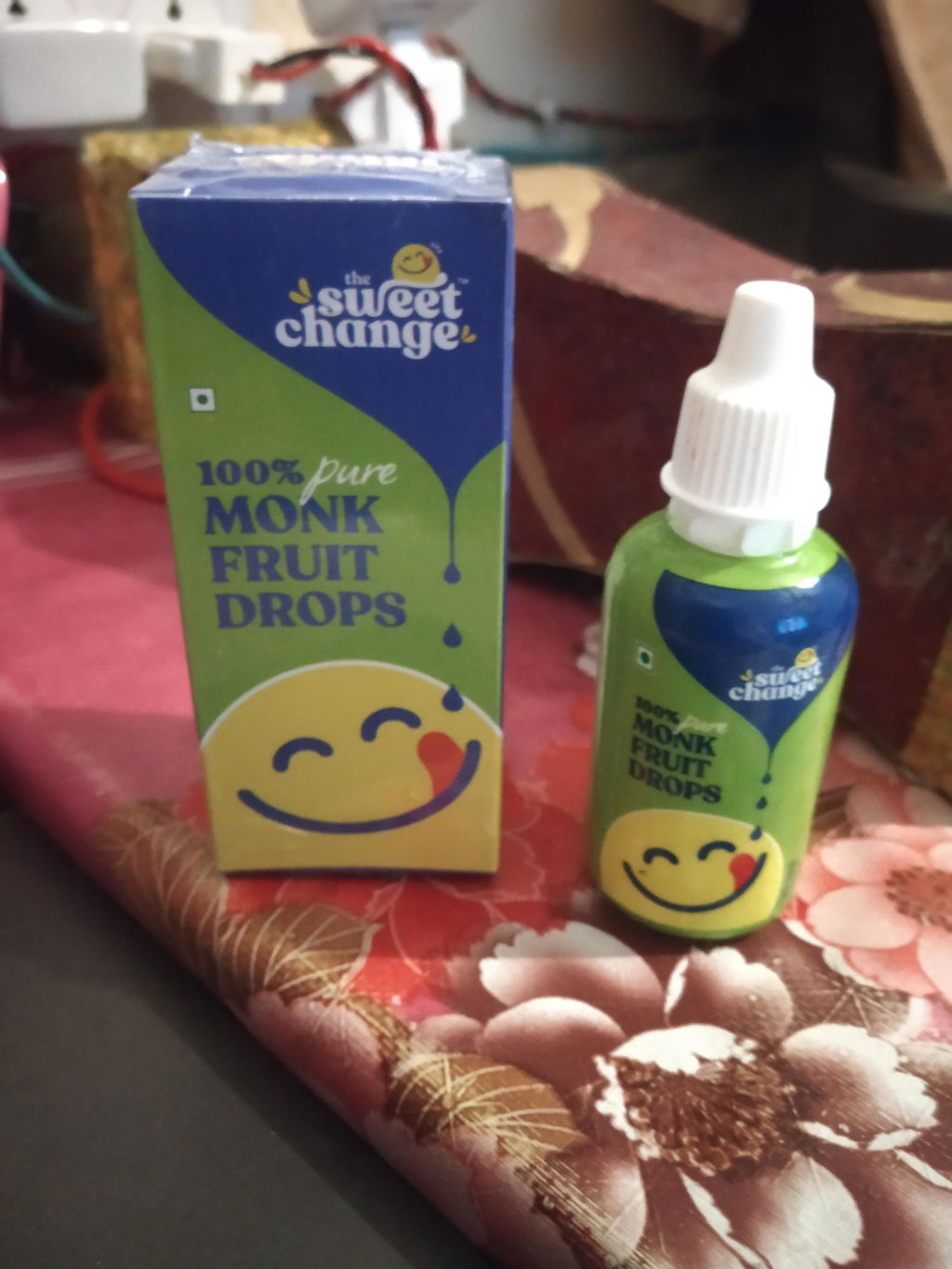
Monk Fruit Drops
monk fruit extract, water and vitamin C. A few drops sweeten a cup of chai.
From ₹2.66 a cup with Buy 2 Get 1₹1,197 · 100 · 300 servings
Shop Monk Fruit DropsRanked · Sweeteners
 Written byKapil GroverrChief Business Officer and Co-Founder, The Sweet Change
 Reviewed bySheen HitaishiChief Brand Officer and Co-Founder, The Sweet Change
 Nutrition reviewed byManvi AgnihotriCEO and Co-Founder, The Sweet Change
For most people sweetening chai and coffee, the best sugar substitute is a plant extract, and our pick is monk fruit made without sugar alcohols, with stevia a close second if its taste suits you. Both add almost no calories and no sugar, and the US FDA has raised no questions about purified extracts of either. Allulose and sugar alcohols suit cooking but have limits, and honey, jaggery and coconut sugar are still sugar.

Our pick for daily chai
High confidence
From ₹2.66 a cupWith Buy 2 Get 1
Shop monk fruit drops and powder
A sound second
Moderate confidence
Price varies by pack
Read monk fruit vs steviaBulk without sugar alcohols
Moderate confidence
Price varies by pack
Read the sweetener ingredients guideUseful bulk, gut limits
Low confidence
Price varies by pack
Read the sweetener ingredients guideStrong, but not for cooking
Low confidence
Price varies by pack
Read the sweeteners guideStill sugar
Low confidence
Price varies by pack
Read jaggery vs sugarScores out of 10 from the criteria on this page. How we scored them
The differences that matter when you sweeten chai, coffee and desserts at home.
| What we compared |
 Monk fruitOur pick |
 Stevia | Allulose | Sugar alcohols | Artificial | Gur, honey |
|---|---|---|---|---|---|---|
| Sweetness against sugarpurified extract or ingredient | 100 to 250 times [1] | 200 to 400 times [1] | - | 25% to 100% as sweet [1] | About 200 to 700 times [1] | They are sugars |
| Taste in hot chai | Not picked out in our two-cup chai testEdge | Bitter note for some people [2] | - | - | - | The taste the others are measured against |
| Sugar and caloriesa cup's worth of sweetness | The extract: few or no calories; not a sugar [1] | Few or no calories; not a sugar [1] | 0.4 kcal per g on US labels, but chemically a sugar [9] | Slightly fewer calories than sugar [1] | None or almost none [1] | Sugar, counted as free sugars [5] |
| Made without sugar alcoholsErythritol, sorbitol and others | Ours has none; 25 of the 44 monk fruit powders we checked did contain erythritol [8]Edge | Depends on the pack: read the ingredient list [10] | Allulose is a sugar, not a sugar alcohol [9] | They are sugar alcohols [1] | - | None |
| Gut at normal amounts | No sugar alcohol in the pack | - | - | Partly absorbed, so large servings can mean wind or loose motions [3]; a laxative-effect note on Indian polyol packs [10] | - | - |
| What regulators say | No US FDA questions on purified extract, in seven notices since 2010 [7]; no daily intake figure specified [1] | No US FDA questions on high-purity steviol glycosides; whole leaf not accepted [1] | Through the US safety-notice process without objection [1] | US FDA: the 2023 erythritol paper did not establish a causal link; it keeps watching [1] | Aspartame: IARC Group 2B, while JECFA kept its daily intake [13] | WHO: keep free sugars under 10% of daily energy [5] |
| Indian kitchenchai, kheer, baking | Drops for chai and coffee; powder for kheer and baking | Drops and powders for drinks | Bulk like sugar for mithai and baking | Measures like sugar [1] | One tablet a cup; aspartame is not heat stable [1] | Works like sugar, with its own flavour |
| Formats you can buy | Drops and powder, with sachets coming | Varies by brand; read the ingredient list | Varies by brand | Varies by brand | - | - |
| Price per cupSweetened like 1 tsp of sugar | From ₹2.66 with Buy 2 Get 1 [15] | Not priced | Not priced | Not priced | Not priced | Not priced |
You are standing at the shelf, or a reel has just crowned one sweetener the best sugar substitute in India, and every pack says the same thing: zero this, natural that. The answer is on the ingredient list on the back.
Many people arrive here from a sugar dabba. In our survey of our own buyers, 39% said they had been using regular sugar before, 12% stevia and 9% sugar-free tablets or sachets.
This page ranks the types of sugar substitute on five criteria we state up front, names each one's downside, and says which "best sugar alternative" is still sugar by another name. We make a sweetener from monk fruit, so we publish the criteria and Manvi Agnihotri, our nutrition reviewer, checks the order.
The best substitute for sugar is the one that does sugar's one job, sweetness, while adding as little of sugar's baggage as possible. A sugar substitute is anything used in place of sugar for sweetness; some add almost no calories, others are sugars under another name.
We scored every type on the same five points:
Chai and coffee carry the most weight, because that is where the sweetener goes. In our survey of our own buyers, 66% said their sweetener goes into coffee and 64% into chai; 15% bake with it.
Each type gets a score out of 10 from those five points. The weights and the working sit in the "How we compared" box on this page, so you can check the arithmetic and disagree with it.
We rank types, not brands. The same type behaves the same whatever the pack says, so the useful habit is reading the ingredient list to see what a blend is made of. Each ingredient in our sweetener library has its own entry if a name on a label is new to you.
In short: sweetness first, baggage second, and the ingredient list settles the rest.

When people ask me which sweetener to use, I ask them to turn the pack over first. A sweetener can carry the name of one plant on the front and be mostly a bulking agent inside. Pick the one whose ingredient list you understand.
Two plant extracts top the list. At the amounts used in a cup they add almost no calories, and they are not sugars [1]. Monk fruit made without sugar alcohols ranks first and stevia second; for the daily cup this tier holds the best sugar substitute, and the best natural sweetener, so taste-test here first.
Monk fruit (Siraitia grosvenorii, luo han guo) comes from a plant native to southern China [1]. The extract gets its sweetness from compounds called mogrosides, and depending on its mogroside content it is reported to be 100 to 250 times sweeter than sugar, so a cup needs a few drops or a pinch [1].
In the US, purified monk fruit extract and juice concentrate have been through seven safety notices since 2010, and each closed with no questions from the FDA [7]. No acceptable daily intake has been specified for monk fruit; one may not be needed when, among other reasons, an ingredient is shown safe at levels well above the amounts used to sweeten [1].
The full picture is in what regulators say about monk fruit.
The thing to watch is the pack, not the fruit. A pinch of extract cannot fill a spoon, so a monk fruit powder that measures like sugar needs a bulking agent, which may be erythritol (tier 3) or allulose (tier 2).
Of the 44 monk fruit powders we checked on marketplaces and brand websites, 25 contained erythritol, and none stated how much monk fruit was inside [8]. Turn the pack over and read the first ingredient.
At The Sweet Change: our Monk Fruit Sweetener Powder is made with monk fruit, guar fibre and allulose, with no erythritol. Our Monk Fruit Drops have three ingredients: monk fruit extract, water and vitamin C.
Stevia sweeteners are steviol glycosides taken from the leaves of Stevia rebaudiana, and they are 200 to 400 times sweeter than sugar [1]. Stevia is the name many shoppers already know; in our survey of our own buyers, 12% said they were using it before they switched.
Its US file is large: the FDA has evaluated many safety notices for high-purity steviol glycosides (95% purity or more) and raised no questions, while whole stevia leaf and crude leaf extracts are not accepted as safe sweeteners there [1]. On a label, "stevia" can mean either, and the purified extract is the one with the record.
The downside is the one everybody mentions: a bitter aftertaste that many people notice in hot chai. A taste study traced that bitterness to two bitter taste receptors on the tongue, TAS2R4 and TAS2R14 [2].
If stevia tastes fine to you, it is a solid daily choice. If it tastes bitter, try a smaller amount or a different form before you give up on it.
Why monk fruit ranks first: taste. In our own two-cup chai test, same milk and same patti, most of the family picked out the stevia cup by the second sip.
That bitter note is why monk fruit made without sugar alcohols is our pick for the daily cup, and why stevia is a sound second if it tastes fine to you.
The two, side by side in the same cup: monk fruit vs stevia.
Allulose is the name on this list most readers will not have met. It is a close chemical cousin (an epimer) of fructose, found naturally in small amounts in foods such as wheat, raisins and dried figs [9].
The body uses very little of it. On US nutrition labels it is counted at 0.4 kcal per gram, about a tenth of sugar's 4 kcal, and the US regulator lets makers leave it out of the "Total Sugars" and "Added Sugars" lines [9].
That is a US labelling rule. Do not read it across to an Indian pack.
It has also been through the US safety-notice process without objection [1].
The downsides are practical. Chemically it is a sugar, a monosaccharide, so "not a sugar" is the wrong description even where US labels leave it out of the sugar lines [9].
Read the pack for how much replaces a spoon of sugar.
In short: very few calories on US labels, but chemically still a sugar.
From ₹2.66 a cup with Buy 2 Get 1
A sugar alcohol (polyol) is a sweetener made from sugars; erythritol, xylitol, sorbitol and maltitol are examples. They run from 25% to 100% as sweet as sugar, carry slightly fewer calories than sugar, and do not promote tooth decay [1].
That bulk is why you find them in sugar-free sweets, biscuits and chewing gum: a sugar alcohol measures like sugar, so the pack feels like sugar [1].
The gut is where the limit shows. Most sugar alcohols are only partly absorbed; the rest draws water into the gut and is fermented in the colon, which is why a large serving can mean wind, bloating or loose motions [3]. Erythritol is the partial exception: about 90% is absorbed and leaves the body unused in urine [3].
How much is too much? In a trial of healthy young adults, 20 g and 35 g of erythritol in one drink were tolerated well, while 50 g brought more reports of nausea and rumbling [4]. In India, a polyol sold as a table-top sweetener carries a note on the pack that it may have a laxative effect [10].
Then there is the heart question. An observational study found higher blood erythritol levels were associated with more heart attacks and strokes in people already under cardiac evaluation [11]. The US FDA reviewed that 2023 paper and determined that the observational studies cited in it did not establish a causal link between consuming erythritol and the observed effects [1].
A small 2024 study (10 volunteers per group) found a 30 g erythritol drink increased platelet reactivity [12]. That is a link, not proof. Still, the 2023 study sent many people back to reading labels, and we see it in our own numbers: in our survey of our own buyers, 49% said they chose us for no erythritol.
In short: useful bulk for cooking, limited by what your gut will take in a day, with an open question on erythritol that the US FDA says it will keep watching [1].

Our first test was two cups of the same chai, same milk, same patti. Most of the family could tell which cup had stevia by the second sip. That bitter note is the thing we set out to avoid.
These are the tabletop tablets and diet-drink sweeteners. Sucralose is about 600 times sweeter than sugar, aspartame and acesulfame potassium (acesulfame K) about 200 times, and saccharin 200 to 700 times [1]. Their strength is plain: one tablet sweetens a cup.
Two things pull them down our list, and the first is aspartame. In 2023 the WHO's cancer agency, IARC, classed aspartame as "possibly carcinogenic to humans" (Group 2B) on limited evidence, while JECFA, the WHO and FAO expert committee on additives, kept its acceptable daily intake at 40 mg per kg of body weight [13].
IARC flagged a hazard; JECFA left the safe-intake number alone.
The second is bigger, and it reaches back into tier 1. In 2023 the WHO issued a guideline recommending against non-sugar sweeteners as a way to control body weight or cut the risk of long-term disease, and its list of those sweeteners runs from acesulfame K, aspartame, saccharin and sucralose to stevia [14].
The same guideline leaves out sugar alcohols and low-calorie sugars, which it treats as sugars with calories [14].
No sweetener on this page, stevia included, is a weight-loss tool. What it can do is smaller and still worth having: keep your chai sweet while the sugar spoon stays in the dabba.
No sugar alcohol in either of ours, and our Drops cost less per cup than the three blends we priced: ₹2.66 to ₹3.31 a cup, against about ₹3.70, ₹4.50 and ₹4.93 for the erythritol, maltitol and allulose blends.
| Per cup |
Our DropsOurs
| Our Powder | Erythritol blend | Maltitol blend | Allulose blend |
|---|---|---|---|---|---|
| Sweetness against sugarAs each label states | One serving a cup | 4:1 (1 g = 4 g sugar) | 1:1 | 1 g = 1 tsp sugar | 1:1 |
| To sweeten a cup like 1 tsp of sugar | 1 serving | 1 g | 4 g | 1 g | 4 g |
| Price per cup | ₹2.66 (300 servings) to ₹3.31 (100 servings)Edge | ₹3.32 (300 servings) to ₹4.50 (100 servings) | About ₹3.70 | About ₹4.50 | About ₹4.93 |
| Free of sugar alcohols | none | none | erythritol | maltitol | none |
| Monk fruit share statedOn the pack or listing | Not stated as a % | 30%Edge | Not stated | Not stated | Not stated |

monk fruit extract, water and vitamin C. A few drops sweeten a cup of chai.
From ₹2.66 a cup with Buy 2 Get 1₹1,197 · 100 · 300 servings
Shop Monk Fruit Drops30% monk fruit, 35% prebiotic guar fibre, 35% allulose; no erythritol. For kheer, halwa and baking.
From ₹3.32 a cup with Buy 2 Get 1₹1,493 · 100 · 300 servings
Shop Monk Fruit Powder| Criterion | What we looked at | Weight |
|---|---|---|
| Taste in hot chai | Our two-cup chai test and the taste-receptor research; types we have not tested in chai are not scored | 30% |
| Sugar and calories it adds | Sugar and calories that a cup's worth of sweetness brings with it | 20% |
| Ease in an Indian kitchen | Chai, coffee, kheer, mithai and baking: dissolving, bulk, heat | 20% |
| What regulators have said | US FDA safety notices, JECFA and WHO positions, FSSAI pack declarations | 15% |
| Gut at normal amounts | Sugar alcohols in the pack and the tolerance research; not scored where this page has no figure | 15% |
Each type is scored 1 to 10 on each criterion; the scores are multiplied by the weights and the total is divided by the weights used, so a criterion we could not score (marked "ns") does not count for or against a type. The monk fruit column is scored as the extract, made without sugar alcohols, as in our Drops; a powder that measures like sugar adds a bulking agent, such as the allulose in ours; the other columns are scored as each type in general, not as any brand.
| Criterion (weight) | Monk fruit, no sugar alcohols | Stevia | Allulose | Sugar alcohols | Artificial sweeteners | Honey, gur, coconut sugar |
|---|---|---|---|---|---|---|
| Taste in hot chai (30) | 8: not picked out in our two-cup chai test; one household test, and taste is personal, so no higher | 5: the bitter note is in the receptor research, and most of the family picked out the stevia cup | ns: not tested in our chai | ns: not tested in our chai | ns: not tested in our chai | ns: sugar is the taste the others are measured against |
| Sugar and calories it adds (20) | 10: the extract adds few or no calories and is not a sugar | 10: few or no calories, not a sugar | 5: 0.4 kcal per g on US labels, but chemically a sugar | 6: slightly fewer calories than sugar | 10: none or almost none | 1: they are sugar, counted as free sugars |
| Ease in an Indian kitchen (20) | 8: drops for chai and coffee, a powder with allulose for kheer and baking | 8: drops and powders for drinks | 9: bulk like sugar for mithai and baking | 9: measures like sugar | 4: one tablet a cup but no bulk, and aspartame is not heat stable | 9: works like sugar, with its own flavour and colour |
| What regulators have said (15) | 8: seven US FDA no-questions notices since 2010; no daily intake figure specified | 8: US FDA no questions on high-purity steviol glycosides; whole leaf not accepted | 7: through the US safety-notice process without objection | 5: the US FDA found no causal link in the 2023 erythritol paper and says it will keep watching | 3: aspartame classed "possibly carcinogenic" by IARC while JECFA kept its intake figure; Indian packs of aspartame, acesulfame K and saccharin carry warnings | 3: the WHO advises keeping free sugars under 10% of energy |
| Gut at normal amounts (15) | 10: no sugar alcohol in the pack | ns: a pack can be the extract alone or a blend, and we have not scanned stevia packs | ns: no tolerance figure on this page | 3: partly absorbed, so large servings can mean wind or loose motions; Indian polyol packs carry a laxative-effect note | ns: no tolerance figure on this page | ns: not a question for sugar |
| Weighted total | (240 + 200 + 160 + 120 + 150) ÷ 100 = 8.7 | (150 + 200 + 160 + 120) ÷ 85 = 7.4 | (100 + 180 + 105) ÷ 55 = 7.0 | (120 + 180 + 75 + 45) ÷ 70 = 6.0 | (200 + 80 + 45) ÷ 55 = 5.9 | (20 + 180 + 45) ÷ 55 = 4.5 |
Confidence is how sure we are of the pick for its use, daily chai and cooking: our view, not a grade of the research. Facts come from the sources at the end of this page. Market details come from public labels and listings we checked; we never name other brands.
For the best sugar substitute in a daily cup, that arithmetic is why monk fruit made without sugar alcohols is our pick, and why stevia still earns a sound second place if its taste suits you.
Jaggery (gur), honey (shahad), coconut sugar, dates, mishri and khand. They taste wonderful, and the reels call them natural sweeteners and the healthy swap. The honest point is that they are sugar.
Free sugars, in the WHO's definition, include any sugar added by the manufacturer, the cook or you, plus the sugars naturally present in honey and syrups [5]. The advice is to keep them under 10% of daily energy, about 50 g or 12 level teaspoons on a 2,000-calorie day [5]. Gur in kheer and honey in water both count.
The glycemic index tells the same story. In the 2008 international tables honey scores 61 and table sugar 65, both in the medium band, and neither jaggery nor coconut sugar has an entry in those tables at all [6]. Swapping cheeni for gur changes the flavour and the colour of your halwa, not the fact that it is sugar.
If you love gur in your winter chai, keep it as the treat it is, and count it as sugar. How jaggery compares with sugar has the numbers side by side.
In short: enjoy them as the sugars they are. The swap that cuts sugar is the one that leaves the sugar out.
Chai ka taste wahi chahiye, sugar nahi. That is the whole brief, and the best sugar substitute depends on the cup.
If you are buying for a parent who takes two spoons in every cup, change the spoon before you change the habit: the same cup, the same time, a different sweetener. For more on that choice, read our guide to sweeteners for diabetes.
Pack prices mislead here, because sweeteners are not equally sweet. Our Powder is 4:1, so 1 g sweetens like 4 g of sugar, about a level teaspoon, and we count one serving of our Drops to a cup [15]. Most of the monk fruit blends we priced are 1:1, so the same cup needs 4 g of powder [8].
Price the cup, then. With Buy 2 Get 1, our Drops work out at ₹2.66 a cup in the 300-serving pack and ₹3.31 in the 100-serving pack, and our Powder at ₹3.32 and ₹4.50 [15].
A monk fruit blend built on erythritol came to about ₹3.70 a cup and one built on allulose to about ₹4.93 [8]. The maltitol blend we priced came to about ₹4.50 [16].
So the cheapest cup in that list is also one with no sugar alcohol in it: our Drops in the larger pack.
A ranking tells you the order. It cannot tell you what happens when the two you are choosing between go into the same cup.
That is what our head-to-head pages do: each takes two sweeteners or sugars, or a sweetener against the blends on the market, and compares them on sugar, calories, taste and use, ending with a simplified table you can read on your phone.
This page is the hub for all of them, so every comparison we publish is listed here.
The best sugar substitute for health is the one that helps you use less sugar and that you will still be using a month from now. If you want the long version of every type on this page, our guide to every type of sweetener goes deeper on each.
A list of sugar substitutes at a glance, in the order we ranked them; the best sugar substitute for a daily cup sits in the top two rows.
| Sweetener | Our score | How sweet vs sugar | Calories | Main downside |
|---|---|---|---|---|
| Monk fruit, made without sugar alcohols | 8.7 | 100 to 250 times [1] | almost none at the amounts used [1] | more than half of the powders we checked add erythritol, so read the label [8] |
| Stevia (steviol glycosides) | 7.4 | 200 to 400 times [1] | almost none [1] | bitter aftertaste for some [2] |
| Allulose | 7.0 | - | 0.4 kcal/g on US labels [9] | chemically a sugar [9] |
| Erythritol and other sugar alcohols | 6.0 | 25% to 100% [1] | slightly lower than sugar [1] | gut tolerance [3]; open heart question [11] |
| Sucralose, aspartame, saccharin | 5.9 | about 600, 200, 200 to 700 times [1] | none or almost none [1] | WHO 2023 advice [14]; aspartame IARC 2B [13] |
| Honey, jaggery, coconut sugar | 4.5 | they are sugars | like sugar | still free sugar [5] |
For daily chai and coffee, a plant extract. Our pick is monk fruit made without sugar alcohols, with stevia a close second: both add almost no calories and no sugar, and the US FDA has not questioned purified extracts of either. Stevia tastes bitter to some people, so taste-test in your own chai and read the ingredient list.
No sweetener is a health food, and the healthiest sugar substitute is the one that helps you use less sugar for good. The World Health Organization advised in 2023 against relying on non-sugar sweeteners, stevia included, to control weight. If you are buying for someone with diabetes, read the label with their doctor's advice in mind.
"Natural" covers two different things. Stevia and monk fruit are plant extracts that add almost no sugar; honey, gur and coconut sugar are natural sweeteners that still count as sugar. The World Health Organization counts the sugars in honey and syrups as free sugars, so the best natural sugar substitute is the extract.
Taste is personal, so the test is your own cup. Stevia's bitter aftertaste is documented in taste-receptor research, and many people notice it in hot chai. A blend that measures spoon for spoon like sugar needs a bulking agent, such as allulose or erythritol, so check which one before you try each in your chai.
They are good sweeteners and poor substitutes. Gur and honey bring flavour and colour that white sugar lacks, and the World Health Organization still counts them as free sugars within the same daily limit as table sugar. Swapping cheeni for gur changes how your chai tastes, not the fact that it is sugar.
Two kinds earn the label: a sugar sold as a substitute (honey, jaggery, coconut sugar and date syrup are sugar by another name), and a sugar alcohol eaten past what your gut can take in a day, which is why FSSAI's labelling rules make polyol table-top sweetener packs carry a note that they may have a laxative effect.
No: we rank types, because the same ingredient behaves the same whatever the front says. What changes between packs is the ingredient list, so turn it over and read two things: which ingredient is first, and whether erythritol or another bulking agent is in it. We make a sweetener ourselves, so we publish the criteria instead of a brand list.
For daily chai, our pick is monk fruit made without sugar alcohols, and stevia is a sound second if its taste suits you. Gur, honey and coconut sugar are still sugar. Whichever you choose, read the ingredient list; FSSAI rules require it to run in order of weight, so the first name is the biggest share.
From ₹2.66 a cup with Buy 2 Get 1

Written by
Kapil Groverr · Chief Business Officer and Co-Founder
IIM Lucknow alumnus · 18 years in marketing
Kapil Groverr is Co-Founder and Chief Business Officer of The Sweet Change, where he leads growth and marketing. He has 18 years in marketing, most recently as Vice President Marketing at Breathe Well-being and before that Head of Digital Marketing at King Koil. An IIM Lucknow alumnus, he writes our sweetener guides and comparisons.
Writes about: Sweetener guides and comparisons
Disclosure: Co-founder of The Sweet Change

Reviewed by
Sheen Hitaishi · Chief Brand Officer and Co-Founder
4 years in content writing · Sri Venkateswara College, University of Delhi
Sheen Hitaishi is Chief Brand Officer and Co-Founder of The Sweet Change, which she started with her sister, Manvi Agnihotri. She runs our social media, customer retention and customer care. Before The Sweet Change she spent four years as a content writer, most recently Senior Content Writer at Univest. She studied at Sri Venkateswara College, University of Delhi.
Disclosure: Co-founder of The Sweet Change

Nutrition reviewed by
Manvi Agnihotri · CEO and Co-Founder
12 years in clinical nutrition, over 11,000 patients · M.Sc Food and Nutrition, silver medallist
Manvi Agnihotri is CEO and Co-Founder of The Sweet Change. She holds an M.Sc in Food and Nutrition, in which she was a silver medallist, and has led brand strategy and patient and doctor education at Breathe Well-being, a diabetes care programme. She reviews our health and nutrition pages before they go live.
Reviews: Nutrition and food science, Blood sugar and diabetes diet
Disclosure: Co-founder of The Sweet Change
Monk fruit made without sugar alcohols is our pick for daily chai.
Monk fruit made without sugar alcohols is our pick; of the three blend types, allulose blends come closest.
Our pick: monk fruitfrom ₹2.66 a cup with Buy 2 Get 1
Shop