Monk fruit sweetener side effects: is it safe?
 Written bySheen HitaishiChief Brand Officer and Co-Founder, The Sweet Change
 Nutrition reviewed byManvi AgnihotriCEO and Co-Founder, The Sweet Change


Monk fruit sweetener side effects have not included anything severe in the human trials so far, so our answer to "is monk fruit safe" is a yes with conditions. The US FDA has not questioned the safety notices filed for it; Europe's food safety authority, EFSA, said in 2019 the data were too thin to conclude either way [1] [2] [3]. Most stomach trouble traces to erythritol in blends, and allergy is possible if you react to gourds.
Key takeaways
- The FDA did not object: seven safety notices closed with no questions, and no daily limit set [1] [2].
- EFSA could not conclude: in 2019 it said the data were not enough to judge safety and asked for longer animal studies [3].
- The human record is small: a 2025 review of five small trials found no severe monk fruit side effects [4].
- Blends are the usual culprit: erythritol loosens the bowels at high intakes, and its daily limit in Europe is 0.5 g per kg of body weight [5].
- Ask first if you are pregnant or buying for a child: there is little research in either group.
On this page
- What is monk fruit sweetener, and why a pinch does the work of a spoon
- Is monk fruit sweetener safe? What the two regulators actually said
- Monk fruit sweetener side effects: what the record shows
- What the human studies show, and what they leave open
- Side effects in blends: read the label
- How much monk fruit sweetener do people use?
- Who should be careful
- What is still not known
- Sources
If you are pregnant, choosing for a young child, or have a medical condition, ask your doctor before using any new sweetener.
What is monk fruit sweetener, and why a pinch does the work of a spoon
You are in the aisle with a pack that says "monk fruit" on the front, and an aunt's forward about sweeteners sits half-read on your phone. The question under both is the same: what is this fruit, and what is in the pack?
The fruit first. Monk fruit sweetener is an extract of luo han guo (Siraitia grosvenorii), a small gourd from southern China in the same family (Cucurbitaceae) as cucumber, melon and lauki [2] [3]. Its sweetness comes from compounds called mogrosides, and one of them, mogroside V, does most of the work [3].

The extract is 100 to 250 times sweeter than sugar, depending on how much mogroside it holds [2]. So a serving is a few drops or a pinch, never a spoon.

Now turn the pack over. If a "monk fruit" powder measures spoon for spoon like sugar, something has to fill that spoon, because a pinch of extract cannot. Very often that something is erythritol or dextrose, and that bulking ingredient is where most side-effect questions begin.
Is monk fruit sweetener safe? What the two regulators actually said
Online you will meet two confident and opposite claims: that America has cleared monk fruit, and that Europe will not. Both are half right, which is the most irritating kind of right, so here is what each regulator was asked and what it wrote down.
What the US FDA says
Between 2010 and 2018 the US Food and Drug Administration (FDA) received seven GRAS (Generally Recognized as Safe) notices for monk fruit extract or juice concentrate, and closed each one with the same line: "FDA has no questions" (GRN 301, 359, 522, 556, 627, 706 and 784) [1]. An eighth notice, GRN 629, was withdrawn at the notifier's request.
Here's the catch. A "no questions" letter is not an approval, whatever some pages say. Under GRAS the company does the safety review and the regulator says only whether it disagrees, and its own wording is that it "has not questioned" those conclusions [2].
Nor has it set an acceptable daily intake (ADI) for monk fruit, on the reasoning that one may not be needed when safety is shown at levels well above what it takes to sweeten food [2].
What EFSA said in 2019
Europe asked a different question: should monk fruit extract be a permitted food additive? In December 2019 the European Food Safety Authority "concluded that toxicity database on Monk fruit extract is insufficient to conclude on the safety of the use of Monk fruit extract as a food additive" [3].
Not unsafe. Not enough data to say.
The panel gave four reasons. Effects on the testes in one 90-day rat study "cannot be dismissed". The genotoxicity tests did not cover what gut bacteria make from mogrosides [3].
Chronic and cancer testing "would have been warranted". And allergenicity "cannot be ruled out", since protein can be up to 36% of the extract [3].
What the opinion does not report is harm in people. The studies that would settle the rat findings were not in the data it assessed. So one regulator has no questions, the other has questions nobody has answered yet, and both are describing the same fruit.
| Regulator | Year | What was assessed | Conclusion |
|---|---|---|---|
| US FDA | 2010 to 2018 | Seven GRAS notices for monk fruit extract and juice concentrate | "FDA has no questions"; no ADI set |
| EFSA | 2019 | Monk fruit extract as a food additive | Data "insufficient to conclude on the safety" |
Monk fruit sweetener safety as the two regulators stated it [1] [2] [3].

Monk fruit sweetener side effects: what the record shows
Side effects of monk fruit sweetener are hard to find in the human trials, and the monk fruit side effects people describe online usually trace back to what was blended with the extract, or to a gourd allergy.
Stomach upset
The trials have little to say about the extract itself; the studies section below covers what they found.
Most of the bloating and loose stools blamed on monk fruit come from the sugar alcohol it is bulked with, usually erythritol, which loosens the bowels at high intakes [5].
Allergy
Monk fruit is a gourd, so a person who reacts to cucumber, melon, pumpkin or lauki could react to it. The protein share mentioned above is why allergy stayed one of the four open points.
Published case reports are hard to find: a Europe PMC search on 10 October 2026 turned up none. So an allergy is possible, and rarely reported.
Blood sugar
In a 2017 trial in 30 healthy men, a drink sweetened with monk fruit did not cause the blood-sugar and insulin spike that a sugar-sweetened drink caused in the first hour [6]. Over three hours the totals did not differ, because glucose rose more after the lunch that followed.
If you have diabetes, that second sentence matters as much as the first, so ask your doctor.
What the human studies show, and what they leave open
The human evidence is small. A 2025 review found five randomised controlled trials of monk fruit sweetener and reported no severe adverse effects across them, while asking for larger trials [4].
No trial has followed monk fruit extract sweetener side effects over years in people, and the long-term animal tests judged necessary in 2019 were missing from the data assessed then [3] [4].
The animal data are larger. In 90-day rat studies the top dose, 2,916 mg of mogroside V per kg of body weight a day from a 39% extract, caused no adverse effect; the 52% extract study with the testis finding sits beside them [3]. Those doses are far above what a sweetened cup of chai delivers.
Side effects in blends: read the label
Most monk fruit sweetener side effects reported online are blend side effects. Ingredient lists run from most to least, so if a pack says monk fruit on the front and lists erythritol or dextrose first on the back, the first name is what you are mostly eating, and you get the first ingredient's effects.

Erythritol is a sugar alcohol (polyol) used as a bulk sweetener, and Europe gives it a daily limit: 0.5 g per kg of body weight, set in 2023 because of those loose stools [5]. For a 60 kg adult that works out to 30 g a day.
Then there is the study you may have seen forwarded, the one that sent many people back to reading labels. A 2023 study linked higher blood erythritol to heart events in people already under cardiac evaluation; the US FDA said these observational studies did not establish a causal link [7] [2]. A link, not proof.
But if a sweetener is going into your cup every single day, it is fair to want to know what is in it. In our survey of our own buyers, 49% said they chose us for no erythritol.
Dextrose is simpler: it is a form of glucose, so a blend built on it is mostly sugar by another name.
How much monk fruit sweetener do people use?
With sugar you know where you stand: two spoons, three cups, six teaspoons a day. With monk fruit there is no daily limit to measure against, as the FDA section explained, so the 2019 exposure estimates are the nearest yardstick.
Those estimates, built to overstate rather than understate, put everyday intake at 0.6 to 36.4 mg of mogroside V per kg of body weight a day at the mean [3].
Our dosage table puts it in kitchen terms. With Monk Fruit Drops, two drops replace a teaspoon of sugar, and a 10 ml bottle holds about 200 drops, or 100 cups.

| What you sweeten | Sugar you would use | Drops instead |
|---|---|---|
| One cup of chai | 1 teaspoon | 2 drops |
| Three cups a day | 3 teaspoons | 6 drops |
| A 10 ml bottle | 100 teaspoons | about 200 drops |
For how the three stack up on sweetness and calories, see jaggery, sugar and monk fruit side by side. Powder ratios for cooking are a separate topic.
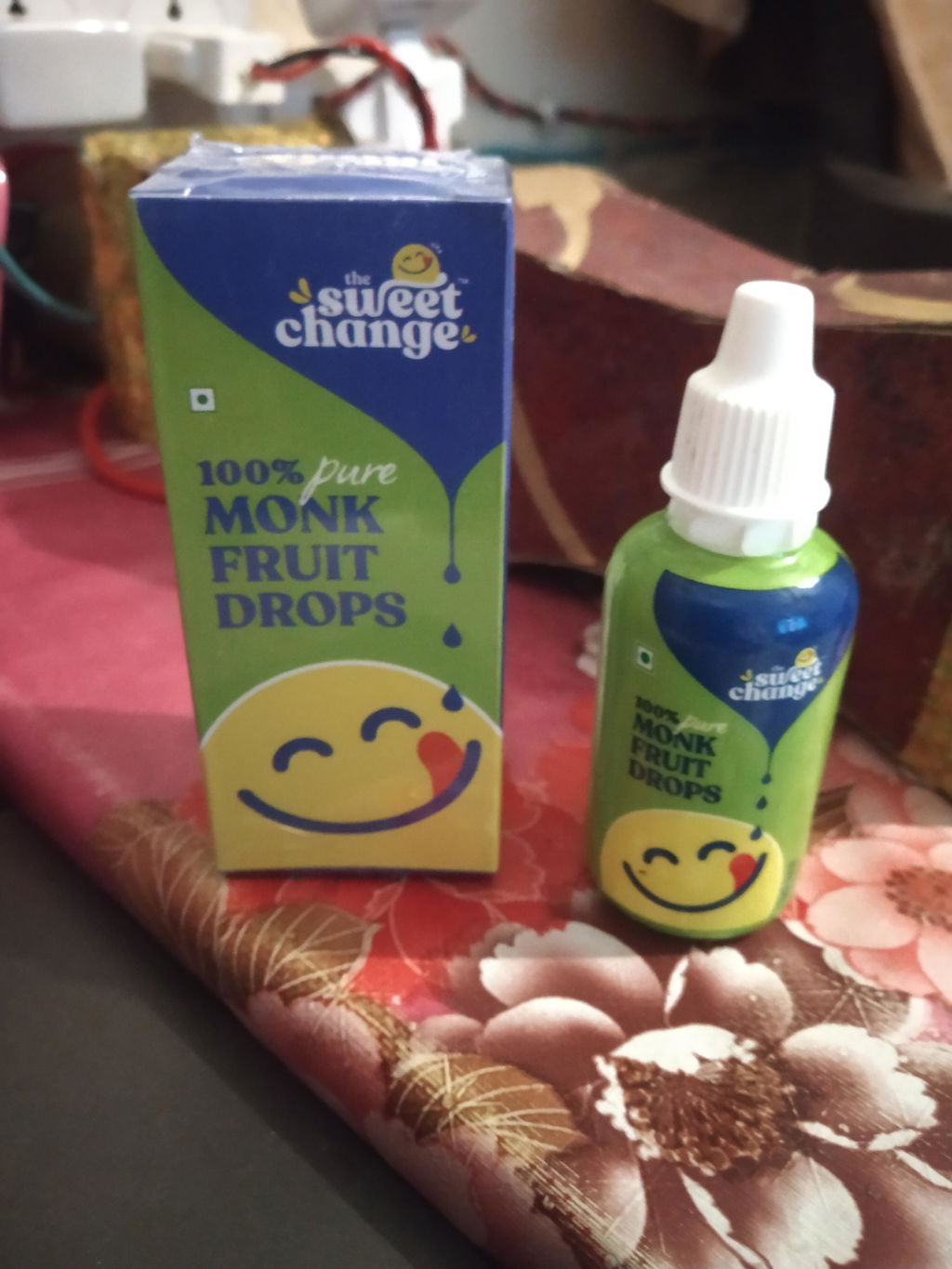
Where TSC fits: Monk Fruit Drops are made with monk fruit extract, water and vitamin C. Two drops replace a teaspoon of sugar. Contains no erythritol or other sugar alcohols. See Monk Fruit Drops
Who should be careful
Four groups should pause before using any monk fruit product; the advice is "ask first", not "no".
- Gourd-family allergy (cucumber, melon, pumpkin, lauki): the allergy section above explains why this question is still open.
- Pregnant, or choosing for a young child: there is little research on monk fruit sweeteners in pregnancy or in young children, so check with your doctor before using it in those groups.
- A medical condition or regular medicines: ask your doctor first.
- A sensitive stomach: check blends for sugar alcohols before blaming the fruit.
On kidneys, no human study was found, so the same advice holds: ask your doctor.
What is still not known
The gaps on monk fruit sweetener side effects are the ones already on this page: nothing long-term in people, the chronic and cancer tests missing from the 2019 data, little data in pregnancy, childhood or kidney disease, and no settled picture of what gut bacteria make of mogrosides [3] [4].
The World Health Organization adds a wider point that applies to every non-sugar sweetener in the shop, monk fruit included. In May 2023 it advised against using non-sugar sweeteners, natural ones included, to control body weight or reduce the risk of long-term disease. The recommendation is conditional and does not apply to people with pre-existing diabetes [8].
So what a sweetener can do is smaller than the forwards promise, and still worth having. Use it to keep your chai sweet while the sugar spoon stays in the dabba, and take weight questions to your doctor.
Questions people ask about monk fruit
Sheen Hitaishi runs our customer care and social channels. These are the safety questions people type into search engines when our pages come up in the answer, plus one point from our survey of our own buyers.
- "Is it safe?" Yes with conditions. The section "What the two regulators actually said" sets out exactly what the FDA and EFSA concluded.
- "Is it good for health?" It takes the sugar out of your cup; that is the whole claim. The WHO's 2023 advice on sweeteners and weight is under "What is still not known".
- "Is it pure?" Pure is a word we avoid, because it tells you nothing you can check. The ingredient list does: Monk Fruit Drops list monk fruit extract, water and vitamin C.
- "Does it have sugar?" The Monk Fruit Drops label reads zero sugar and zero calories per serving. Blends built on dextrose are a different story, so check the first ingredient.
- "Does it increase blood sugar? Is it safe for pre-diabetics?" The trial this page cites is small and in healthy men (see "Blood sugar"). If you have pre-diabetes, ask your doctor.
- "Does it affect fertility?" No human study has looked at this. The one animal finding behind the caution is the rat testis result covered under "What EFSA said in 2019"; a separate rat reproduction and development screening study found no effects, though it did not run long enough to cover a full sperm-production cycle [3]. If you are planning a pregnancy, ask your doctor.
- Why erythritol comes up so often: in our survey of our own buyers, no erythritol was the top reason for choosing us; 49% said so.
More answers on our customer FAQ.
Back in the aisle, then. Monk fruit sweetener benefits and side effects rest on the same thin evidence: one review of five small human trials, and two regulators who read the same animal data differently. Monk fruit sweetener side effects have not shown up as anything severe on the record so far.
Cheat sheet
- Read the first ingredient. If erythritol or dextrose comes before monk fruit, you are mostly eating that, and its side effects are the ones you will feel.
- Two drops, one teaspoon. With Monk Fruit Drops, two drops replace a teaspoon of sugar; three cups of chai a day is six drops.
- Erythritol has a ceiling in Europe. About 30 g a day for a 60 kg adult; the blends section has the working and the reason [5].
- Gourd allergy, go slowly. If cucumber, melon, pumpkin or lauki trouble you, monk fruit might too [3].
- Pregnant, buying for a child, or managing a condition: ask your doctor before you start.
Questions people ask
Does monk fruit have any side effects?
Few monk fruit side effects have appeared in trials. A 2025 review of five small human trials found no severe adverse effects. Most digestive complaints trace to added sugar alcohols such as erythritol, which has a daily limit in Europe; allergy is possible if you react to gourds.
Does monk fruit sweetener cause cancer?
No human study has linked monk fruit to cancer. The missing half of the picture: EFSA said in 2019 that it had no data from the long-term animal cancer tests it would expect. A 2025 review of five small human trials reported no severe adverse effects.
Is monk fruit sweetener bad for you?
No human study shows harm. A 2025 review of five small trials found no severe effects, and the US FDA closed seven GRAS notices with no questions. EFSA in 2019 flagged missing long-term data and one rat finding it could not dismiss, not harm in people; in a blend, the first ingredient decides what you feel.
Is monk fruit sugar safe?
"Monk fruit sugar" usually means a blend: a little extract bulked with erythritol or dextrose so it pours like sugar, and its safety is the bulking ingredient's. Erythritol has a daily limit in Europe, set in 2023, of 0.5 g per kg of body weight because high intakes can cause diarrhoea; dextrose is a sugar. Read the first ingredient.
Is monk fruit safe for diabetics?
In a 2017 trial in 30 healthy men, a drink sweetened with monk fruit did not cause the blood-sugar and insulin spike that a sugar-sweetened drink caused in the first hour, though over three hours the totals did not differ. Those were healthy volunteers, not people with diabetes, so ask your doctor about your own plan.
How much monk fruit sweetener is safe per day?
There is no official daily limit: the US FDA has not set an acceptable daily intake for monk fruit, reasoning that one may not be needed when safety is shown well above sweetening levels. In the kitchen, two drops of Monk Fruit Drops replace a teaspoon of sugar, so three cups of chai a day is six drops.
Monk fruit ke nuksan kya hain?
Very few have been recorded. A 2025 review of five small human trials found no severe adverse effects. Problems people report usually come from erythritol or dextrose blended into the product, or from a gourd allergy EFSA could not rule out in 2019, so check the ingredient list first.
Is monk fruit sweetener healthy?
It does one job: it replaces the sugar in your cup. It adds no sugar or calories to your chai, and a 2017 trial in 30 healthy men found no first-hour glucose or insulin spike after a monk fruit drink. The WHO advised in 2023 against relying on any non-sugar sweetener for weight control.
 Monk Fruit Drops (100 servings)
Rs. 497.00
Monk Fruit Drops (200 servings)
Rs. 971.00
Monk Fruit Drops (100 servings)
Rs. 497.00
Monk Fruit Drops (200 servings)
Rs. 971.00
 Monk Fruit Powder No Erythritol (100 servings)
Rs. 675.00
Monk Fruit Powder No Erythritol (300 servings)
Rs. 1,493.00
Monk Fruit Powder No Erythritol (100 servings)
Rs. 675.00
Monk Fruit Powder No Erythritol (300 servings)
Rs. 1,493.00
Related articles


Written by
Sheen Hitaishi · Chief Brand Officer and Co-Founder
4 years in content writing · Sri Venkateswara College, University of Delhi
Sheen Hitaishi is Chief Brand Officer and Co-Founder of The Sweet Change, which she started with her sister, Manvi Agnihotri. She runs our social media, customer retention and customer care. Before The Sweet Change she spent four years as a content writer, most recently Senior Content Writer at Univest. She studied at Sri Venkateswara College, University of Delhi.
Disclosure: Co-founder of The Sweet Change

Nutrition reviewed by
Manvi Agnihotri · CEO and Co-Founder
12 years in clinical nutrition, over 11,000 patients · M.Sc Food and Nutrition, silver medallist
Manvi Agnihotri is CEO and Co-Founder of The Sweet Change. She holds an M.Sc in Food and Nutrition, in which she was a silver medallist, and has led brand strategy and patient and doctor education at Breathe Well-being, a diabetes care programme. She reviews our health and nutrition pages before they go live.
Reviews: Nutrition and food science, Blood sugar and diabetes diet
Disclosure: Co-founder of The Sweet Change
Sources
- US Food and Drug Administration. 2010 to 2018. GRAS Notice Inventory, notices for Siraitia grosvenorii (monk fruit) extract and juice concentrate: GRN 301, 359, 522, 556, 627, 706 and 784; GRN 629 withdrawn. FDA. https://www.hfpappexternal.fda.gov/scripts/fdcc/index.cfm?set=GRASNotices&sort=GRN_No&order=DESC&startrow=1&type=basic&search=Siraitia
- US Food and Drug Administration. 2025. Aspartame and Other Sweeteners in Food. FDA, content current as of 27 February 2025. https://www.fda.gov/food/food-additives-petitions/aspartame-and-other-sweeteners-food
- EFSA Panel on Food Additives and Flavourings (FAF). 2019. Safety of use of Monk fruit extract as a food additive in different food categories. EFSA Journal 17(12):e05921. https://doi.org/10.2903/j.efsa.2019.5921
- Kaim U, Labus K. 2025. Monk Fruit Extract and Sustainable Health: A PRISMA-Guided Systematic Review of Randomized Controlled Trials. Nutrients 17(9):1433. https://doi.org/10.3390/nu17091433
- EFSA Panel on Food Additives and Flavourings (FAF). 2023. Re-evaluation of erythritol (E 968) as a food additive. EFSA Journal 21(12):e8430. https://doi.org/10.2903/j.efsa.2023.8430
- Tey SL, Salleh NB, Henry J, Forde CG. 2017. Effects of aspartame-, monk fruit-, stevia- and sucrose-sweetened beverages on postprandial glucose, insulin and energy intake. International Journal of Obesity 41(3):450-457. https://doi.org/10.1038/ijo.2016.225
- Witkowski M, Nemet I, Alamri H, et al. 2023. The artificial sweetener erythritol and cardiovascular event risk. Nature Medicine 29(3):710-718. https://doi.org/10.1038/s41591-023-02223-9
- World Health Organization. 2023. WHO advises not to use non-sugar sweeteners for weight control in newly released guideline. Departmental update, 15 May 2023. https://www.who.int/news/item/15-05-2023-who-advises-not-to-use-non-sugar-sweeteners-for-weight-control-in-newly-released-guideline
The Sweet Change makes the products mentioned on this page. How we write and review