Most commonly used ingredients in sweeteners

Luo han guo fruits, one cracked open, beside stevia leaves, a bowl of sugar crystals and a block of jaggery on a counter

Turn a sweetener pack over and you will meet one of seventeen names, in four groups: plant-derived (monk fruit, stevia), sugar alcohols and rare sugars (erythritol, xylitol, maltitol, sorbitol, allulose), the artificial sweeteners list (sucralose, aspartame, acesulfame K, saccharin, neotame) and the sugars themselves (table sugar, gur, khandsari, honey, agave). Below I take each one in turn: what it is, how sweet it is in your chai, and the honest downside where there is one.

Key takeaways

  • Sweetest by far: sucralose is about 600 times sweeter than table sugar; neotame 7,000 to 13,000 times [1].
  • Monk fruit extract: reported to be 100 to 250 times sweeter than sugar, depending on its mogroside content [1].
  • Calories on a European label: sugar alcohols count at 2.4 kcal per gram, erythritol at 0 [2].
  • Not on the EU list: monk fruit extract and allulose are not authorised sweeteners in the EU [3].
  • Medium GI: table sugar (65) and honey (61) sit in the medium band; glucose is 103 and erythritol 0 [4][5].
On this page
  1. Why the names on the back of the pack matter
  2. Plant-derived sweeteners
  3. Sugar alcohols and rare sugars
  4. Artificial sweeteners list
  5. Sugars and traditional sweeteners
  6. How sweeteners appear on an ingredient label
  7. Quick comparison
  8. How we built this list

This page describes ingredients and is not medical advice. If you have diabetes or another condition, talk to your doctor or dietitian before changing what you eat.

Why the names on the back of the pack matter

You are standing in the aisle, or scrolling on your phone, and the front of the pack says monk fruit in big, friendly letters. It costs more than the stevia next to it, and you are about to pay for the fruit. Then you turn it over, and the first name on the back is something you cannot pronounce.

That first name is the one that matters. In Europe, the law puts ingredients in descending order of weight, so whatever comes first is what the pack is mostly made of [2]. And if you want to know whether a product has a sweetener in it at all, look for the sweetener's name in that same list [1].

So a pack can say monk fruit on the front and be mostly erythritol on the back, and neither line is false. The front is the marketing. The back is the recipe.

This sweetener ingredients list walks through seventeen names you will meet on labels, one at a time, in four groups. For each one I tell you what it is, how it is made or grown, how sweet it is in kitchen terms, what is known about blood sugar, and the honest downside where there is one.

E numbers are explained as we go, and a quick comparison table waits at the end for the day you just want to look something up.

Plant-derived sweeteners

Two sweet compounds taken out of plants: mogrosides from monk fruit and steviol glycosides from stevia leaves. Both are hundreds of times sweeter than sugar, so a pack needs only a pinch, and that pinch is why you should read what sits beside them on the label.

This is the group the front of the pack likes to talk about. A fruit and a leaf give us two sweet compounds, and what goes into a pack is the compound itself, drawn out of the plant and concentrated [1].

Wonderful for a pinch, awkward for a spoon. On blood sugar, the US FDA's general position on sweeteners of this strength is that they generally will not raise blood sugar levels, and neither of these two has a glycemic index value in the tables we read [1].

Card listing monk fruit extract and stevia with their E numbers and how sweet each is compared with sugar

Monk fruit extract

Monk fruit, or luo han guo, is a round green fruit from a vine of the gourd family, native to southern China; botanists call it Siraitia grosvenorii [7][1]. The sweetness lives in compounds called mogrosides, drawn out of the fruit with water, and mogroside V is the main one [7].

Depending on its mogroside content, the extract is reported to be 100 to 250 times sweeter than sugar [1]. A pinch does the work of a spoon. So when a "monk fruit" powder measures spoon for spoon like sugar, something else is filling that spoon, and the back of the pack will tell you what.

It has no E number and is not on the EU's list of authorised sweeteners [3]; EFSA said in 2019 that the data were insufficient to conclude on its safety as an additive [7]. In the US, the FDA has not questioned its GRAS notices [1].

Good to know: on a label, look for "monk fruit extract" or "mogrosides", then read the name beside it.

At The Sweet Change: our powder is made with monk fruit, guar fibre and allulose, with no erythritol. We made that choice after the 2023 and 2024 erythritol studies [8][9]. The US FDA says the 2023 paper's observational studies did not establish a causal link [1], and the 2024 study showed a link, not proof [9].

Stevia

Stevia on a label means steviol glycosides, sweet compounds from the leaves of Stevia rebaudiana, a plant native to parts of South America. They are extracted from the leaf, and some are now made by fermentation. At 200 to 400 times sweeter than sugar, a pinch replaces a spoonful [1].

You will meet them in soft drinks and powdered drink mixes sold as "sugar-free" or "diet" [1].

Now the honest part. Steviol glycosides can taste bitter as well as sweet: of the 25 bitter taste receptors on the human tongue, two, TAS2R4 and TAS2R14, pick up that off-taste [10]. For some it lingers after the cup is empty.

Its EU number is E 960a, and it was first assessed in the EU in 2010 [3][6]. In the US, only high-purity steviol glycosides (such as Reb A) carry GRAS notices the FDA has not questioned; whole-leaf and crude stevia extracts are not permitted as sweeteners [1].

Good to know: if your chai turned bitter after a swap, the stevia may be why.

Sugar alcohols and rare sugars

The sugar alcohols list (erythritol E 968, xylitol E 967, sorbitol E 420, maltitol E 965) plus allulose, a rare sugar. None is sweeter than sugar, and all are used by the gram, so this is the group that fills the spoon; on a European label the polyols count at 2.4 kcal per gram and erythritol at 0 [[2]](#sources).

If the first group is what the front of the pack talks about, this group is what the back of the pack is made of. Sugar alcohols, also called polyols, are hydrogenated carbohydrates, and they are permitted in the US as sugar substitutes [5][1].

Across the class they run from 25% to 100% as sweet as sugar and are slightly lower in calories [1]. That is what lets a blend measure like sugar, and it is why one of them can be the first ingredient.

On blood sugar, the US FDA's position is that they do not cause a sudden increase in blood glucose [1]. The glycemic index figures agree: every sugar alcohol in this group sits well below table sugar, with each one's number in its entry [5]. Allulose sits here too, a rare sugar with the same bulk job.

Card listing erythritol, xylitol, maltitol, sorbitol and allulose with E numbers and sweetness compared with sugar

Allulose

Allulose, also written D-allulose or D-psicose, is a rare sugar: it meets the chemical definition of a sugar, but the body uses it differently from sucrose [1]. It occurs naturally in small amounts in wheat, raisins and dried figs; for a pack it is made from fructose by an enzyme step [11].

Comments sent to the US FDA put it at about 70% as sweet as sucrose, so you use it by the spoon, a little more than sugar, and a US label may count it at 0.4 kcal per gram [11].

The same comments said allulose does not raise blood sugar the way other sugars do; that is the commenters' claim, not a regulator's finding, and no glycemic index value appears in the tables we read [11].

It has no E number and is not on the EU's list of authorised sweeteners; in the US the FDA has no questions on its GRAS notices [3][1].

Good to know: the word on the pack is simply "allulose"; used by the spoon, it may be the first ingredient.

Erythritol

Erythritol is made by fermentation with Moniliella yeasts, then purified and dried; its EU number is E 968 [12].

It has about 70% of sugar's sweetening power, so it fills the spoon that a pinch of monk fruit or stevia extract cannot, and its glycemic index is 0 [12][5].

Then, in 2023, a study came out that sent many people back to reading labels [8]. It linked higher blood erythritol to heart attack, stroke and death over three years in people already under cardiac evaluation [8].

The US FDA reviewed the paper and said these observational studies did not establish a causal link, and that it will keep reviewing new information [1].

Our own buyers read for it too: in our survey of our own buyers, 49% said they chose us for no erythritol.

A 2024 follow-up found that 30 g of erythritol, but not 30 g of glucose, raised platelet reactivity in healthy volunteers, 10 per group [9].

Good to know: a link is not proof, but if a sweetener goes into your cup every day, it is fair to want to know it is there.

Xylitol

Xylitol is one of six sugar alcohols the US names as examples of the class: sorbitol, xylitol, lactitol, mannitol, erythritol and maltitol [1]. Its EU number is E 967, and its EU re-evaluation is still ongoing [3][6].

The sweetness range we have is for the whole class, not for xylitol alone, so think of a spoon of it as somewhere between a quarter of a spoon of sugar and a full one [1].

Where it stands out is blood sugar. Its glycemic index is 13, in the very low band [5]. It turns up in sugar-free chewing gum, one of the foods sugar alcohols sweeten [1].

Good to know: "xylitol" and "E 967" are the same thing; the number is just the EU's code for it.

Maltitol

Maltitol is the sugar alcohol to watch in "sugar-free" chocolate and mithai. It sits in the same class as xylitol and erythritol [1]. Its EU number is E 965, and its EU re-evaluation is ongoing [3][6].

Its sweetness falls inside the class range and it is used by the gram, so when it appears on a label, check how high up the list it sits [1]. Its calories are not far below sugar's [2].

Here is the catch. Its glycemic index is 35, the highest of the sugar alcohols in this group [5]. That is still well under table sugar, but it is not zero, and a "sugar-free" bar that lists maltitol first is mostly maltitol.

Good to know: "sugar-free" on the front and maltitol first on the back is a combination worth a second look.

Sorbitol

Sorbitol has the lowest E number in this group, E 420, and it comes first among the six US examples above [3][1]. Its EU re-evaluation, covering the sorbitols as a family, is ongoing [6].

Its sweetness sits inside the class range too, so a spoon of it may taste like anything from a quarter of a spoon of sugar to a whole one [1]. On the glycemic index it is 9, close to erythritol and well under table sugar [5].

You will meet it in sugar-free candies and chewing gums, the foods sugar alcohols sweeten [1]. On an ingredient list it may read "sorbitol" or "E 420", and both mean the same thing.

Good to know: sorbitol's low GI tells you about sorbitol, not about the chocolate, flour and fat around it.

Artificial sweeteners list

The artificial sweetener types you will meet on labels: sucralose (E 955), aspartame (E 951), acesulfame K (E 950), saccharin (E 954) and neotame (E 961). Each is approved in the US and authorised in the EU, and each is hundreds to thousands of times sweeter than sugar, so a pack uses milligrams [[1]](#sources)[[6]](#sources).

This is the artificial sweeteners list in the strict sense. The artificial sweeteners names you will see on packs are sucralose, aspartame, acesulfame K, saccharin and neotame, and if you searched for types of artificial sugar, these five are what the phrase points to [1].

At the strengths given in each entry below, something bulkier has to carry them. They add only a few or no calories to the diet, and on blood sugar the general position I quoted under the plant extracts covers these five as well [1].

Card listing sucralose, aspartame, acesulfame K, saccharin and neotame with E numbers and sweetness compared with sugar

Sucralose

Sucralose is about 600 times sweeter than table sugar [1]. Put that in kitchen terms: a pinch in a glass of nimbu paani is already too much, so a maker has to carry it in something bulkier before you can measure it at all, and that bulk is what you taste by the spoon.

It was approved in the US for 15 food categories in 1998 and as a general-purpose sweetener in 1999. It is found in baked goods, beverages, chewing gum, gelatins and frozen dairy desserts, and it is heat stable, so it keeps its sweetness through baking and in a pot of kheer on the boil [1].

Its EU number is E 955, and its EU re-evaluation finished in 2026 [3][6].

Good to know: "sucralose" and "E 955" are one ingredient; on a tabletop pack, the word beside it tells you what the pack is mostly made of.

Aspartame

Aspartame is made from two amino acids, phenylalanine and aspartic acid, joined so that the pair tastes intensely sweet [1]. Those two amino acids are ordinary constituents of protein foods such as dal and paneer.

It is about 200 times sweeter than table sugar. It does contain calories, but you use far less of it than sugar [1].

The honest limitation is heat. Aspartame is not heat stable and loses its sweetness when heated, which is why it is not the usual choice for baked goods. In a cup of chai that has already been poured it works; in the pot on the stove it fades.

In the US it was first regulated in 1974 for tabletop use, chewing gum, cold breakfast cereals and dry mixes for drinks, instant coffee and tea, gelatins and puddings, and as a general-purpose sweetener in 1996 [1]. Its EU number is E 951, and its EU re-evaluation finished in 2013 [3][6].

Good to know: add it after the chai is off the flame, not while it boils.

Acesulfame K

Acesulfame K is the one with three names on a label: acesulfame K, acesulfame potassium or Ace-K, all the same additive. It is about 200 times sweeter than table sugar and is often combined with other sweeteners, so expect to see it beside another name rather than alone [1].

It was approved in the US for specific foods and drinks in 1988, and as a general-purpose sweetener and flavour enhancer in 2003, except in meat and poultry. It is heat stable, so it survives baking and boiling, which puts it in the kheer pot where aspartame cannot go [1].

Its EU number is E 950, and its EU re-evaluation finished in 2025 [3][6].

Good to know: three names, one ingredient; when you see Ace-K, read the name next to it, because the two are working together.

Saccharin

Saccharin is the oldest of the five, first discovered and used in 1879 [1]. It is synthesised, which is a plain way of saying made chemically [6].

It is 200 to 700 times sweeter than table sugar and contains no calories. In the US it has been regulated as a food additive since 1977, for beverages, fruit juice drinks, as a sugar substitute for cooking or table use, and in processed foods. That "table use" is the little sachet beside the chai at a railway canteen [1].

Its EU number is E 954, and its EU re-evaluation finished in 2024 [3][6].

Good to know: it was in use long before any of us, and the label still reads "saccharin" or "E 954" [1].

Neotame

Neotame is the sweetest of the five: approximately 7,000 to 13,000 times sweeter than table sugar [1]. At that strength a pack uses a speck, so it is never the bulk of anything and you will not meet it on its own in a spoon.

It was approved in the US in 2002 as a general-purpose sweetener and flavour enhancer, except in meat and poultry, and it is heat stable. General-purpose means it can turn up in the kinds of food sold as "sugar-free" or "diet": soft drinks, candy, puddings, jams [1].

Its EU number is E 961; it was first assessed in the EU in 2007 and its re-evaluation finished in 2025 [3][6].

Good to know: if neotame is on the label it is there in a trace; whatever is listed first is what you are eating by the spoon.

Sugars and traditional sweeteners

Table sugar, gur (jaggery), khandsari, honey and agave syrup: the sweet foods everything else on this page is measured against, and the ones an Indian kitchen reaches for by habit. Table sugar is the reference, sweetness 1, for every sweetness figure here.

Here is the group with no E numbers and no secrets: the sweet foods themselves. In Europe, sugars and the foods that contain them are not considered sweeteners, so none of them carries an E number [6].

This is also the group that moves blood sugar, which is where the glycemic index comes in. The glycemic index, or GI, is a 100-point scale with glucose as the reference food; it shows how much the carbohydrate in a food raises blood glucose after you eat it [4][13][5].

Foods at 55 or less count as low GI and 70 or more as high; 55 to 70 is intermediate, or medium in everyday words [4][5].

Glycemic load, or GL, takes the serving into account: the available carbohydrate in a serving multiplied by the GI, divided by 100 [4].

So two spoons of sugar in a cup of chai carry a smaller load than a plate of jalebi made with the same sugar, even though the GI of the sugar is the same. This page gives GI only.

Card listing table sugar, jaggery, khandsari, honey and agave syrup, none of which has an E number

Table sugar

Table sugar is sucrose, the one in the dabba. Granulated sugar gives 387 kcal per 100 g, and on a European label carbohydrates other than polyols count at 4 kcal per gram [14][2].

Its glycemic index is 65 on the glucose scale, where glucose itself is 103 and fructose 15 [4]. That puts sucrose in the medium band, below glucose and well above the sugar alcohols.

In plain words: two teaspoons in your chai raise blood glucose, less steeply than glucose itself would, and every cup adds to the day's load [4]. Three cups a day is six teaspoons, and over a month that is 180 spoons.

On a pack it may appear as "sugar", "sucrose", or alongside glucose syrup and dextrose. When any of these is first in the list, that is what you are mostly buying.

Good to know: "sugar" and "sucrose" are the same thing; count the spoons either way.

Jaggery

Gur, or jaggery, is the dark sugar sold in blocks and lumps, the one in til ladoo, chikki and winter halwa, and the one many of us grew up hearing is "better than sugar". On a label it is a sugar, not a sweetener, so it has no E number [6].

Here I have to be honest about this page's limits. We found no gur value in the published GI tables we read, or in a literature search on 10 October 2026, so no glycemic index or load is given here, and the same goes for its calories [4].

So the question "is gur better than sugar" has no published answer we could find, and I will not invent one for you. What the label can tell you is simpler: on an ingredient list, gur sits in the sugar group.

Good to know: "jaggery" on the back of a pack belongs with the sugars, whatever the front says about it.

Khandsari

Khandsari, or desi khand, is the pale, grainy sugar some homes keep for kheer and sherbet, and the one an older recipe means when it says "khand". Like gur, it is a sugar on a label, not a sweetener, and carries no E number [6].

As with gur, we found no verified figure for its sweetness, energy or glycemic index in a primary source, so none is given here. I would rather leave a cell empty than fill it with a guess, and this page does that in several places.

It appears in this list because people ask about it, and because "khand" on a pack belongs in the same group as "sugar". If a sweetener blend lists it, read it the way you would read sugar.

Good to know: desi khand and gur are both sugars on a label; the words change, the group does not.

Honey

Honey is a food, not an additive, so it carries no E number either [6].

By weight it gives 304 kcal per 100 g, a little less than granulated sugar [14]. Its glycemic index is 61 on the glucose scale, a little below sucrose, so it sits in the same medium band [4].

That matters because of the morning ritual. A spoon of honey in warm water is still a spoon of sugars, with a GI a little below sugar's. If you take it for the taste, enjoy it; if you take it as a sugar-free start to the day, the numbers say otherwise.

You will meet honey as itself, in a jar, and as the sweetening ingredient in packaged foods, so check the list there too.

Good to know: honey has its own flavour and a slightly lower GI than sugar, and it is still counted as sugar on a label.

Agave syrup

Agave syrup is a sweet syrup sold as a sugar alternative; it is a food, not an additive, so it has no E number [6]. It gives 310 kcal per 100 g, close to honey [14].

We have not read a primary source for how it is made or for its glycemic index, so neither appears here, and I would rather say so than borrow a number from a blog. In the kitchen, treat it as a sugar: it adds calories and carbohydrate by the spoon, as honey does.

You will meet it as a syrup in a bottle, and the word to find is "agave", followed by "syrup" or "nectar". The plant on the label does not change what is in the spoon.

Good to know: a syrup sold as an alternative to sugar is still a sugar by the spoon.

How sweeteners appear on an ingredient label

A sweetener can appear under its common name, its E number, or both. An E number is simply the code the EU gives an authorised additive: sucralose and E 955 are the same thing, E 960a is steviol glycosides from the stevia leaf, and E 968 is erythritol [3].

If you came here for a list of artificial sweeteners in India, the five names and E numbers above are how they appear on a label; the regulator statuses on this page cover the US FDA and the EU. The same goes for the types of artificial sweeteners and the sugar alcohols: name or number, the ingredient is the same.

Turn the pack over before you trust the front. The front may say monk fruit or stevia in large letters; the ingredient list says what the pack is mostly made of.

What customers tell us: in our survey of our own buyers, 49% said they chose us for no erythritol, 31% said no bitter aftertaste and 22% said the ingredient list. "I want to know ingredients" is one of the questions people ask that our pages have appeared for in Google's AI answers.

Quick comparison

Chart of how sweet each ingredient is compared with sugar, from sugar alcohols at 25% to 100% up to neotame at 13,000 times

Now that each name means something, here is the list of artificial sweeteners and the rest side by side. Sweetness is against table sugar at 1. Calories: the European label value per gram for the polyols, the US label value for allulose, the regulator's wording for the artificial five, and per 100 g for the sugars.

GI is on the glucose scale. "Not given" means we found no figure in a primary source on 10 October 2026.

Ingredient Group How sweet vs sugar Calories GI
Monk fruit extract Plant-derived 100 to 250 times [1] not given not given
Stevia (steviol glycosides) Plant-derived 200 to 400 times [1] not given not given
Allulose Rare sugar about 70% [11] 0.4 kcal/g, US label [11] not given
Erythritol Sugar alcohol about 70% [12] 0 kcal/g, EU label [2] 0 [5]
Xylitol Sugar alcohol 25% to 100%, class range [1] 2.4 kcal/g [2] 13 [5]
Maltitol Sugar alcohol 25% to 100%, class range [1] 2.4 kcal/g [2] 35 [5]
Sorbitol Sugar alcohol 25% to 100%, class range [1] 2.4 kcal/g [2] 9 [5]
Sucralose Artificial about 600 times [1] few or none [1] not given
Aspartame Artificial about 200 times [1] contains calories, tiny amounts used [1] not given
Acesulfame K Artificial about 200 times [1] few or none [1] not given
Saccharin Artificial 200 to 700 times [1] none [1] not given
Neotame Artificial 7,000 to 13,000 times [1] few or none [1] not given
Table sugar (sucrose) Sugar 1 (reference) 387 kcal per 100 g [14] 65 [4]
Jaggery (gur) Sugar not given not given not given
Khandsari Sugar not given not given not given
Honey Sugar not given 304 kcal per 100 g [14] 61 [4]
Agave syrup Sugar not given 310 kcal per 100 g [14] not given

Regulatory status is in each entry above, with the EU number where there is one; the table leaves it out so it fits a phone screen.

Cheat sheet

  • First name first: the ingredient listed first is what the pack is mostly made of, so read the back before you trust the front [2].
  • Pinch or spoon: monk fruit, stevia and the five artificial sweeteners work by the pinch; a powder that measures like sugar has a bulk filler, and its name is on the back.
  • Erythritol by name: the 2023 and 2024 studies are in the erythritol entry above, with the FDA's response that the 2023 paper's studies "did not establish a causal link"; a link is not proof, and it is still fair to know what is in your cup [1].
  • "Sugar-free" still has a GI: maltitol sits at 35 against sugar's 65, and we found no published value for gur or khandsari [5].
  • The chai test: stevia can turn a cup bitter, aspartame fades in a boiling pot, and sucralose and acesulfame K survive the boil [10][1].

How we built this list

We read every figure on this page in the source's own text on 10 October 2026: the US and EU regulators' pages and regulations, the published GI tables, the US national food database and the studies behind the stevia and erythritol entries. The full list, numbered as the brackets run, is under Sources.

Where a source gave a class range rather than a value for one ingredient, the description says so. Where we found nothing, we say "not given" rather than guess; gur and khandsari wait for a primary Indian source, and the day one is published this page will change.

We name no other brands and call no sweetener safe or unsafe; the status lines repeat the regulator's own wording, and the two erythritol studies are reported with the FDA's response beside them, and safety questions belong on the entries.

The five names in the artificial sweeteners list above are the additives; the rest of the page is what they are blended with or measured against.

All articles

Questions people ask

What are the names of artificial sweeteners?

Five artificial sweeteners approved by the US FDA and authorised in the EU are sucralose (E 955), aspartame (E 951), acesulfame K (E 950), saccharin (E 954) and neotame (E 961); advantame (E 969) is a sixth. Of the five, saccharin is the oldest, first discovered and used in 1879, and neotame the newest, approved in 2002.

What are artificial sweeteners?

Artificial sweeteners are food additives made to give sweetness in place of sugar. The five on this page's artificial sweeteners list are sucralose, aspartame, acesulfame K, saccharin and neotame. The US FDA regulates them as food additives, and they are hundreds to thousands of times sweeter than table sugar, so a pack uses tiny amounts.

Which sweeteners are sugar alcohols?

The sugar alcohols you will see on labels are erythritol (E 968), xylitol (E 967), maltitol (E 965) and sorbitol (E 420); lactitol and mannitol are in the same class. The US FDA puts them at 25% to 100% as sweet as sugar, and EU labelling rules count them at 2.4 kcal per gram, erythritol at 0.

What do E numbers on a sweetener label mean?

An E number is the code the EU gives an authorised food additive, so E 955 on a pack means sucralose and E 960a means steviol glycosides. Sucrose and honey carry no E number, because in Europe sugars count as foods, not sweeteners.

Which artificial sweeteners have calories?

Aspartame contains calories, but at about 200 times sugar's sweetness you use far less of it. Saccharin contains none, and the US FDA says sweeteners contribute only a few or no calories to the diet, which covers sucralose, acesulfame K and neotame too. The sugar alcohols are a different group, used by the gram.

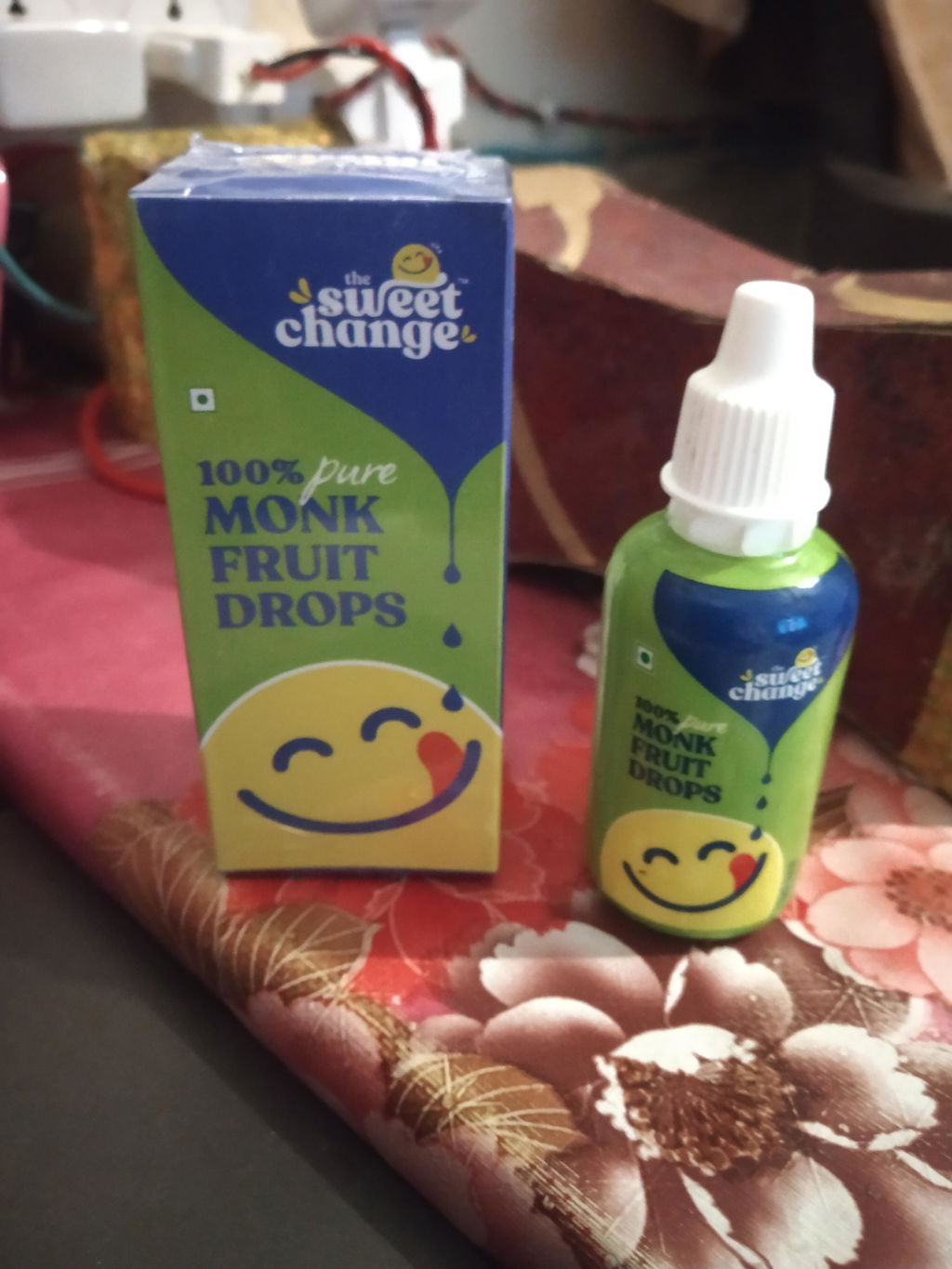
Monk Fruit Drops (100 servings)Monk Fruit Drops (100 servings) Rs. 497.00 Monk Fruit Drops (200 servings)Monk Fruit Drops (200 servings) Rs. 971.00 Monk Fruit Powder No Erythritol (100 servings)Monk Fruit Powder No Erythritol (100 servings) Rs. 675.00 Monk Fruit Powder No Erythritol (300 servings)Monk Fruit Powder No Erythritol (300 servings) Rs. 1,493.00
Manvi Agnihotri

Written by
Manvi Agnihotri · CEO and Co-Founder

12 years in clinical nutrition, over 11,000 patients · M.Sc Food and Nutrition, silver medallist

Manvi Agnihotri is CEO and Co-Founder of The Sweet Change. She holds an M.Sc in Food and Nutrition, in which she was a silver medallist, and has led brand strategy and patient and doctor education at Breathe Well-being, a diabetes care programme. She reviews our health and nutrition pages before they go live.

Reviews: Nutrition and food science, Blood sugar and diabetes diet

Disclosure: Co-founder of The Sweet Change

Sources

  1. US Food and Drug Administration (US FDA). 2025. Aspartame and Other Sweeteners in Food (content current as of 27 February 2025). fda.gov. https://www.fda.gov/food/food-additives-petitions/aspartame-and-other-sweeteners-food
  2. European Union. 2011. Regulation (EU) No 1169/2011 on the provision of food information to consumers, Article 18 and Annex XIV. Official Journal of the European Union, via EUR-Lex. https://eur-lex.europa.eu/legal-content/EN/TXT/HTML/?uri=CELEX:32011R1169
  3. European Union. 2026. Regulation (EC) No 1333/2008 on food additives, Annex II Part B2 "Sweeteners", consolidated text of 18 August 2026. Official Journal of the European Union, via EUR-Lex. https://eur-lex.europa.eu/legal-content/EN/TXT/HTML/?uri=CELEX:02008R1333-20260818
  4. Atkinson FS, Foster-Powell K, Brand-Miller JC. 2008. International tables of glycemic index and glycemic load values: 2008. Diabetes Care 31(12):2281-2283. https://doi.org/10.2337/dc08-1239; full text: https://pmc.ncbi.nlm.nih.gov/articles/PMC2584181/
  5. Livesey G. 2003. Health potential of polyols as sugar replacers, with emphasis on low glycaemic properties. Nutrition Research Reviews 16(2):163-191. https://doi.org/10.1079/NRR200371; abstract: https://pubmed.ncbi.nlm.nih.gov/19087388/
  6. European Food Safety Authority (EFSA). 2026. Sweeteners (topic page, last reviewed 17 February 2026). efsa.europa.eu. https://www.efsa.europa.eu/en/topics/topic/sweeteners
  7. EFSA Panel on Food Additives and Flavourings. 2019. Safety of use of Monk fruit extract as a food additive in different food categories. EFSA Journal. https://doi.org/10.2903/j.efsa.2019.5921; full text: https://pmc.ncbi.nlm.nih.gov/articles/PMC7008860/
  8. Witkowski M and others (Cleveland Clinic). 2023. The artificial sweetener erythritol and cardiovascular event risk. Nature Medicine. https://doi.org/10.1038/s41591-023-02223-9; full text: https://pmc.ncbi.nlm.nih.gov/articles/PMC10334259/
  9. Witkowski M and others. 2024. Ingestion of the Non-Nutritive Sweetener Erythritol, but Not Glucose, Enhances Platelet Reactivity and Thrombosis Potential in Healthy Volunteers. Arteriosclerosis, Thrombosis, and Vascular Biology. https://doi.org/10.1161/ATVBAHA.124.321019; abstract: https://pubmed.ncbi.nlm.nih.gov/39114916/
  10. Hellfritsch C, Brockhoff A, Stähler F, Meyerhof W, Hofmann T. 2012. Human psychometric and taste receptor responses to steviol glycosides. Journal of Agricultural and Food Chemistry. https://doi.org/10.1021/jf301297n; abstract: https://pubmed.ncbi.nlm.nih.gov/22616809/
  11. US Food and Drug Administration (US FDA). 2020. The Declaration of Allulose and Calories from Allulose on Nutrition and Supplement Facts Labels: Guidance for Industry. fda.gov. https://www.fda.gov/media/123342/download
  12. EFSA Panel on Food Additives and Flavourings. 2023. Re-evaluation of erythritol (E 968) as a food additive. EFSA Journal 21(12):e8430. https://doi.org/10.2903/j.efsa.2023.8430; full text: https://pmc.ncbi.nlm.nih.gov/articles/PMC10731997/
  13. Atkinson FS, Brand-Miller JC, Foster-Powell K, Buyken AE, Goletzke J. 2021. International tables of glycemic index and glycemic load values 2021: a systematic review. American Journal of Clinical Nutrition. https://doi.org/10.1093/ajcn/nqab233; abstract: https://pubmed.ncbi.nlm.nih.gov/34258626/
  14. US Department of Agriculture (USDA), FoodData Central. 2019. SR Legacy release: Sugars, granulated (169655); Honey (169640); Sweetener, syrup, agave (170277). https://fdc.nal.usda.gov/food-details/169655/nutrients; https://fdc.nal.usda.gov/food-details/169640/nutrients; https://fdc.nal.usda.gov/food-details/170277/nutrients

The Sweet Change makes the products mentioned on this page. How we write and review