Monk fruit for diabetics: what the research says
 Written byJatin AgnihotriCOO and Co-Founder, The Sweet Change
 Reviewed byKapil GroverrChief Business Officer and Co-Founder, The Sweet Change
 Medically reviewed byManvi AgnihotriCEO and Co-Founder, The Sweet Change


Monk fruit for diabetics is a way to keep chai sweet without adding sugar: its sweetness comes from mogrosides, not sugar, and sweeteners of this kind generally do not raise blood sugar. In one small trial a monk fruit drink caused no spike in glucose or insulin, unlike a sugar drink; the swap is not a treatment for diabetes. Check the label, because many packs add erythritol or dextrose.
Key takeaways
- Few or no calories: sweeteners like monk fruit add few or no calories and generally do not raise blood sugar [1].
- The one human trial: in 30 healthy men, a monk fruit drink caused no spike in glucose or insulin, unlike a 65 g sugar drink [2].
- The WHO line: its 2023 advice against sweeteners for weight control does not cover people who already have diabetes [3].
- Dextrose is glucose: glycemic index 103 against 65 for table sugar [4] [5].
Discuss with your doctor or dietitian before changing your diet, especially if you take diabetes medicines.
On this page
If you take medicine or insulin for diabetes, talk to your doctor before changing what you eat or drink.
Where the sweetness comes from
It usually starts with someone else's report. Your father's HbA1c comes back higher than last year, the doctor says "cut the sugar", and the next morning the chai still has to be made. Somebody picks up a pack that says monk fruit on the front, and the whole family wants to know if it is safe to pour.
You are far from alone in that kitchen. In a national survey of more than 1.1 lakh adults aged 20 and over, 11.4% had diabetes and another 15.3% had prediabetes, which is roughly one adult in four [6]. In our survey of our own buyers, 59% said someone at home keeps an eye on blood sugar.
So, first, what the pack is talking about. Monk fruit (Siraitia grosvenorii, luo han guo) is a small gourd from a vine of the cucumber family, grown in southern China, and its sweetness comes from compounds called mogrosides [1] [7]. Most of it is grown in one province, Guangxi, which holds about 80% of the cultivated area [7].
Those mogrosides are the whole point. Depending on how much of them an extract holds, it is 100 to 250 times sweeter than sugar, so a pinch does the work of a spoon [1]. Sweeteners of this kind add few or no calories to your day and generally do not raise blood sugar [1].

That is why a monk fruit sweetener for diabetes gets talked about at all: it gives the taste of sweet without the sugar the body has to deal with. Our guide to types of sweeteners walks through every option; this page stays on what this one does, and does not do, for a person with diabetes.
Monk fruit for diabetics: glucose and insulin after one cup
The question gets real at the first cup. You pour it, the glucometer sits on the table, and somebody wants to test an hour later. People type "does monk fruit raise blood sugar" into a search box and hope for a plain no; for the drink itself, the one trial in people gives exactly that [2].
There is one trial in people worth knowing well. Thirty healthy men each drank, on different days, a mid-morning drink sweetened with monk fruit, stevia, aspartame or 65 g of sugar, then ate lunch an hour later while the researchers tracked their blood glucose and insulin for three hours [2].
The sugar drink did what you would expect: a large spike in glucose and insulin within the first hour. The monk fruit drink did not [2].
Here's the catch, and it comes at lunch. An hour later the men ate as much lunch as they wanted, and on the sweetener days they ate more; glucose and insulin rose after that larger lunch, and the calories saved in the cup were eaten back at later meals [2].
Read that as a kitchen fact. Swapping the sugar out of the chai removes that sugar and the spike that came with it; the plate at the next meal still counts.
Two more limits. The trial was in healthy men, and in the research we read no trial has measured this in people with diabetes, the readers it matters most to. The blood-sugar-lowering effects you may read about for mogrosides come from mice and lab work, and even that research says the mechanisms are not yet fully understood [7].
In short: the cup gets sweeter without sugar, and that is the real, modest win.
Type 2 diabetes and prediabetes: does the answer change?
A prediabetes report arrives differently. There is no prescription, just a number that is "a little high" and a sentence from the doctor about sugar. If you are buying monk fruit for a diabetic patient, or for a parent who has just been told to watch out, you want to know whether the advice is the same for both.
The WHO has ruled on this question. Its 2023 guideline advises against using non-sugar sweeteners to control body weight or to lower the risk of disease, and it states that the advice does not apply to people who already have diabetes [3].
For prediabetes, then, the WHO advice does apply, and it is about long-term weight control rather than today's chai. Its review found no lasting benefit for body fat, saw possible links to type 2 diabetes and heart disease in long-term studies, and graded the recommendation conditional because those links might be confounded by who uses sweeteners and how [3].
Whether the search was "monk fruit diabetics" or "monk fruit for diabetic patient", the answer has the same shape. The sweetener takes the sugar out of the cup for both groups; it is not a treatment for type 2 diabetes or prediabetes, and we would look at the plate around the cup before the spoon in it.
If you want the next step after the cup, start with the plate: which atta to use for rotis is where we would look first.
In short: same swap, same limits, for both groups.
Read the label: erythritol, dextrose and other fillers
Now the part that matters more in India than any trial. The pack in your hand says monk fruit in large letters, perhaps "monk fruit diabetic friendly" on a sticker, and the ingredient list on the back says something else first.
The extract on its own goes in by the pinch, because it is so much sweeter than sugar. A powder that measures spoon for spoon like sugar has to be bulked with something.
In India the label has to list ingredients from most to least by weight or volume, so the first ingredient is the one there is most of [8]. That is the one you are eating most of.

Sometimes that filler is dextrose. Dextrose is glucose by another name [4], and glucose scores 103 on the glycemic index, against 65 for table sugar [5].
If you came here looking for a monk fruit glycemic index, this is where we would send you. On a bulked pack the number that counts is the first ingredient's, so when a pack sold as monk fruit sugar lists dextrose first, its glycemic index is, to us, the glycemic index of dextrose.
For the extract on its own we could not find a published value in the tables we used, so the nearest thing to an answer is the US FDA position in the first section of this page.
More often the filler is erythritol, a sugar alcohol. In 2023 a study of people already being assessed for heart risk found that those with higher levels of erythritol in their blood had more heart attacks, strokes and deaths over the next three years; it shows a link, not a cause [9].
The US FDA reviewed that paper and said its observational studies did not establish a causal link, and it continues to monitor erythritol [1].
That study sent many people back to reading labels, and our own buyers tell us the same: in our survey of our own buyers, 49% said they chose us for no erythritol.
One search phrase we see for this section is "erythritol and monk fruit good for diabetics", and the fair answer has two parts. Erythritol, like other sugar alcohols, does not cause a sudden rise in blood glucose [1]; the heart question above is the part still open.
If you are looking for the best monk fruit for diabetics in your family, start at the back of the pack, not the front. How to read sweetener ingredient lists goes through every filler you will meet; the table below covers the three you will see most.
| If the first ingredient is | What it is | What it means for blood sugar |
|---|---|---|
| Monk fruit extract (with water, in drops) | the sweet extract itself | generally does not raise it (see above) |
| Erythritol | a sugar alcohol used as bulk | no sudden rise; the heart study above is the open question |
| Dextrose or maltodextrin | glucose, or a starch made of glucose units | dextrose is glucose, high on the GI scale (see above) |
The honest downsides of monk fruit
Type "monk fruit bad for diabetics" into a search box and you will find a lot of alarm and not much evidence. Before buying a pack for someone with diabetes, we would weigh four things.
- The trials are small. The one human trial above was in healthy men, and the rest is mostly animal and lab work [2] [7].
- The pack is rarely just monk fruit. The blends question is covered above, and it is the biggest practical downside in India.
- No daily limit set: the US FDA has not specified an acceptable daily intake for monk fruit extract, and says one may not be needed when safety is shown at levels well above what sweetening takes [1].
- Pregnant, or buying for a young child: ask your doctor before starting any new sweetener.
For side effects, allergies and what the US FDA and the human trials say, read our monk fruit safety guide. This page stays with the diabetes question.
Using monk fruit in chai, kheer and baking
The first week is the real test. The chai tastes "off" to half the family, someone adds more, and by Friday the pack is at the back of the cupboard. Usually that is dosing, not the sweetener.
Start with far less than you think, because it is so much sweeter than sugar, and add it after the chai has boiled so you can taste as you go. In kheer, sweeten at the very end for the same reason.
The cup is where most people start. In our survey of our own buyers, 66% said they use their sweetener in coffee and 64% in chai.

Baking is different. Sugar gives a cake bulk, browning and a soft crumb as well as sweetness, and an extract gives only the sweetness, so a recipe that leans on sugar for its structure needs a tested version rather than a straight swap.
If you are choosing monk fruit extract for diabetics in the family, the form matters for this reason. Drops are the extract in water, so you control the amount a drop at a time; a powder is the extract plus whatever bulks it, which is where the label section comes back in.
Cheat sheet
- The swap removes the sugar in the cup: no glucose or insulin spike from the monk fruit drink in the one trial; the next meal still counts.
- Read the first ingredient: it is the one you are eating most of.
- Dextrose is glucose: if it is the first ingredient, there is more of it than of anything else.
- Start with a pinch, taste, add: after boiling in chai, at the end in kheer.
- On medicine or insulin: talk to your doctor before you change what you eat or drink.
That is our honest reading of monk fruit for diabetics: a real but small win in the cup, no treatment, and a back label that matters more than the front. Make the swap in the chai you drink most, and keep a photo of the ingredient list on your phone for the next appointment.
Questions people ask
Is monk fruit good for diabetics?
It can replace the sugar in chai and coffee; the US FDA's position is that sweeteners of this kind generally do not raise blood sugar. A small 2017 trial in 30 healthy men saw no glucose or insulin spike after a monk fruit drink. It is a swap, not a treatment for diabetes, so read the first ingredient.
Can diabetics have monk fruit?
Yes, as a swap for the sugar you already take, in normal amounts. The US FDA says such sweeteners generally do not raise blood sugar, and the WHO's 2023 advice against sweeteners for weight control leaves out people who already have diabetes. If you take medicine or insulin, ask your doctor first, and avoid packs that list dextrose first.
Is monk fruit safe for diabetics?
The US FDA has not questioned the safety notices for monk fruit extract and has set no daily limit, saying one may not be needed. The main human trial, in 30 healthy men, found no glucose or insulin spike from the drink; we found none yet in people with diabetes. Side effects and allergies: see our monk fruit safety guide.
Is monk fruit good for diabetes type 2?
It takes the sugar out of the cup; it is a sugar swap, not a treatment for type 2 diabetes. The WHO's 2023 advice against non-sugar sweeteners for weight control does not apply to people who already have diabetes, so for you the question is taste and the label. We would look at the meal around the chai first.
Is monk fruit good for prediabetes?
As a way to cut added sugar from chai, yes; as a treatment, no. The WHO's 2023 advice against non-sugar sweeteners for weight control applies to everyone without diabetes, prediabetes included, and it asks people to make the whole diet less sweet. Use the swap, and work on the plate as well as the cup.
Can monk fruit cause diabetes?
We found no study showing that monk fruit causes diabetes. The WHO's 2023 review of long-term observational studies saw a possible link for non-sugar sweeteners as a group, not monk fruit in particular, and rated its advice conditional because those links may be confounded by who uses sweeteners and why. Less sweetness overall is the surer advice.
Does monk fruit spike insulin?
No spike came from the drink itself. In a 2017 trial of 30 healthy men, a monk fruit drink caused no spike in glucose or insulin, while a sugar drink did. The later rise on the sweetener days followed lunch an hour on, when the men ate more, so treat it as a sugar swap, not a treatment.
What is the glycemic index of monk fruit?
We could not find a published glycemic index value for monk fruit extract in the tables we used; the US FDA's position is that sweeteners of this kind generally do not raise blood sugar. On a blended pack, read the first ingredient instead: dextrose is glucose, which ranks well above table sugar on published glycemic index tables.
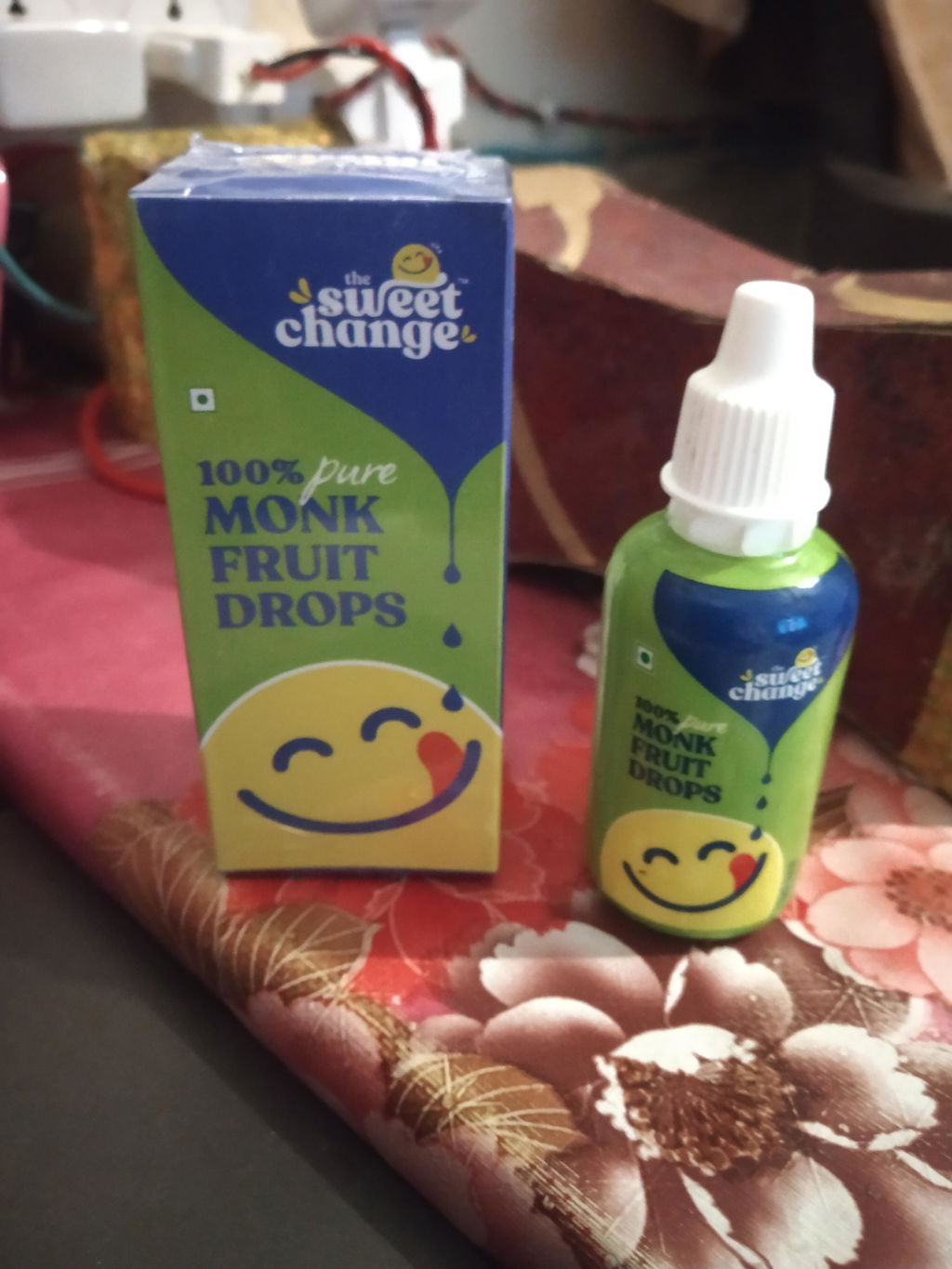
 Monk Fruit Drops (100 servings)
Rs. 497.00
Monk Fruit Drops (200 servings)
Rs. 971.00
Monk Fruit Drops (100 servings)
Rs. 497.00
Monk Fruit Drops (200 servings)
Rs. 971.00
 Monk Fruit Powder No Erythritol (100 servings)
Rs. 675.00
Monk Fruit Powder No Erythritol (300 servings)
Rs. 1,493.00
Monk Fruit Powder No Erythritol (100 servings)
Rs. 675.00
Monk Fruit Powder No Erythritol (300 servings)
Rs. 1,493.00
Related articles


Written by
Jatin Agnihotri · COO and Co-Founder
MBA, Indian School of Business · 12 years in technology and security
Jatin Agnihotri is COO and Co-Founder of The Sweet Change, where he runs operations, from manufacturers and vendors to shipping and logistics, and creates content for our Instagram. He spent 12 years in technology at Honda Cars India, Extramarks Education, where he was Vice President IT, and Jio Platforms. He holds an MBA from ISB.
Disclosure: Co-founder of The Sweet Change

Reviewed by
Kapil Groverr · Chief Business Officer and Co-Founder
IIM Lucknow alumnus · 18 years in marketing
Kapil Groverr is Co-Founder and Chief Business Officer of The Sweet Change, where he leads growth and marketing. He has 18 years in marketing, most recently as Vice President Marketing at Breathe Well-being and before that Head of Digital Marketing at King Koil. An IIM Lucknow alumnus, he writes our sweetener guides and comparisons.
Writes about: Sweetener guides and comparisons
Disclosure: Co-founder of The Sweet Change

Medically reviewed by
Manvi Agnihotri · CEO and Co-Founder
12 years in clinical nutrition, over 11,000 patients · M.Sc Food and Nutrition, silver medallist
Manvi Agnihotri is CEO and Co-Founder of The Sweet Change. She holds an M.Sc in Food and Nutrition, in which she was a silver medallist, and has led brand strategy and patient and doctor education at Breathe Well-being, a diabetes care programme. She reviews our health and nutrition pages before they go live.
Reviews: Nutrition and food science, Blood sugar and diabetes diet
Disclosure: Co-founder of The Sweet Change
Sources
- US Food and Drug Administration. 2025. Aspartame and Other Sweeteners in Food (content current as of 27 February 2025). FDA, Silver Spring. https://www.fda.gov/food/food-additives-petitions/aspartame-and-other-sweeteners-food
- Tey SL, Salleh NB, Henry J, Forde CG. 2017. Effects of aspartame-, monk fruit-, stevia- and sucrose-sweetened beverages on postprandial glucose, insulin and energy intake. International Journal of Obesity 41(3):450-457. https://doi.org/10.1038/ijo.2016.225
- World Health Organization. 2023. WHO advises not to use non-sugar sweeteners for weight control in newly released guideline (departmental update, 15 May 2023). WHO, Geneva. https://www.who.int/news/item/15-05-2023-who-advises-not-to-use-non-sugar-sweeteners-for-weight-control-in-newly-released-guideline
- Office of the Federal Register. 2026. 21 CFR 184.1857 Corn sugar. Electronic Code of Federal Regulations (eCFR), current as of 1 October 2026. https://www.ecfr.gov/current/title-21/chapter-I/subchapter-B/part-184/subpart-B/section-184.1857
- Atkinson FS, Foster-Powell K, Brand-Miller JC. 2008. International tables of glycemic index and glycemic load values: 2008. Diabetes Care 31(12):2281-2283. https://doi.org/10.2337/dc08-1239
- Anjana RM, Unnikrishnan R, Deepa M, et al.; ICMR-INDIAB Collaborative Study Group. 2023. Metabolic non-communicable disease health report of India: the ICMR-INDIAB national cross-sectional study (ICMR-INDIAB-17). The Lancet Diabetes & Endocrinology 11(7):474-489. https://doi.org/10.1016/S2213-8587(23)00119-5
- Huang H, Peng Z, Zhan S, Li W, Liu D, Huang S, Zhu Y, Wang W. 2024. A comprehensive review of Siraitia grosvenorii (Swingle) C. Jeffrey: chemical composition, pharmacology, toxicology, status of resources development, and applications. Frontiers in Pharmacology 15:1388747. https://doi.org/10.3389/fphar.2024.1388747
- Food Safety and Standards Authority of India. 2020. Food Safety and Standards (Labelling and Display) Regulations, 2020, regulation 5(2)(b) (compendium Version IV, 23 September 2022). FSSAI, New Delhi. https://www.fssai.gov.in/upload/uploadfiles/files/Compendium_Labelling_Display_23_09_2022.pdf
- Witkowski M, Nemet I, Alamri H, et al. 2023. The artificial sweetener erythritol and cardiovascular event risk. Nature Medicine 29(3):710-718. https://doi.org/10.1038/s41591-023-02223-9
The Sweet Change makes the products mentioned on this page. How we write and review