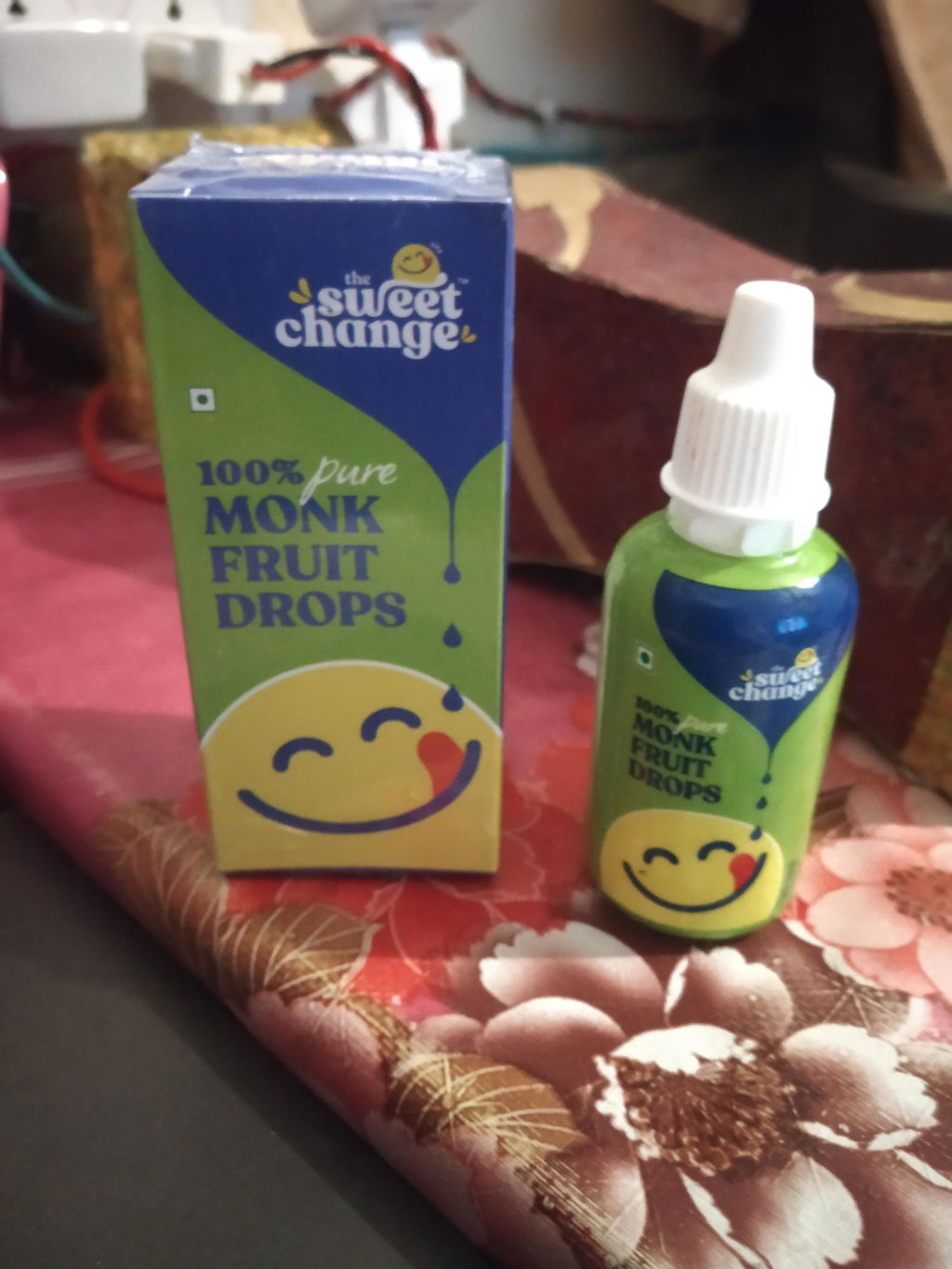
Monk Fruit Drops
monk fruit extract, water and vitamin C. Two drops replace a teaspoon of sugar.
From ₹2.66 a cup with Buy 2 Get 1₹1,197 · 100 · 300 servings
Shop Monk Fruit DropsDiabetes · Sweeteners
 Written byKapil GroverrChief Business Officer and Co-Founder, The Sweet Change
 Reviewed byJatin AgnihotriCOO and Co-Founder, The Sweet Change
 Medically reviewed byManvi AgnihotriCEO and Co-Founder, The Sweet Change
A diabetic sweetener is any sugar substitute that people managing diabetes use in place of sugar. Pick one with no sugars and no sugar alcohols high on the ingredient list, and use it in moderation: the American Diabetes Association's 2026 Standards say non-nutritive sweeteners can replace sugar-sweetened products in moderation and for the short term. Our pick is monk fruit made without sugar alcohols, sold as drops and powder, with sachets coming.
If you have diabetes or take medicines for it, check with your doctor before changing your diet.
Someone at home has been told to watch their sugar, and the morning chai is where the two spoons go. So you search for a diabetic sweetener, and a wall of packs comes back, most of them with "diabetic" or "sugar free" on the front.
The front of the pack is advertising. Of the 55 monk fruit powders, drops and sachets we checked online in India on 13 October 2026, 45 used "diabetic" or "diabetes" somewhere in the listing [6]. The back of the pack is regulated, and that is where we start.
A diabetic friendly sweetener is one whose label you have read. Four things decide it, and all four are on the back of the pack.

Those four checks are why we make our sweetener the way we do: monk fruit, no erythritol or other sugar alcohols, and a label short enough to read in the shop. If a name on a label is new to you, our guide to the types of sweeteners explains each one.
Our pick of diabetic sweetener for the daily cup is monk fruit made without sugar alcohols, and we say so as the people who make one. The criteria are plain: no sugars, no sugar alcohols, and a clean taste in hot chai.
From our own buyers: in our survey of our own buyers, 49% said they chose us for no erythritol and 31% for no bitter aftertaste, and 59% said someone at home keeps an eye on blood sugar [5].
Monk fruit (Siraitia grosvenorii, luo han guo) gets its sweetness from compounds called mogrosides, and the extract is reported to be 100 to 250 times sweeter than sugar, so a cup needs two drops or a small scoop, not a spoon [8].
In the US, the FDA closed seven safety notices for monk fruit extract and juice concentrate between 2010 and 2018 with no questions [9].
The human trial we lean on is the one in the takeaways: 30 healthy men, four drinks, and no spike in blood sugar or insulin after the monk fruit drink, unlike the sugar drink [4].
The honest limit, said once: monk fruit has fewer long-term human studies than older sweeteners, and that trial was in healthy men, not in people with diabetes. What the studies say about monk fruit goes through them one by one, and is monk fruit safe? covers what regulators have said.
The others have real strengths. Stevia is 200 to 400 times sweeter than sugar, so a pinch sweetens a cup, and its bitter aftertaste is real too: two bitter taste receptors on the tongue respond to steviol glycosides [8] [10]. Our stevia evidence page has the detail.
Sucralose is about 600 times sweeter than sugar and heat-stable, which suits cooking; it is an artificial sweetener [8]. Erythritol blends measure like sugar; the label checks above explain why, and which warning line they carry. More on artificial sweeteners and diabetes.
| Option | For daily chai | What to know | Confidence |
|---|---|---|---|
| Monk fruit, no sugar alcohols | Our pick: two drops or a small scoop | Fewer long-term studies than older sweeteners | High confidence |
| Stevia | Works; a little goes a long way | Bitter aftertaste from two taste receptors | Moderate confidence |
| Sucralose | Works; heat-stable for cooking | Artificial sweetener | Moderate confidence |
| Erythritol blends | Measure like sugar | Sugar alcohol; polyol packs carry a laxative-effect line | Low confidence |
| Honey, gur, coconut sugar | Still sugar | Count them as sugar | No label |
Both formats are the same monk fruit; the difference is where the sweetener goes. In our survey of our own buyers, 66% said theirs goes into coffee and 64% into chai, so for most homes the drops come first [5].
People search for diabetic sweetener drops and diabetic sweetener powder as if they were two products. The question underneath is simpler: do you stir it or cook with it?

Monk Fruit Drops have three ingredients, monk fruit extract, water and vitamin C, and declare 0 g sugar and 0 kcal per serving on the pack's nutrition panel [11]. Two drops replace a teaspoon of sugar, and the 10 ml bottle holds about 100 servings [11].
That is the format people mean when they search for monk fruit drops for diabetics: one bottle by the kettle, two drops in each cup, nothing to dissolve.
Monk Fruit Powder is made with monk fruit, guar fibre and allulose (30% / 35% / 35%), with no erythritol [11]. Pick it if you cook or bake: 1 g sweetens like 4 g of sugar, it can be heated, and the allulose helps kheer, halwa and cakes brown and hold together [11].
Both formats contain no erythritol or other sugar alcohols [11]. We sell drops and powder, with sachets coming.
On price, the per-cup number matters more than the pack price, because a 10 ml bottle lasts 100 cups. Searches for a diabetic sweetener price compare packs; compare cups.
With Buy 2 Get 1, the 100-serving Drops work out at ₹3.31 a serving (₹497 twice for three bottles, 300 servings), and the 300-serving Powder at ₹3.32 per cup of chai sweetened like 1 teaspoon of sugar (₹1,493 twice for three packs, 900 servings) [11].
From ₹2.66 a cup with Buy 2 Get 1
A sweetener replaces the sugar in your cup. It does not replace the rest of the plan, and the guidance says so in plain words.
The American Diabetes Association's 2026 Standards of Care say that non-nutritive sweeteners can be used in place of sugar-sweetened products if consumed in moderation and for the short term, to reduce overall calorie and carbohydrate intake, and that they do not appear to have a significant effect on glycaemic management; water is the first choice of drink [1].
The WHO's 2023 advice against using non-sugar sweeteners for weight control applies to everyone except people who already have diabetes [12]. So if you are reading this for someone with diabetes, that advice is not aimed at them; for everyone else it is conditional advice, because the links behind it might be confounded [12].
About 1 in 4 Indian adults has diabetes or prediabetes [13]. That is a lot of kitchens where one person's cup is sweetened differently from everyone else's, and the sweetener is the smallest part of the change.
That is the whole job of a diabetic sweetener: keep the chai sweet while the sugar spoon stays in the dabba. For the full comparison of every option, including tablets and the sugar alcohols, read our full guide to sweeteners for diabetes; what you eat with it and your medicines are between you and your doctor.
We make and sell the monk fruit sweetener on this page. How we write and review.

monk fruit extract, water and vitamin C. Two drops replace a teaspoon of sugar.
From ₹2.66 a cup with Buy 2 Get 1₹1,197 · 100 · 300 servings
Shop Monk Fruit Dropsmade with monk fruit, guar fibre and allulose, with no erythritol. For kheer, halwa and baking.
From ₹3.32 a cup with Buy 2 Get 1₹1,493 · 100 · 300 servings
Shop Monk Fruit PowderWe scored each option on sugars, sugar alcohols and taste in hot chai, using the sources numbered on this page. Confidence is how sure we are of the pick for daily chai and cooking, not a grade of the research.
Most non-nutritive sweeteners do not. The American Diabetes Association's 2026 Standards say they do not appear to have a significant effect on glycaemic management, and the US FDA's position is that such sweeteners generally will not raise blood sugar levels. Honey, gur and coconut sugar are sugars, so they count as sugar in your day whatever the pack says.
Prediabetes is a reason to talk to your doctor first, and no sweetener treats it. On safety, the US FDA has closed seven safety notices for monk fruit with no questions, and the American Diabetes Association's 2026 Standards say non-nutritive sweeteners can replace sugar-sweetened products in moderation and for the short term. Our monk fruit safety page goes deeper.
The Drops declare zero grams of sugar and zero calories per serving on the pack's nutrition panel. The Powder contains allulose, a rare sugar that FSSAI's definition of sugars counts as a sugar on an Indian label, so we do not call the Powder sugar free. Neither format contains erythritol or any other sugar alcohol.
Drops for anything you stir (chai, coffee, nimbu pani): two drops replace a teaspoon of sugar and there is nothing to dissolve, which is why some of our buyers said they picked us for drops being easy in chai and coffee. Powder for anything you cook or bake, where sugar gives bulk: kheer, halwa, cakes. Many homes keep both.
Not yet. We sell monk fruit drops and powder, with sachets coming. If a sugar free sachet for diabetes is what you are searching for, for the office or for travel, the drops bottle fits a pocket and two drops sweeten a cup, so it does the same job until the sachets are on sale.
Yes, with the Powder: it can be heated, and the allulose in it helps kheer, halwa and cakes brown and hold together, so it suits dishes where sugar gives bulk as well as sweetness. The Drops suit anything you stir rather than bake. One gram of Powder sweetens like four grams of sugar, about a teaspoon.
Pick one with no sugars and no sugar alcohols high on the ingredient list, and use it in moderation and for the short term, as the American Diabetes Association's 2026 Standards advise for non-nutritive sweeteners. Our pick is monk fruit made without sugar alcohols. If you are searching for sugar free chini for diabetes, read the ingredient list first.
Per pack, more than sugar; per cup, a few rupees. Two drops or one gram of powder replace a teaspoon of sugar, so one pack lasts a hundred cups or more. That is why we price our own packs per serving, and why it pays to compare any sweetener per cup, not per pack.
From ₹2.66 a cup with Buy 2 Get 1

Written by
Kapil Groverr · Chief Business Officer and Co-Founder
IIM Lucknow alumnus · 18 years in marketing
Kapil Groverr is Co-Founder and Chief Business Officer of The Sweet Change, where he leads growth and marketing. He has 18 years in marketing, most recently as Vice President Marketing at Breathe Well-being and before that Head of Digital Marketing at King Koil. An IIM Lucknow alumnus, he writes our sweetener guides and comparisons.
Writes about: Sweetener guides and comparisons
Disclosure: Co-founder of The Sweet Change

Reviewed by
Jatin Agnihotri · COO and Co-Founder
MBA, Indian School of Business · 12 years in technology and security
Jatin Agnihotri is COO and Co-Founder of The Sweet Change, where he runs operations, from manufacturers and vendors to shipping and logistics, and creates content for our Instagram. He spent 12 years in technology at Honda Cars India, Extramarks Education, where he was Vice President IT, and Jio Platforms. He holds an MBA from ISB.
Disclosure: Co-founder of The Sweet Change

Medically reviewed by
Manvi Agnihotri · CEO and Co-Founder
12 years in clinical nutrition, over 11,000 patients · M.Sc Food and Nutrition, silver medallist
Manvi Agnihotri is CEO and Co-Founder of The Sweet Change. She holds an M.Sc in Food and Nutrition, in which she was a silver medallist, and has led brand strategy and patient and doctor education at Breathe Well-being, a diabetes care programme. She reviews our health and nutrition pages before they go live.
Reviews: Nutrition and food science, Blood sugar and diabetes diet
Disclosure: Co-founder of The Sweet Change
Our pick: monk fruitfrom ₹2.66 a cup with Buy 2 Get 1
Shop