Sweetener stevia: what it is, INS 960, taste and safety
 Written byKapil GroverrChief Business Officer and Co-Founder, The Sweet Change
 Reviewed byJatin AgnihotriCOO and Co-Founder, The Sweet Change
 Nutrition reviewed byManvi AgnihotriCEO and Co-Founder, The Sweet Change


Stevia is a sweetener made from the leaves of the Stevia rebaudiana plant, and its sweet compounds, steviol glycosides, are 200 to 400 times sweeter than sugar with no calories [1] [2]. On an Indian pack, sweetener stevia appears as INS 960, and the daily limit works out to about 27 packets a day for a 60 kg adult [3] [1]. Its main downside is a bitter aftertaste some people notice [4].
Key takeaways
- Where the sweetness comes from: steviol glycosides in the leaf, 200 to 400 times sweeter than sugar [1].
- The label name: Indian packs list it as INS 960, and a stevia table-top sweetener must state the sweetener with its purity [3] [5].
- The daily limit: 4 mg per kg of body weight a day as steviol, about 27 packets for a 60 kg adult [1].
- Read the first ingredient: ingredients run from most to least, so the first one is what most of a powder is [5].
- Our pick for daily chai: if the aftertaste bothers you, a monk fruit sweetener made without sugar alcohols is the swap we make.
On this page
- What is stevia?
- INS 960: the name on an Indian label
- Drops, powder, tablets, sachets: what you are really buying
- Why stevia can taste bitter
- Is stevia sweetener safe, and how much is too much?
- Using stevia in chai, coffee and baking
- Sweetener stevia and monk fruit: our pick for daily chai
- Cheat sheet
- Sources
What is stevia?
It usually starts at the shop shelf. A green pack says "stevia", it costs a few times what sugar does, and the back lists things you cannot pronounce. Someone at home has been told to cut sugar, so you want to know what this leaf actually is before it goes in the chai.
Stevia is a sweetener made from the leaves of Stevia rebaudiana, a plant native to South America. The sweet part is a group of compounds called steviol glycosides, the best known being stevioside and rebaudioside A, and they are 200 to 400 times sweeter than table sugar [1].
It is a non-nutritive sweetener, which is the technical way of saying it provides no calories [2].
The word "natural" needs one plain sentence. The phrase natural sweetener stevia is fair in the sense that it starts as a plant, but what you buy is a purified extract, not crushed leaves.
In the United States, the FDA has accepted GRAS notices only for high-purity steviol glycosides, 95% or more, while whole leaf and crude extracts are not permitted there as sweeteners [1].
So when you set it beside the other plant-derived options in our guide to the ingredients in sweeteners, think of it as a leaf refined to its sweet part. That is the fairest one-line description of sweetener stevia.
INS 960: the name on an Indian label
Turn the pack over and the word stevia may not appear in the ingredient list at all. What you find instead is a number.
The International Numbering System (INS) code for steviol glycosides is 960, and Indian labels declare a food additive by its functional class together with either its name or its INS code [3] [5]. So "Sweetener (INS 960)" or "Steviol glycosides (960)" on an Indian pack is stevia extract.
There is a second line to look for. Under the Food Safety and Standards (Labelling and Display) Regulations 2020, a steviol glycoside pack sold as a table-top sweetener must carry a "Contains" declaration naming the sweetener with its purity and the weight percent of its marker compound [5].
That line is the useful one. It tells you how much of the pack is really stevia extract and how pure that extract is, and a pack that leaves it off is not following the rule.
Where to look: the ingredient list and the small-print box beside it, usually on the back or the side panel.
Drops, powder, tablets, sachets: what you are really buying
Here is the part most packs do not spell out. Pure stevia extract is so sweet that a spoon of it would be unusable, so a powdered sweetener stevia pack that measures like sugar has to be mostly something else.
The ingredient list settles what that something is. By law the ingredients run in descending order by weight, so the first name is what most of the pack is made of [5]. If the first ingredient is dextrose, maltodextrin or a sugar alcohol, that is the bulking agent, and the stevia extract sits further down the list.
Before you buy stevia sweetener online, read the first two ingredients and the "Contains" line; the photos on a listing rarely show the back. If you are buying for someone with diabetes, what stevia means if you have diabetes covers the blends in more detail.
Liquid stevia sweetener
A liquid stevia sweetener is the simpler product: stevia extract in water, sometimes with a preservative, and no bulking agent to measure with. A stevia drop sweetener is dosed by the drop, which is why the bottle is small.
Tablets and sachets sit in between: a fixed dose of extract on a carrier, so one packet sweetens the same every time.
Why stevia can taste bitter
Most people who dislike stevia say the same thing: the first sip is sweet, then a bitter note hangs on at the back of the tongue. That is not your imagination, and it is not a bad batch.
Our tongues carry about 25 kinds of bitter-taste receptor, and in laboratory tests two of them respond to steviol glycosides. How bitter a glycoside tastes also depends on which glycoside it is, which is why extracts differ and why brands blend them [4].
In the kitchen it means two things. Use less than you think, because more extract means more of the bitter note along with the sweet; and if one brand tastes bitter, another with a different glycoside mix may not.
In our survey of our own buyers, 12% said they used stevia before switching to us, and 31% said they chose us for no bitter aftertaste.
Is stevia sweetener safe, and how much is too much?
The honest answer has three parts: what the Indian label rule requires, what the daily limit is, and where the research stops.
The label rule is the one above: the pack must name the sweetener and its purity. The limit comes from the Joint FAO/WHO Expert Committee on Food Additives, which set an acceptable daily intake of 4 mg per kg of body weight a day, expressed as steviol, a figure the US FDA also uses [3] [1].
In kitchen terms, the FDA's own worked example says that for rebaudioside A the limit comes to 12 mg per kg of body weight, or about 27 table-top packets a day for a 60 kg adult, each packet as sweet as two teaspoons of sugar [1]. Two cups of chai a day with a packet each sit far below that.
Steviol glycosides pass through the upper gut unchanged: the digestive enzymes there do not break them down, and they are not absorbed through the upper part of the gut [1].
Now the limits. The WHO's 2023 guideline advises against using non-sugar sweeteners, stevia included, to control body weight or cut disease risk, and says the advice does not apply to people who already have diabetes [6].
In a two-week trial in 120 healthy adults, stevia changed the mix of gut bacteria, as each of the other three sweeteners tested did in its own way; it was saccharin and sucralose, not stevia, that significantly worsened blood sugar responses [7].
Blood sugar in one line: in a trial of 30 healthy men, a stevia-sweetened drink caused no spike in glucose or insulin, unlike a drink with 65 g of sugar [8].
For sweetener stevia in a daily chai, then, the side effects people search for come down to the aftertaste, the filler, a gut-bacteria change seen in one short trial and the WHO's weight-control advice, within that daily limit. For the same questions across every sweetener, read how safe sweeteners are, one by one.
Using stevia in chai, coffee and baking
Chai is where most Indian kitchens meet stevia first, and where most mistakes happen. The usual one is treating a drop like a spoon.
With a bottle of drops, start with fewer than the label suggests and add one at a time. Chai mein do boondein, phir taste karo. Drops mix straight into hot or cold drinks, so coffee, nimbu pani and lassi work the same way.
Powder measures more like sugar, which is the filler's job; the trade-off is that you are mostly spooning filler, so read the first ingredient before you measure.
Baking is where stevia's sweetness works against it. A pinch of extract carries the sweetness of a cup of sugar [1], and that is the problem: a cake or a ladoo needs the cup, not the pinch, for its bulk, so a recipe written for sugar needs another ingredient to make up the volume.
Those are the stevia sweetener uses that work: drops for drinks, powder when you want to measure, and some patience with baking.
Sweetener stevia and monk fruit: our pick for daily chai
Give stevia its due. It is sold everywhere, in every format, and its high-purity extracts carry the US GRAS notices we mentioned above. For a lot of people it does the job.
Then the fair comparison. Monk fruit (Siraitia grosvenorii, luo han guo) is a fruit from southern China whose extract is 100 to 250 times sweeter than sugar depending on its mogroside content, and like stevia it is non-nutritive [1] [2].
In the US, the FDA has closed seven GRAS notices for monk fruit extract with "no questions" [9]. In the same trial of 30 men, the monk fruit drink also caused no spike in glucose or insulin [8].
Its limit, stated plainly: monk fruit has fewer long-term human studies than older sweeteners such as stevia; what is known about monk fruit's safety sets out the studies that exist.
Our pick is ours, with the criterion stated. For daily chai, where you taste the sweetener on its own several times a day, we pick a monk fruit sweetener made without sugar alcohols, on two grounds: taste and a short ingredient list.
People searching for the best sweetener stevia makes usually mean the one with the least aftertaste; if you have tried two brands and still notice it, this is the swap we make. We sell ours as drops and powder, with sachets coming.
| Stevia | Monk fruit (made without sugar alcohols) | |
|---|---|---|
| Comes from | leaves of Stevia rebaudiana [1] | a fruit from southern China [1] |
| Sweet compounds | steviol glycosides [1] | mogrosides [1] |
| Times sweeter than sugar | 200 to 400 [1] | 100 to 250 [1] |
| Calories | zero [2] | non-nutritive [2] |
| US FDA position | no questions on GRAS notices for 95%-purity extracts [1] | no questions on seven GRAS notices [9] |
| Taste note | bitter aftertaste some people notice [4] | the swap we make when that aftertaste bothers you |
| Our pick for daily chai | Moderate confidence | Our pick, High confidence |
How we compared: "confidence" is how sure we are of the pick for daily chai, judged on taste and a short ingredient list; it is our view, not a grade of the research.
Cheat sheet
- INS 960 on an Indian ingredient list means sweetener stevia, that is, steviol glycosides.
- Read the first ingredient: it is what most of a powder is; the "Contains" line tells you the purity.
- Start with fewer drops than the bottle says and add one at a time.
- The daily limit is about 27 packets a day for a 60 kg adult; a few cups of chai are nowhere near it.
- If the aftertaste bothers you, a monk fruit sweetener made without sugar alcohols is our pick for daily chai; the main types of sweeteners covers the rest.
Questions people ask
Is stevia sweetener safe?
Regulators accept it within a daily limit. The Joint FAO/WHO Expert Committee on Food Additives set an acceptable daily intake of 4 mg per kg of body weight as steviol, which the US FDA works out to 27 packets a day for a 60 kg adult. The WHO's 2023 guideline adds that they are not a weight-control tool.
Is stevia sweetener healthy?
It is a way to take sugar out of a cup, not a health food. MedlinePlus lists it as non-nutritive, so it adds no calories, and the WHO's 2023 guideline advises against counting on any non-sugar sweetener to control weight or lower disease risk, while noting that the advice does not cover people who already have diabetes.
Is sweetener 960 safe?
Sweetener 960 is the INS code the Joint FAO/WHO Expert Committee on Food Additives lists for steviol glycosides, the sweet compounds of stevia, so the answer is the same as for stevia. That committee set its daily limit as steviol, and the US FDA cites the same figure. Read the pack for the purity line and the filler listed first.
Stevia sweetener kya hai?
Stevia sweetener ek plant ki pattiyon se bana sweetener hai. In plain English: it is an extract of the leaves of Stevia rebaudiana, a South American plant, whose steviol glycosides are a few hundred times sweeter than sugar with no calories, as the US FDA and MedlinePlus describe it. On Indian packs, look for INS 960 and the "Contains" line.
Why does stevia taste bitter?
Because two of the tongue's bitter-taste receptors respond to steviol glycosides, as a 2012 laboratory study that screened human bitter receptors found, and some glycosides taste more bitter than others. That is why brands blend extracts and why the bitterness shows more when you use a lot. Try less first, then a different brand's blend.
Can I use stevia in chai?
Yes; drops are easiest: add one or two to hot chai, stir, taste, and add more only if needed, because the bitter note grows with the amount. Powders carry a filler such as dextrose or maltodextrin, so a spoon is mostly filler. If the aftertaste spoils the cup, a monk fruit sweetener made without sugar alcohols is our swap.
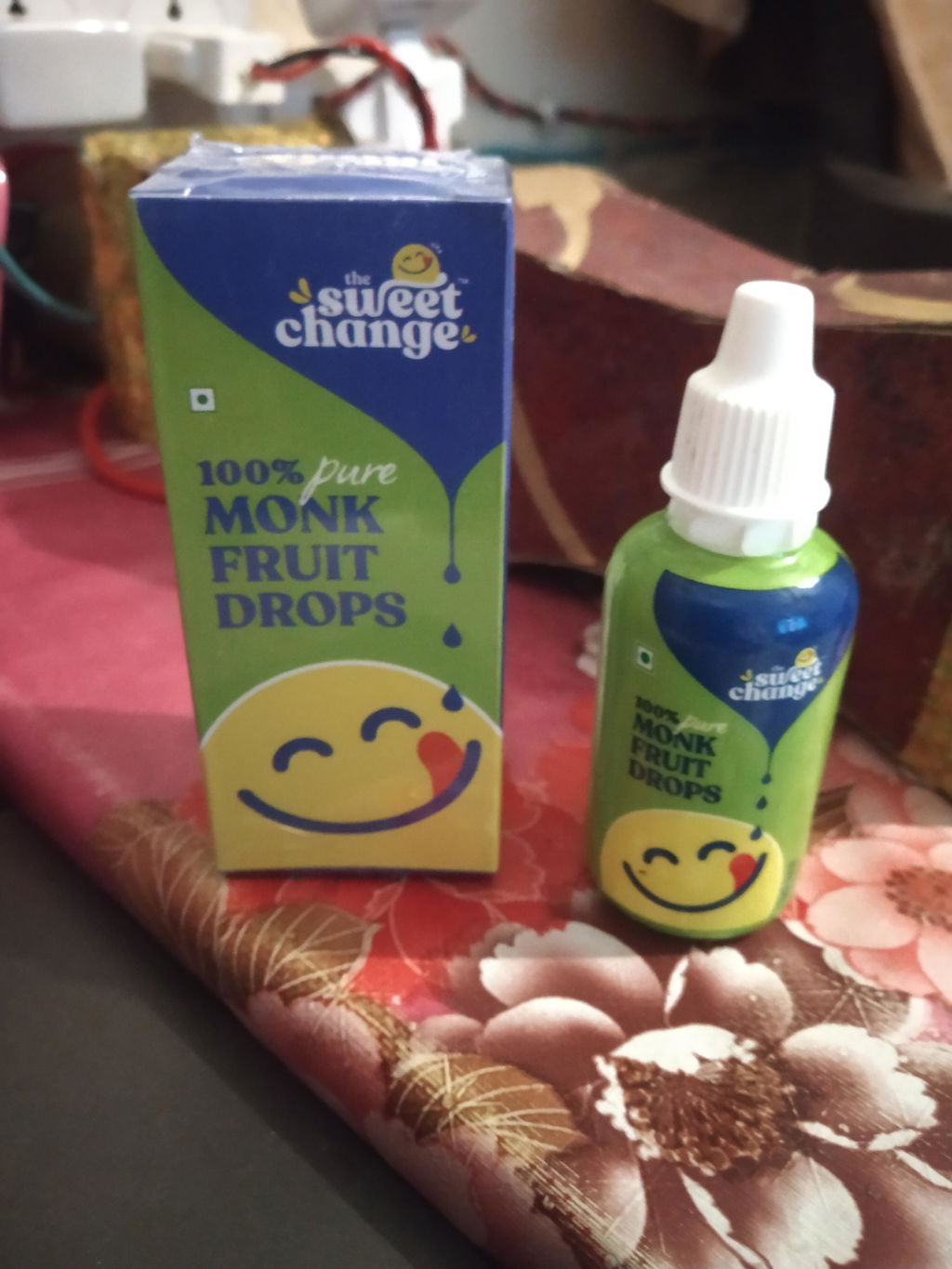
 Monk Fruit Drops (100 servings)
Rs. 497.00
Monk Fruit Drops (200 servings)
Rs. 971.00
Monk Fruit Drops (100 servings)
Rs. 497.00
Monk Fruit Drops (200 servings)
Rs. 971.00
 Monk Fruit Powder No Erythritol (100 servings)
Rs. 675.00
Monk Fruit Powder No Erythritol (300 servings)
Rs. 1,493.00
Monk Fruit Powder No Erythritol (100 servings)
Rs. 675.00
Monk Fruit Powder No Erythritol (300 servings)
Rs. 1,493.00
Related articles


Written by
Kapil Groverr · Chief Business Officer and Co-Founder
IIM Lucknow alumnus · 18 years in marketing
Kapil Groverr is Co-Founder and Chief Business Officer of The Sweet Change, where he leads growth and marketing. He has 18 years in marketing, most recently as Vice President Marketing at Breathe Well-being and before that Head of Digital Marketing at King Koil. An IIM Lucknow alumnus, he writes our sweetener guides and comparisons.
Writes about: Sweetener guides and comparisons
Disclosure: Co-founder of The Sweet Change

Reviewed by
Jatin Agnihotri · COO and Co-Founder
MBA, Indian School of Business · 12 years in technology and security
Jatin Agnihotri is COO and Co-Founder of The Sweet Change, where he runs operations, from manufacturers and vendors to shipping and logistics, and creates content for our Instagram. He spent 12 years in technology at Honda Cars India, Extramarks Education, where he was Vice President IT, and Jio Platforms. He holds an MBA from ISB.
Disclosure: Co-founder of The Sweet Change

Nutrition reviewed by
Manvi Agnihotri · CEO and Co-Founder
12 years in clinical nutrition, over 11,000 patients · M.Sc Food and Nutrition, silver medallist
Manvi Agnihotri is CEO and Co-Founder of The Sweet Change. She holds an M.Sc in Food and Nutrition, in which she was a silver medallist, and has led brand strategy and patient and doctor education at Breathe Well-being, a diabetes care programme. She reviews our health and nutrition pages before they go live.
Reviews: Nutrition and food science, Blood sugar and diabetes diet
Disclosure: Co-founder of The Sweet Change
Sources
- US Food and Drug Administration. 2025. Aspartame and Other Sweeteners in Food (content current as of 27 February 2025). FDA. https://www.fda.gov/food/food-additives-petitions/aspartame-and-other-sweeteners-food
- MedlinePlus Medical Encyclopedia, US National Library of Medicine. 2025. Sweeteners - sugar substitutes (reviewed 3 July 2025). https://medlineplus.gov/ency/article/007492.htm
- Joint FAO/WHO Expert Committee on Food Additives (JECFA). 2026. Evaluations of the JECFA: food additives database, steviol glycosides (INS 960; ADI 0 to 4 mg/kg bw as steviol). World Health Organization, Geneva. https://apps.who.int/food-additives-contaminants-jecfa-database/Home/Chemical/267
- Hellfritsch C, Brockhoff A, Stähler F, Meyerhof W, Hofmann T. 2012. Human psychometric and taste receptor responses to steviol glycosides. Journal of Agricultural and Food Chemistry 60(27):6782-6793. https://doi.org/10.1021/jf301297n
- Food Safety and Standards Authority of India. 2020. Food Safety and Standards (Labelling and Display) Regulations, 2020: regulations 5(2)(b) and 5(5) and the Schedule of declarations for table-top sweeteners (compendium Version IV, 23 September 2022). FSSAI, New Delhi. https://www.fssai.gov.in/upload/uploadfiles/files/Compendium_Labelling_Display_23_09_2022.pdf
- World Health Organization. 2023. WHO advises not to use non-sugar sweeteners for weight control in newly released guideline (departmental update, 15 May 2023). WHO, Geneva. https://www.who.int/news/item/15-05-2023-who-advises-not-to-use-non-sugar-sweeteners-for-weight-control-in-newly-released-guideline
- Suez J, Cohen Y, Valdés-Mas R, et al. 2022. Personalized microbiome-driven effects of non-nutritive sweeteners on human glucose tolerance. Cell 185(18):3307-3328. https://doi.org/10.1016/j.cell.2022.07.016
- Tey SL, Salleh NB, Henry J, Forde CG. 2017. Effects of aspartame-, monk fruit-, stevia- and sucrose-sweetened beverages on postprandial glucose, insulin and energy intake. International Journal of Obesity 41(3):450-457. https://doi.org/10.1038/ijo.2016.225
- US Food and Drug Administration. 2010 to 2018. GRAS Notice Inventory: notices for Siraitia grosvenorii (monk fruit) extract closed with "FDA has no questions". https://www.hfpappexternal.fda.gov/scripts/fdcc/index.cfm?set=GRASNotices&sort=GRN_No&order=DESC&startrow=1&type=basic&search=Siraitia
The Sweet Change makes the products mentioned on this page. How we write and review