

7 Key Differences Between Artificial vs Natural Sweeteners
Why Sweetness Is Not the Enemy
Sweetness is a natural part of human experience. From childhood celebrations to festive desserts and everyday chai - sweetness connects comfort, culture, and joy. The problem isn’t sweetness - it’s sugar overload.
With India now known as the Diabetes Capital of the World, and lifestyle conditions like PCOS, metabolic syndrome, obesity, and fatty liver rising dramatically, reducing sugar intake is no longer just a diet decision - it’s a health necessity.
This is where the debate between Artificial vs Natural Sweeteners becomes important.
Both are seen as alternatives to sugar - but they work very differently in the body. Some support metabolic health, while others may confuse hormonal pathways, trigger cravings, or impact gut bacteria.
So how do you decide?
This guide breaks down 7 key differences between artificial vs natural sweeteners, backed by research - in simple, real-world language.
First, What Exactly Are Sweeteners?
Artificial Sweeteners
These are lab-made substitutes designed to mimic sweetness with zero calories. They are often used in:
- Diet sodas
- Sugar-free gums
- Protein powders
- Low-calorie packaged foods
- Diabetic-marketed processed foods
Examples include: Aspartame, Sucralose, Saccharin, Acesulfame-K.

Natural Sweeteners
These come from plants or naturally occurring sources and may be caloric or zero-calorie depending on the type.
Common natural sweeteners:
- Monk Fruit
- Stevia
- Erythritol (from fermented fruits)
- Coconut Sugar
- Honey (not ideal for diabetics)
Among these, the zero-calorie natural sweeteners (monk fruit, stevia, erythritol) are preferred for metabolic health.

7 Key Differences Between Artificial vs Natural Sweeteners
1. The Source
| Feature | Artificial Sweeteners | Natural Sweeteners |
| Origin | Synthetic chemicals | Plants/nature-derived |
| Examples | Aspartame, Sucralose | Monk fruit, Stevia, Erythritol |
Understanding source matters because the body often responds better to natural molecules it recognizes, rather than highly processed or chemically modified compounds.
2. Impact on Blood Sugar and Insulin
Many people assume that because both artificial and natural sweeteners have zero calories, they affect blood sugar the same way - but research says otherwise.
- Artificial sweeteners may trigger insulin signaling, even without sugar.
- Natural zero-calorie sweeteners like monk fruit and stevia do NOT raise blood sugar or insulin.
A major 2014 Nature study found that certain artificial sweeteners may lead to glucose intolerance - especially in individuals already metabolically compromised.https://www.nature.com/articles/nature13793
3. Gut Health & Microbiome Impact
Your gut is home to trillions of bacteria, influencing digestion, immunity, hormones, skin, and metabolism.
- Artificial sweeteners like sucralose and saccharin have been shown to disrupt gut microbiota diversity, which may contribute to bloating, poor digestion, cravings, and inflammation.Sucralose and saccharin have been linked to reduced gut microbiota diversity in multiple studies, primarily in animal models but with some human evidence suggesting imbalances in beneficial bacteria like Bifidobacteria and Bacteroides, potentially leading to inflammation and digestion issues.Sucralose/Saccharin review (2022): https://pmc.ncbi.nlm.nih.gov/articles/PMC9029443/
- The seminal 2014 Nature study demonstrated saccharin, sucralose, and aspartame modulate gut microbiota composition and function in mice, causing dysbiosis transferable to germ-free mice and linked to glucose intolerance in humans.Nature microbiota study (2014): https://www.nature.com/articles/nature13793
- Natural sweeteners - especially erythritol and monk fruit - are generally gut-friendly and well tolerated, even for people with IBS or gut sensitivity.
- Studies on Natural Sweeteners and Gut Tolerance: Erythritol shows minimal impact on gut microbiota composition, being largely non-fermentable and absorbed in the small intestine, making it well-tolerated even in moderate doses without laxative effects in healthy individuals.Erythritol/polyols effects: https://pmc.ncbi.nlm.nih.gov/articles/PMC6363527/
- Monk fruit extracts, particularly mogroside V, exhibit no negative microbiome effects and may promote beneficial bacteria growth with prebiotic potential, producing short-chain fatty acids like acetate and butyrate.Monk fruit microbiome: https://www.foodandnutritionjournal.org/volume13number1/the-battle-of-natural-sweeteners-a-comprehensive-guide-to-monk-fruit-and
- These natural options align with better tolerance for IBS or sensitive guts compared to artificial sweeteners.
A balanced microbiome = better mood, energy, digestion, and metabolic stability.
4. Taste, Cravings & Emotional Eating
Sweetness is not only chemical - it's psychological.
Artificial sweeteners are often 200–600x sweeter than sugar, overstimulating taste receptors. This can:
- Increase cravings
- Trigger overeating later
- Create a habit loop similar to sugar addiction
Natural sweeteners, especially when blended correctly, offer a cleaner, softer sweetness closer to real sugar, helping reduce craving cycles and emotional snacking.
5.Long-Term Safety
Artificial sweeteners are approved in limited amounts, but long-term research reveals mixed signals. Potential associations include:
- Higher sweet cravings
- Increased appetite
- Metabolic confusion
- Microbiome imbalance
- Possible cardiovascular impacts (based on recent studies)
Natural sweeteners like monk fruit and stevia have been used traditionally for centuries and hold FDA GRAS (Generally Recognized as Safe) status.
6. Versatility in Real Food Use
One of the most practical differences in the Artificial vs Natural Sweeteners debate is how they perform in real everyday food.
Many people discover the truth only after trying them in chai, coffee, or baking - and realizing they don’t behave the same as sugar.
Artificial Sweeteners Often Struggle in Real Cooking
Artificial sweeteners may:
- Taste chemical or artificial, especially in warm beverages
- Break down under heat, losing sweetness when used in baking or Indian cooking
- Leave a metallic or bitter aftertaste, especially in desserts and hot coffee
This makes artificial sweeteners less ideal for cooking-based cultures like India, where chai, halwa, laddoos, pancakes, and baking are part of everyday life.
Natural Sweeteners Work Better in Real Kitchen Use
High-quality natural sweeteners particularly monk fruit blends are:
- Heat stable (perfect for cooking and baking)
- Ideal for Western baking (cakes, muffins, brownies, cookies)
- Great for Indian sweets (kheer, halwa, laddoos, modaks, rabri)
- Perfect for daily beverages (tea, coffee, cold brew, smoothies)
- Easy to use in cold drinks (lemonades, iced teas, kombucha)
Because of their 1:1 sugar replacement ability, natural sweeteners provide a consistent, familiar taste without the struggle of dosage calculations or flavor adjustments.
Best for Daily Lifestyle Use
When evaluating Artificial vs Natural Sweeteners, the final question always is:“Can I use this every day without side effects or effort?”
With artificial sweeteners, long-term use remains controversial because of possible effects on:
- Hunger & cravings
- Gut microbiome
- Reward pathways
- Blood sugar signaling
Natural sweeteners, especially zero-calorie ones, support a sustainable lifestyle shift rather than a short-term diet hack.
Natural sweeteners work effortlessly in:
✔ Morning chai or coffee
✔ Breakfast oats and smoothies
✔ Healthy desserts
✔ Daily sweet cravings
✔ Festive mithai (without sugar crash)
✔ Baking, cooking & everyday kitchen use
This makes natural sweeteners a realistic and sustainable choice for families, diabetics, weight-loss journeys, fitness goals, PCOS support, and overall better long-term health.
So Which Sweetener Should You Choose?
If your goal is:
- Better blood sugar control
- Weight loss without giving up sweetness
- Reduced cravings
- Stable mood and energy
- A gut-friendly option
- Long-term metabolic health
Then natural sweeteners especially monk fruit–based blends are the clear winner.
❌ Stevia with bitterness
❌ Maltodextrin (hidden sugar with high GI)
❌ Artificial additives disguised as natural
❌ Ingredients unsuitable for diabetics or daily use
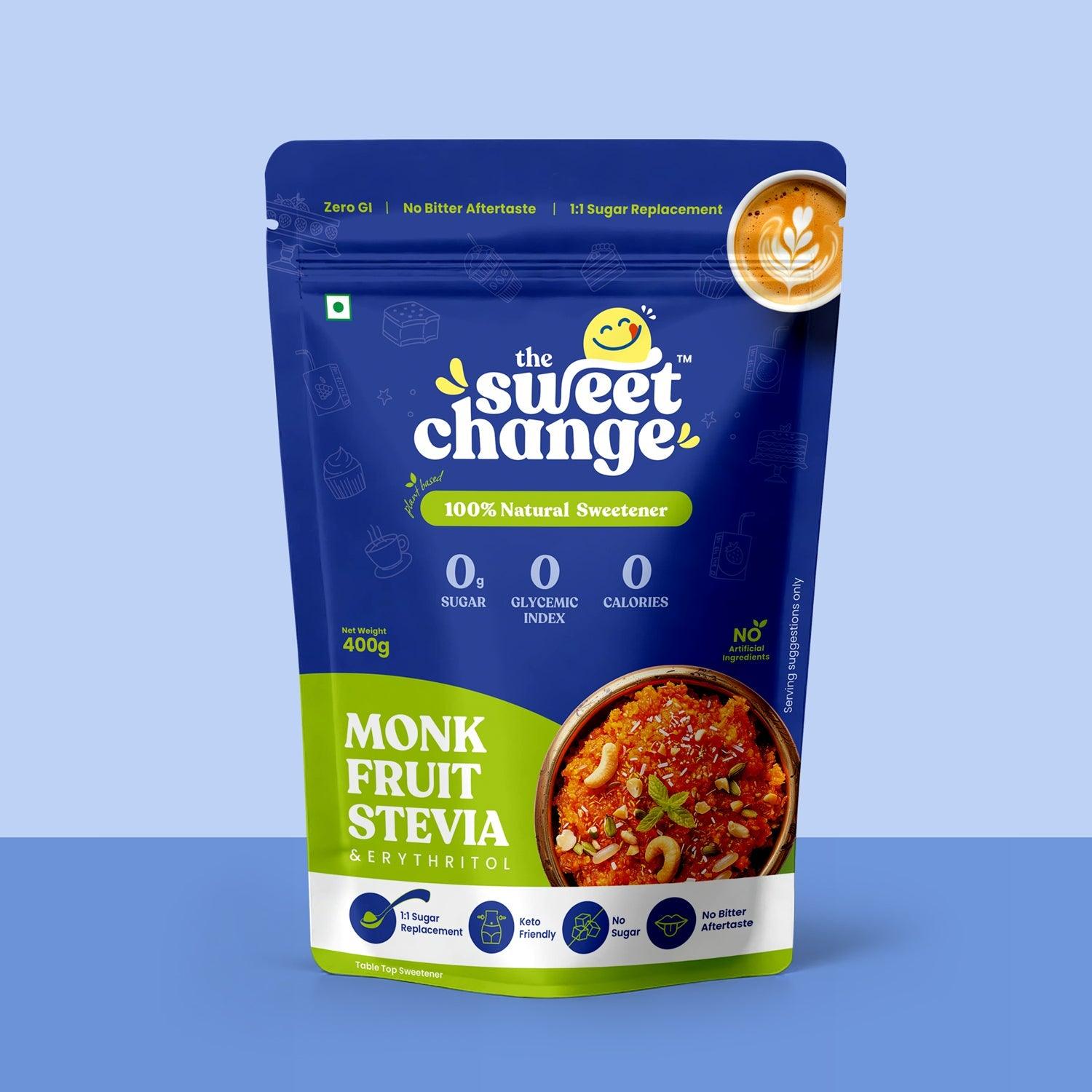
The Sweet Change was created to solve those problems with a clean and balanced formulation using:
Monk Fruit Extract
Stevia Leaf Extract
Fermented, naturally occurring Erythritol

Benefits You’ll Notice Immediately:
- Tastes just like sugar
- Zero aftertaste or bitterness
- Zero calories
- Zero glycemic index (diabetic-friendly)
- 1:1 sugar replacement (no guesswork)
- Safe for daily use - kids, elderly, PCOS, diabetics, weight loss
Whether it’s coffee, chai, kheer, halwa, pancakes, rasmalai, brownies, smoothies or baking - it blends seamlessly.
Summary: The Healthier Choice Is Clear
When comparing Artificial vs Natural Sweeteners, the differences go far deeper than calories. Artificial sweeteners may offer zero calories but can potentially interfere with hunger signals, gut health, cravings, and long-term metabolic balance.
Natural sweeteners, especially monk fruit–based blends, offer:
- Better metabolic response
- Better long-term safety
- Better taste & versatility
- Better alignment with real, healthy lifestyles
If your goal is sustainable health - not restrictive dieting - natural sweeteners are the smarter choice.
Make the Sweet Change Today-
https://www.thesweetchange.com/products/100-natural-monk-fruit-stevia-sweetener
FAQs About Artificial vs Natural Sweeteners
1. Will natural sweeteners help me lose weight more effectively than artificial sweeteners?
Yes - especially if you choose natural zero-calorie sweeteners like monk fruit. Artificial sweeteners may be calorie-free but can trigger dopamine and insulin signaling, which may lead to increased cravings, overeating, and stagnant fat loss. Natural sweeteners help satisfy sweetness without triggering these compensatory pathways, making them more supportive for weight loss, fitness goals, and long-term calorie control.
2. Are natural sweeteners safe for diabetic or prediabetic individuals?
Yes - natural zero-calorie sweeteners such as monk fruit have a Zero Glycemic Index, meaning they do not spike blood sugar or insulin levels. They are suitable for diabetics, prediabetics, insulin resistance, PCOS management, and metabolic health optimization - making them a safer long-term choice.
3. Can natural sweeteners cause digestive discomfort or bloating?
Some artificial sweeteners may disrupt gut bacteria and digestion. Natural sweeteners are generally gentle and well-tolerated. If someone has extreme sensitivity, introducing them gradually often helps the digestive system adapt. Unlike many artificial sweeteners, natural options do not kill beneficial gut bacteria or trigger inflammation.
4. Can children, seniors, or daily lifestyle users consume natural sweeteners safely?
Yes. As long as the sweetener is clean, filler-free, and natural, it is safe for all age groups - including children, seniors, and diabetics. Natural sweeteners, especially monk fruit, have been used traditionally for centuries and are considered safe for long-term regular use.
5. Can I use natural sweeteners in cooking, baking, and traditional recipes?
Absolutely - and this is one of the biggest advantages of using natural sweeteners. High-quality, heat-stable natural sweeteners like The Sweet Change work beautifully in cooking, baking, and everyday recipes without losing sweetness or changing flavor. Because they replace sugar in a 1:1 ratio, natural sweeteners offer consistent sweetness, stable performance under heat, and the same versatility as regular sugar - without the calories or glycemic spike.
No need for conversions - just use it exactly like sugar.

 https://www.thesweetchange.com

Silver Medalist with an M.Sc in Food & Nutrition, I lead strategic initiatives at Breathe Well-being to reverse Type 2 Diabetes—driving brand strategy, market insights, and sales team enablement. I create patient- and HCP-focused content and mentor nutrition consultants to deliver high-impact webinars and consultations. Currently pursuing a Master’s in Digital Marketing & Analytics from ISB, I merge clinical expertise with data-driven marketing to transform chronic care and improve health outcomes.